
Post actualizado el día octubre 27, 2026 by DeiviSanzPlay
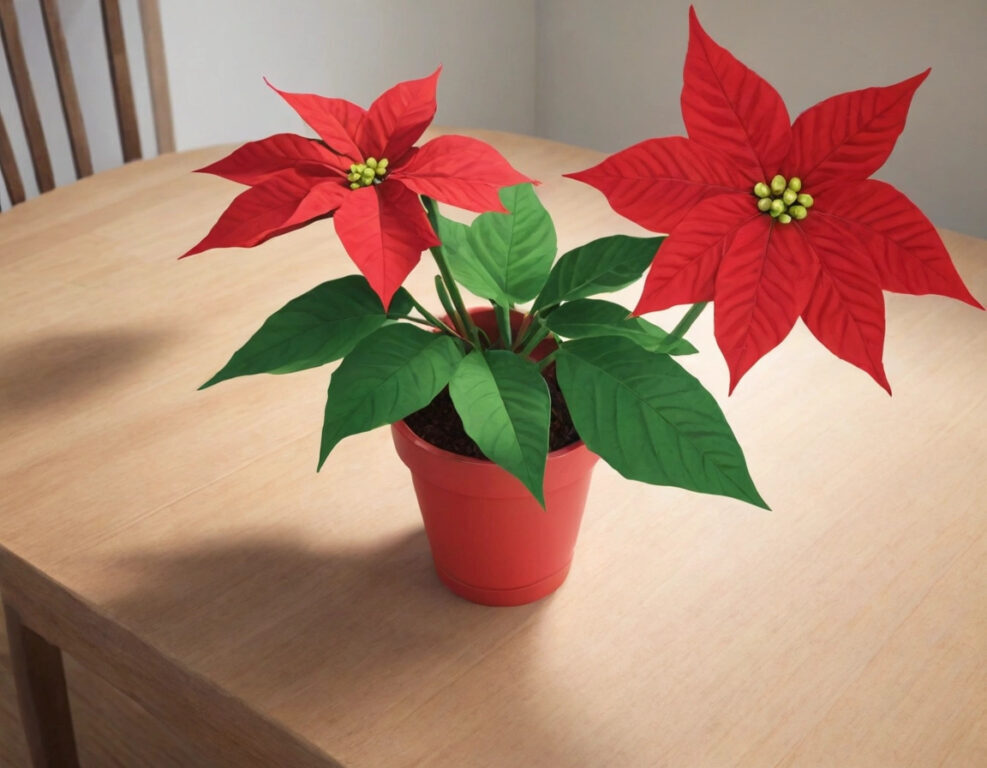
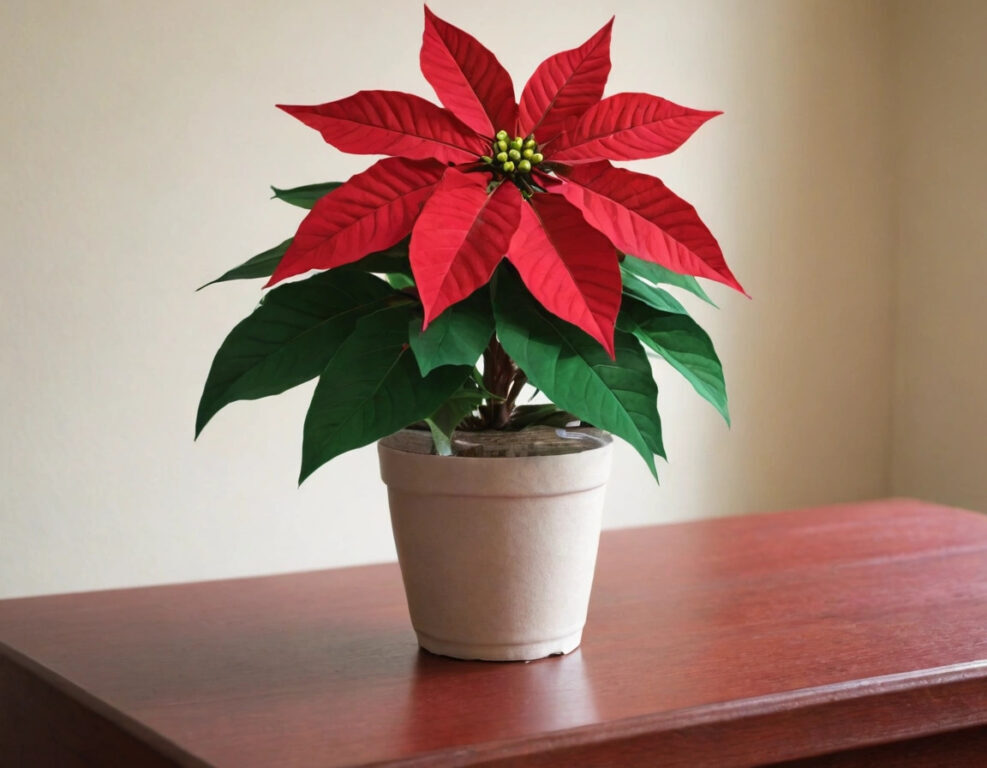
Most people treat a poinsettia like a disposable Christmas decoration: it looks great for three weeks, then it drops every leaf and ends up in the bin by January. That’s a waste. A poinsettia (Euphorbia pulcherrima) is a perennial shrub native to Mexico, and with the right pruning schedule it can rebloom year after year. The trick isn’t the cut itself — it’s the timing. Get the timing wrong and you’ll strip the plant of the exact stems that would have produced next season’s red bracts.
How to Prune Poinsettia: The Only Window That Actually Works
The single best moment to prune a poinsettia is late spring, once the colored bracts have faded and dropped and the plant has stopped pushing new growth. In most climates that lands somewhere between April and early June. If you’re wondering how to prune poinsettia without triggering a growth spurt that dies back in summer, this is the answer: cut when the plant is already awake, not while it’s dormant in winter.
Pruning in December or January — the mistake almost everyone makes — forces the plant to waste energy on tender shoots that get hit by cold and low light. Those shoots die, the stems scar, and the plant enters spring already exhausted. I’ve seen this happen with dozens of gifted poinsettias. The fix is simple: wait. Let it look ugly for a few months.
Tools and the Cut Itself (Don’t Skip the Disinfection)
Use bypass pruners or sharp scissors, and wipe the blades with 70% isopropyl alcohol between plants. Poinsettia sap is milky and sticky, and it’s a perfect vehicle for bacterial and fungal transfer. If you pruned a sick plant yesterday, those same blades will infect a healthy one today.
Make each cut at a slight angle, about 5mm above a leaf node or a dormant bud, so water runs off instead of pooling in the wound. This is the detail that separates a clean heal from a rotting stem. Never cut flush against the main trunk, and never leave a long stub either — both invite dieback.
As a rule, remove no more than one third of the total stem length in a single session. If the plant is leggy after winter, you can be more aggressive, but split it into two rounds: one in late spring, a lighter tidy-up in mid-summer.
Why Pruning Poinsettia Is About Shape, Not Just Cleanup
Pruning poinsettia serves three purposes, and only one of them is cosmetic. First, you remove dead, weak, or crossing branches so the plant channels carbohydrates into strong shoots instead of propping up dying tissue. Second, you open up the center of the canopy — poinsettias are prone to botrytis and powdery mildew when air can’t move between stems. Third, you control height. An unpruned poinsettia can easily reach 1.5 metres indoors, which nobody wants on a windowsill.
Cutting back also resets the plant’s hormone balance. Removing the apical bud — the topmost growing tip — breaks apical dominance and forces side shoots to develop. More side shoots mean more tips, and more tips mean more bracts in December. That’s the whole game.
Step-by-Step: How to Prune Poinsettia Properly
- Inspect first. Look for dry, brown, or blackened stems. Anything mushy at the base is rot and needs to go immediately, regardless of season.
- Cut dead wood back to healthy green tissue. Stop where the cross-section is clean and pale, not brown.
- Shorten the main stems by one third. Aim for a balanced, rounded shape.
- Thin the interior. Remove any branch growing inward or rubbing against another.
- Wipe the sap. Dab cuts with a damp cloth; the milky latex irritates skin and can stain.
- Move the plant to bright, indirect light. No direct midday sun for two weeks.
- Water sparingly. Less foliage means less transpiration — overwatering after pruning is the number one killer.
Pinching vs Pruning: The Summer Detail Most Guides Ignore
Between July and late August, you should pinch, not prune. Pinching means removing just the growing tip with your fingernails, leaving the rest of the stem intact. Do it every three to four weeks. This is what actually builds the dense, bushy poinsettia you see in florist shops.
Stop pinching around the first week of September. From that point on, the plant needs to set its terminal buds, and any cut after early September will delay or eliminate flowering. This is non-negotiable if you want red bracts by December.
Mistakes That Kill Poinsettias Every Year
- Pruning in winter. Cold + fresh cuts = dead shoots.
- Dirty tools. Fungal spores spread in seconds.
- Over-pruning. Cutting more than half the plant at once can shock it permanently.
- Watering right after. Wait two or three days before the first watering post-prune.
- Ignoring light. A pruned poinsettia in a dark corner will regrow thin and pale.
- Forgetting the light cycle. From October, poinsettias need 12–14 hours of complete darkness per night to colour up. A living room lamp will sabotage the whole process.
Aftercare: What Determines Whether It Blooms Again
Once you’ve pruned, the plant’s job is to build biomass through summer. Feed it a balanced liquid fertiliser every two weeks from May to September, then switch to a low-nitrogen, high-phosphorus formula in October. Keep it at 18–22°C, away from draughts and radiators.
The darkness trick is what most people miss. Starting in early October, put the plant in a closet or cover it with a cardboard box from 5pm to 8am. During the day, give it six hours of bright indirect light. Do this for eight to ten weeks and the bracts will turn red, pink, or white depending on the variety. Without that dark period, you’ll get a green leafy shrub and nothing else.
Poinsettias are not fragile. They’re just on a very specific clock, and pruning is how you reset it. Cut at the right time, pinch through summer, respect the dark cycle in autumn, and the same plant that everyone else throws away in January will be the centrepiece of your December table for years.