

Post actualizado el día octubre 26, 2026 by DeiviSanzPlay
Forget counting grams like a robot. In 2026, the protein conversation has shifted toward something more real: whole, natural foods that deliver a complete amino acid profile plus fiber, healthy fats, and micronutrients your body actually recognizes. This isn’t another generic list. It’s a practical breakdown of seven high-protein foods that are all natural, backed by verified nutrition data, and chosen because they work in a real kitchen, not just in a lab.
Why Natural Protein Sources Beat Powders in 2026
Daily protein recommendations haven’t changed much: healthy adults need between 10% and 35% of calories from protein. A sedentary person sits around 0.8 g per kilogram of body weight, while anyone training for muscle sits between 1.6 and 2.2 g/kg. What changed is where people get it from.
The push toward high-protein natural foods comes from a simple realization: isolated protein misses the fiber, polyphenols, and fats that make nutrients absorb properly. Your gut bacteria matter here. Without fiber, you’re just pushing protein through a sluggish system.
Nutrient density beats gram-chasing every single time. A food that gives you 20 g of protein plus iron, magnesium, and fiber will always outperform a scoop of isolate.
1. Lentils: The Cheapest Complete Protein Trick
Dry lentils pack around 27.5 g of protein per 100 g. That’s absurd for a plant food, and it costs pennies per serving. The catch? Lentil protein is incomplete on its own, but pair it with rice or any whole grain and you get every essential amino acid.
Beyond protein, lentils are loaded with iron, folate, and soluble fiber. That fiber slows glucose absorption, keeps you full for hours, and feeds the gut microbiome. I’d argue lentils are the single most underrated natural protein source in Western diets.
Practical move: cook a big batch on Sunday, store it in the fridge, and throw them into salads, stir-fries, or blend them into a pâté. Their neutral taste soaks up cumin, smoked paprika, garlic—whatever you’ve got.
2. Chicken Breast: Still the Lean Benchmark
About 22 g of complete protein per 100 g, with barely any fat. Chicken breast contains all nine essential amino acids in proportions ideal for muscle synthesis. For body composition, it’s hard to beat on efficiency per calorie.
It also delivers vitamin B3 (niacin) for energy metabolism, plus selenium and phosphorus. Its real advantage is neutrality—it takes on any seasoning without fighting back.
Stick to baking, grilling, or boiling. Shred leftovers into wraps or soups to bump protein without effort. Rotate spices weekly so you don’t burn out by Wednesday.
3. Wild Salmon: Protein With Omega-3 Built In
Roughly 20.6 g of complete protein per 100 g, plus EPA and DHA omega-3s. That fat profile is the differentiator: it supports heart health, brain function, and inflammation control in ways chicken simply can’t.
Salmon is also one of the few natural food sources of vitamin D, a nutrient most people are deficient in. Wild salmon tends to have a slightly better nutrient-to-fat ratio than farmed, though both are solid choices.
Grill or bake a fillet with lemon and dill for dinner, then flake the cold leftovers over greens the next day. Smoked salmon with scrambled eggs is a protein-heavy breakfast that takes five minutes.
4. Almonds: Dense, Portable, and Sneaky High in Protein
Around 21 g of plant protein per 100 g, wrapped in healthy monounsaturated fats, fiber, vitamin E, and magnesium. Almond protein isn’t complete alone, but in a varied diet it contributes meaningfully to total amino acid intake.
Vitamin E is a fat-soluble antioxidant that protects cell membranes. Magnesium supports muscle and nerve function. The fiber keeps hunger in check, which matters if you’re managing weight.
Chop them over yogurt or oatmeal. Natural almond butter on toast beats most spreads nutritionally. Ground almonds work as a breading for chicken or fish, adding crunch and protein at once.
5. Eggs: The Bioavailability King
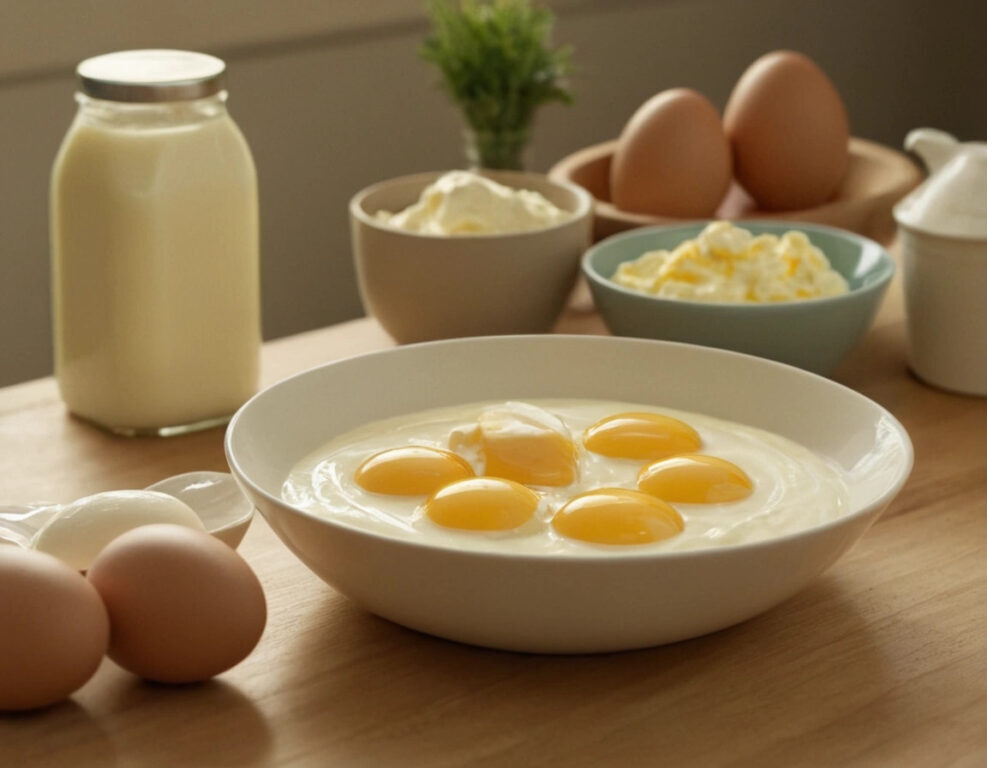
One large egg gives about 6 g of the highest-quality protein available, split between white (albumin) and yolk (vitamins, choline, lutein). Eggs are cheap, versatile, and fit any meal.
The yolk concentrates vitamins A, D, E, K, plus choline for brain health and lutein for eyes. Modern research has largely cleared eggs of the old cholesterol scare for most people. The white is nearly pure protein and water.
Scrambled eggs with spinach for breakfast, a veggie omelet for lunch, hard-boiled as a snack. Hard to mess up, hard to beat.
6. Greek Yogurt: Protein Plus Probiotics
Plain Greek yogurt delivers around 10 g of protein per 100 g, depending on brand, with live cultures that support gut health. That combination of high-protein natural food and probiotics is rare.
It also brings calcium, B12, and iodine. Skip the flavored versions loaded with sugar; buy plain and add your own fruit, honey, or nuts. The difference in quality is enormous.
Use it as a base for savory dips, swap it for sour cream, or blend it into smoothies for thickness and protein.
7. Tofu: The Plant Protein That Actually Works
Firm tofu offers about 17 g of protein per 100 g and is one of the few complete plant proteins, meaning it contains all essential amino acids. It also provides calcium, iron, and magnesium.
Its texture is the point: it absorbs marinades and takes on whatever flavor you throw at it. Press it, cube it, pan-fry it until golden. Toss into stir-fries, curries, or grain bowls.
For anyone cutting back on animal protein without losing muscle-building capacity, tofu is the practical answer.
How to Actually Build a Natural High-Protein Day
Don’t stack seven protein sources into one meal. Spread them. Eggs and Greek yogurt at breakfast, lentils or tofu at lunch, salmon or chicken at dinner, almonds as a snack. That pattern hits protein targets while covering fiber, omega-3s, and micronutrients.
Also, stop fearing whole-food fats. The omega-3s in salmon and monounsaturated fats in almonds improve satiety and hormone function. Low-fat everything is a 2010s hangover.
Finally, choose one or two foods from this list you’ll genuinely cook this week. Knowledge without a shopping list is just entertainment. The best natural protein foods are the ones that actually end up on your plate.


