

Post actualizado el día octubre 26, 2026 by DeiviSanzPlay
You’ve seen the photos a thousand times. But standing in front of the Great Pyramid of Giza at 6 a.m., before the tour buses arrive, hits completely differently. The seven wonders of the world aren’t just bucket-list checkmarks — they’re the most ambitious things humans ever built, and half of them don’t even exist anymore.
That’s the part most travel blogs skip. The original list was basically a Greek tourism brochure from 2,000 years ago. Of those seven ancient wonders of the world, exactly one survived. The rest are rubble, legends, or arguments among archaeologists.
What Actually Counts as a Wonder of the World in 2026
Two lists matter today. The ancient one (Giza, Babylon, Ephesus, Olympia, Halicarnassus, Rhodes, Alexandria) and the modern one voted in 2007 by over 100 million people through a New7Wonders campaign. Only the Great Pyramid appears on both — it’s the undisputed champion of the wonders of the world.
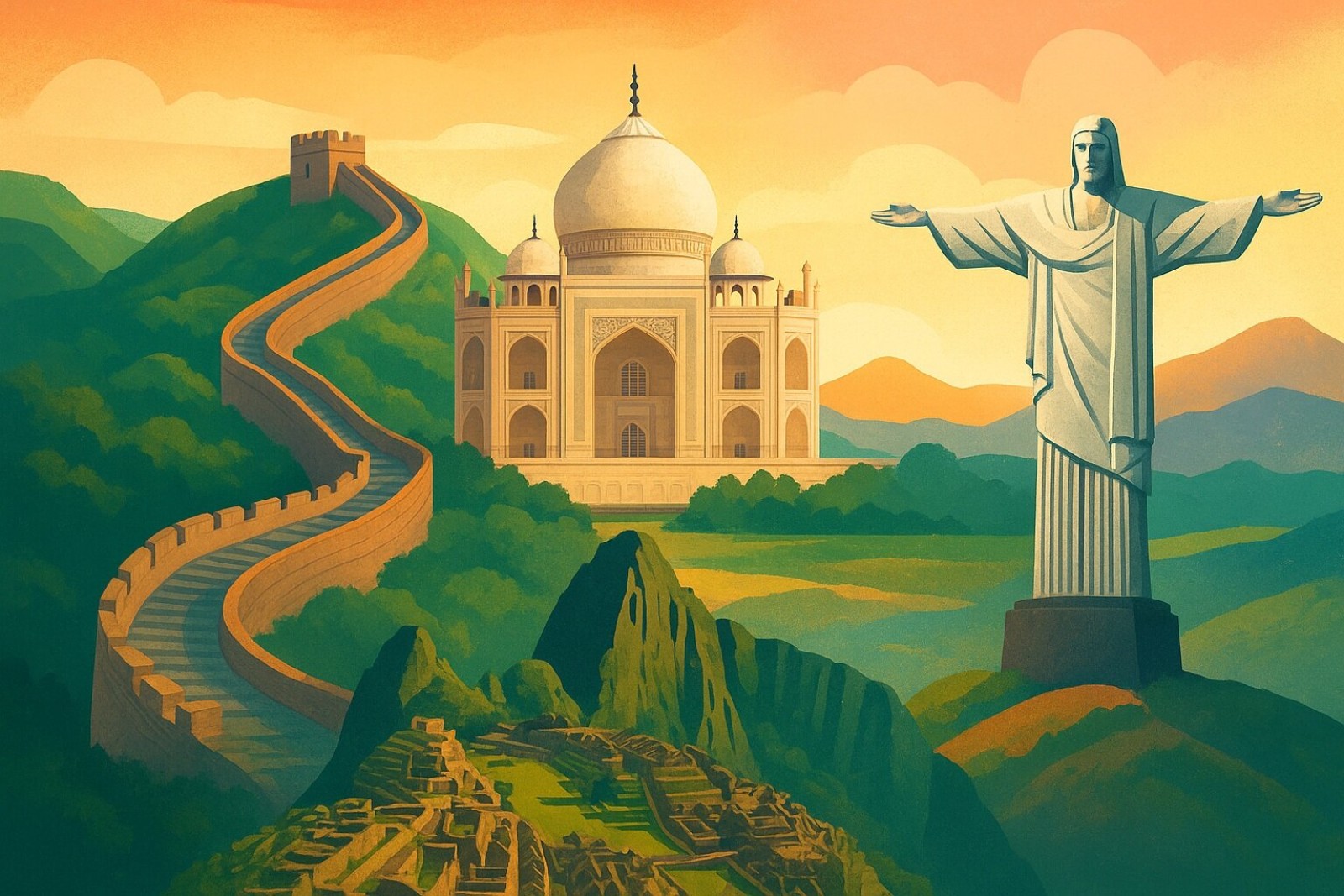
Here’s the modern seven: Great Wall of China, Petra in Jordan, Christ the Redeemer in Brazil, Machu Picchu in Peru, Chichén Itzá in Mexico, the Colosseum in Rome, and the Taj Mahal in India. Notice something? The list is heavy on the Americas and Asia. Europe only got the Colosseum. That wasn’t an accident — the vote was global, and the results reflected where people actually live and travel.
The Great Pyramid of Giza is the oldest of all seven wonders of the world and the only one still standing. Built around 2560 BC, it held the record as the tallest human-made structure for nearly 4,000 years. No crane, no wheeled vehicles in the way we think of them, no iron tools. Just copper chisels, ramps, and what must have been terrifying logistics.
Machu Picchu: The Wonder That Almost Stayed Hidden
Machu Picchu is the one that feels like a movie set. Built around 1450 for the Inca emperor Pachacuti, it sits at 2,430 meters above sea level, wrapped in cloud forest. The Spanish never found it. Hiram Bingham «discovered» it in 1911 — except local farmers already knew it existed, and a 10-year-old boy led him there.
What makes Machu Picchu stand out among the wonders of the world is the engineering. The Inca built it without mortar, cutting stones so precisely that you can’t slide a credit card between them. It survives earthquakes that leveled Spanish colonial buildings in Cusco. Drainage systems under the terraces still work after five centuries of rain.
If you’re going, book tickets months ahead. Peru limits visitors to around 4,500 per day, and the Inca Trail permits sell out six months early. Altitude sickness is real — spend two days in Cusco (3,400 m) before heading down to the site. Locals chew coca leaves; you can too, or drink the tea.
Taj Mahal: A Monument to Grief, Not Just Love
The Taj Mahal gets sold as the ultimate love story, and it is — but it’s also a tomb. Shah Jahan built it between 1632 and 1653 for his favorite wife, Mumtaz Mahal, who died giving birth to their 14th child. He was so devastated that he spent the empire’s treasury on white marble, inlaid with 28 types of semi-precious stones.
Stand close and you’ll see the pietra dura flowers — each one slightly different because hand-cut. The four minarets tilt outward 2 degrees so they’d fall away from the dome in an earthquake. The whole thing is a masterpiece of symmetry, except for one detail: Shah Jahan’s own tomb, added later beside Mumtaz’s, breaks the perfect balance.
Best time to visit the Taj Mahal? October to March, early morning at sunrise. It’s closed Fridays for prayers. Foreign tickets cost around 1,100 rupees (roughly $13), and you get a water bottle and shoe covers. Skip the guides who approach you outside — official ones are available at the ticket counter.
The Great Wall of China: Longer Than You Think
Forget the myth that you can see the Great Wall from space. You can’t, not with the naked eye. What you can see is 21,196 kilometers of wall, trenches, and natural barriers built across 2,000 years by different dynasties. The Ming sections near Beijing — Badaling, Mutianyu, Jinshanling — are the restored, tourist-friendly parts.
If you want the real experience, go to Jiankou or Gubeikou. Crumbling, overgrown, sometimes dangerous. That’s the Great Wall that feels like one of the true wonders of the world — wild, silent, and enormous.
Christ the Redeemer, Chichén Itzá, Petra, and the Colosseum
Christ the Redeemer in Rio is the youngest of the modern wonders, finished in 1931. It’s 30 meters tall, weighs 635 tons, and gets struck by lightning several times a year. The view from the top of Corcovado over Rio de Janeiro, Sugarloaf Mountain, and the beaches is the reason it made the list.
Chichén Itzá in Mexico’s Yucatán is a Maya city that peaked around 600–1200 AD. The El Castillo pyramid has 365 steps, one for each day of the year, and during the equinoxes, shadows create the illusion of a serpent slithering down the stairs. Get there at 8 a.m. when gates open — by 11 a.m. it’s a furnace and a crowd.
Petra in Jordan is carved directly into rose-red sandstone cliffs by the Nabataeans around 300 BC. The Treasury (Al-Khazneh) is the postcard shot, but most tourists never walk the extra 45 minutes to the Monastery, which is bigger and emptier. Go in spring or autumn. Summer in Petra is brutal.
The Colosseum in Rome held 50,000 to 80,000 spectators for gladiator fights, animal hunts, and — yes — mock naval battles when they flooded the arena. It’s the most visited monument in Italy, so buy skip-the-line tickets online and go right at opening or two hours before closing.
How Tourism Is Slowly Destroying the Wonders of the World
Here’s the uncomfortable truth nobody wants to print on a postcard. Mass tourism is eroding these sites faster than any ancient empire ever did.
- Machu Picchu limits daily entries and closes sections on rotation to let the stone recover from foot traffic.
- The Taj Mahal has yellowed from air pollution and insect droppings; mud-pack treatments are applied periodically to pull out the stains.
- The Great Wall loses bricks to tourists who pocket them as souvenirs — a real problem at unrestored sections.
- Venice and Petra both charge entry fees designed to cap visitor numbers, with mixed results.
UNESCO monitors all of these. Some are on the «in danger» list, some aren’t — but the pressure is universal. If you visit, follow the rules. Don’t touch the carvings, don’t climb where it’s forbidden, don’t buy artifacts from vendors who clearly looted them.
Practical Tips for Visiting the Wonders of the World in 2026
Planning matters more now than ever, because ticketing has gotten stricter everywhere. Here’s what actually works:
- Book official tickets directly from government or site websites. Third-party resellers mark up 30–100%.
- Go off-season. Machu Picchu in February, Petra in July, the Taj in May — fewer people, cheaper flights, and you’ll actually enjoy it.
- Hire local, licensed guides. They know the history, the shortcuts, and the best light for photos. In Peru and Jordan, this also directly supports communities.
- Respect sacred sites. Cover shoulders and knees at the Taj and in Petra’s monastery. No drones at Machu Picchu without a permit.
- Travel with cash. Card readers fail at Petra, Chichén Itzá, and rural China.
The wonders of the world aren’t going anywhere soon — but they’re not immortal either. The Hanging Gardens of Babylon vanished. The Colossus of Rhodes collapsed in an earthquake. What we have left is a reminder that even the most permanent-looking human achievements are temporary.
Go see them while they’re still standing. Just don’t be the tourist who ruins it for everyone else.
FAQ About the Wonders of the World
How many wonders of the world are there in 2026?
There are two official lists: the seven ancient wonders (only the Great Pyramid of Giza survives) and the seven modern wonders chosen in 2007. That’s 14 total, but only 8 still exist and can be visited.
Which wonder of the world is the most visited?
The Great Wall of China receives over 10 million visitors per year, making it the most visited of the modern wonders of the world. The Colosseum is second, with around 7 million annual visitors.
What is the oldest wonder of the world still standing?
The Great Pyramid of Giza, built around 2560 BC for the pharaoh Khufu. It’s the oldest of the seven wonders of the world and the only one from the ancient list still intact.
Can you visit all seven modern wonders of the world?
Yes, and people do it. A realistic route takes 4–6 weeks and roughly $8,000–15,000 per person depending on flights and comfort level. Start in Mexico (Chichén Itzá), move through Peru, Brazil, then cross to Europe and Asia.
Is Machu Picchu or the Taj Mahal better?
They’re not comparable. Machu Picchu is about landscape and mystery; the Taj Mahal is about craftsmanship and emotion. If you can only pick one, Machu Picchu wins for the overall experience — the train ride, the mountains, and the sense of having stepped into another century.

