Post actualizado el día octubre 25, 2026 by DeiviSanzPlay
There is a list of endangered animals that doesn’t make it into afternoon TV documentaries, but which decides whether an entire ecosystem goes to hell or holds on. And no, it’s not just the polar bear or the panda. They’re creatures many people have never even heard of and that are one step away from disappearing. If we don’t wake up, by 2026 we’ll be lamenting irreversible losses.
The International Union for Conservation of Nature (IUCN) has a red list that classifies endangered species. There the harsh reality is clear: there are more than 46,000 threatened species across the planet. It’s not a figure to dress up a headline, it’s a serious warning.
Northern white rhino: practically a ghost
Two females remain. Najin and Fatu. The last male, Sudan, died in 2018. So when we talk about critically endangered animals, this is the most extreme case. Poaching for their horns—which on the black market are worth more than gold—and the loss of their habitat in central Africa have driven them into a dead end.
There is an in vitro fertilization project using eggs from the females and frozen sperm from deceased males. But let’s not fool ourselves: it’s a race against the clock and very expensive. If it works, it will be a scientific miracle. If not, this subspecies will be gone forever.
Vaquita marina: the most threatened cetacean in the world
It lives only in the Upper Gulf of California, Mexico. And fewer than 10 individuals remain. Yes, you read that right: fewer than ten. Illegal fishing with gillnets to catch totoaba—a fish whose swim bladder is sold in China as a delicacy—is killing vaquitas as collateral damage.
The Mexican government has tried to ban those nets, but corruption and a lack of enforcement mean illegal fishing continues. It’s a brutal example of how the illegal trade in animals and animal parts condemns entire species. The vaquita does not breed in captivity, so the only option is to truly protect its habitat. And that isn’t happening.
African forest elephant: the silent giant
The African forest elephant is smaller than the savanna elephant, but just as important. Its population has fallen by 86% in 31 years, according to the IUCN. Poaching for ivory and deforestation for palm oil and cocoa plantations are cornering them.
These elephants disperse seeds and maintain the structure of the forest. Without them, the jungle becomes poorer and less able to capture carbon. In other words, their disappearance also accelerates climate change. It’s not just a matter of pity, it’s a matter of pure ecological survival.
Spix’s macaw: the parrot that came back from nothing
You probably know it from the movie Rio. The Spix’s macaw was declared extinct in the wild in 2019. But there is a reintroduction plan in Brazil with birds bred in captivity. In 2022 the first individuals were released in a reserve in Bahía.
Deforestation and the illegal pet trade wiped them out. There are now about 200 birds in breeding programs, but reintroducing them isn’t like planting a tree and waiting. They need to learn to find food, avoid predators and reproduce without human help. It’s tough, but there is hope.
Hammerhead shark: the predator that sustains the ocean
Sharks are not the bad guys of the movie. They are key to the health of the oceans. The hammerhead shark is critically endangered due to uncontrolled fishing for the fin trade. Around 100 million sharks are killed worldwide every year, often just for their fins.
Without apex predators, populations of herbivorous fish spiral out of control, eat the coral and the marine ecosystem collapses. Protecting sharks isn’t an environmentalist whim, it’s maintaining the machine that produces oxygen and food for millions of people.
Polar bear: the icon of climate change
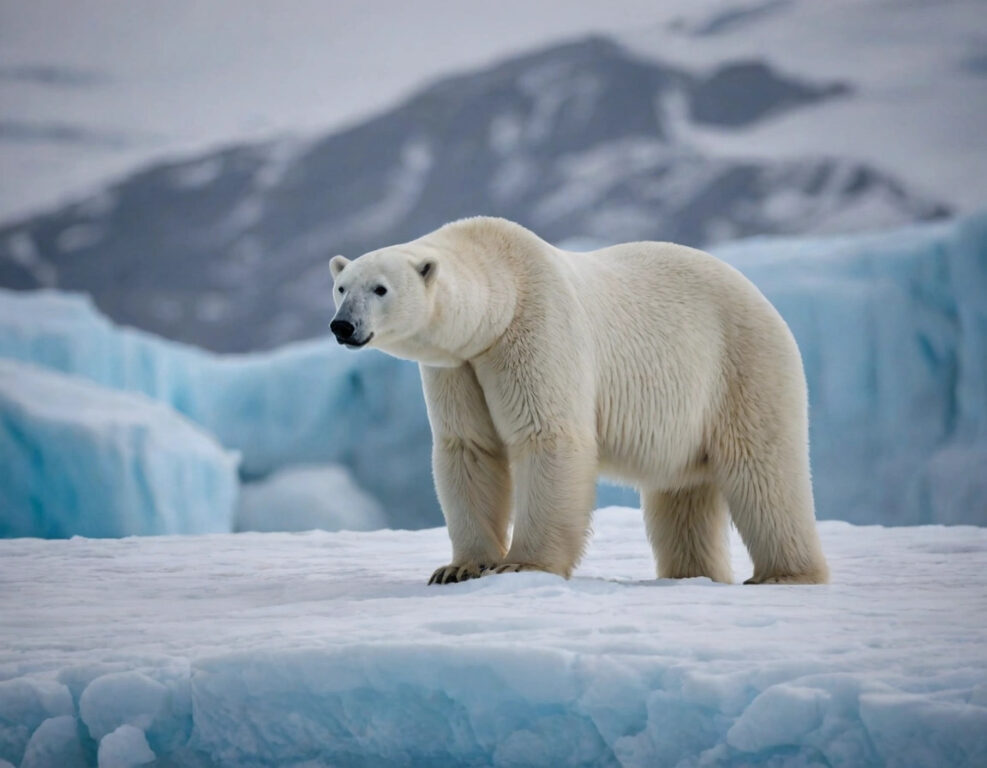
The polar bear depends on sea ice to hunt seals. And Arctic ice is melting at a rate of 13% per decade. In 2026, the situation is critical in some areas such as the Beaufort Sea, where the population has fallen by 40% in less than 20 years.
It’s not just that they have less ice to walk on, it’s that without ice they can’t hunt and they fast for months. In the end, females don’t accumulate enough fat to raise their young. Climate change is not a theory, it’s what is killing this animal right now.
Amur leopard: the rarest feline on the planet
It lives on the border between Russia and China. About 100 individuals remain in the wild. Poaching for its skin and habitat loss from logging and fires are its executioners. But there is good news: in 2023 a national park was created in China that connects with Russia, and the population appears to have stabilized.
It’s an example that when there is political will and international cooperation, extinction can be slowed. It’s not fast or cheap, but it works.
Panamanian golden frog: the silence of the amphibians
This bright yellow little frog went extinct in the wild in 2007 due to a chytrid fungus that devastated amphibians in Central America. It survives only in aquariums and conservation centers. Climate change helped spread the fungus, because more stable temperatures favor its growth.
Amphibians are bioindicators: if they die, the ecosystem is sick. Their disappearance is a warning that something is wrong in the water and in the air. And we’re not talking about some weird bug, we’re talking about the base of the food chain.
What can we do to really help?
Much more than you think. You don’t need to be a Greenpeace activist to make a difference. Here are some concrete actions:
- Reduce your consumption of meat and products with palm oil: livestock farming and monocultures are the main cause of tropical deforestation.
- Don’t buy souvenirs made of ivory, tortoiseshell or exotic skins: the illegal animal trade is a scourge you can curb with your wallet.
- Support verified organizations such as WWF, IUCN or local foundations working on the ground. Not all NGOs are the same, do your research.
- Vote for politicians who prioritize biodiversity: habitat protection laws are what really save species.
- Spread accurate information: share this article and talk about the issue. Ignorance is extinction’s best ally.
The list of endangered animals in 2026 is long and bleak, but it is not an irreversible sentence. Every species we save is a triumph. And every one we lose is a collective failure. There’s no time for cynicism. Act.