Post actualizado el día octubre 26, 2026 by DeiviSanzPlay
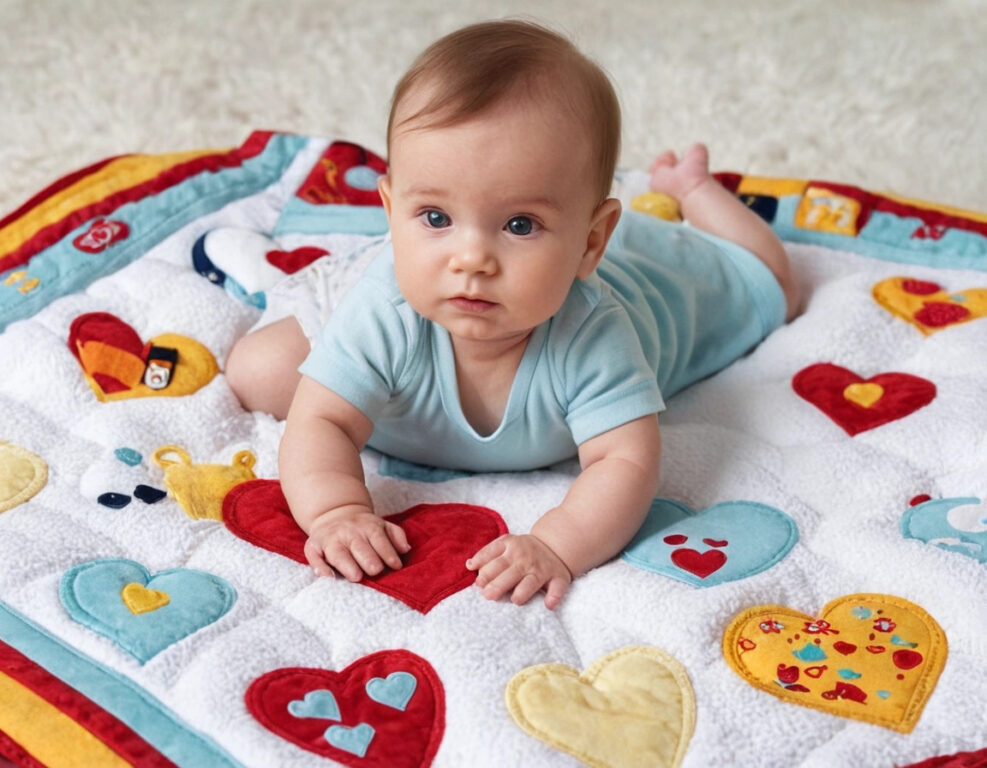
A baby play mat is not just a cute rug you throw on the floor. It’s a padded, often textured surface designed specifically so your baby can spend time on their back, tummy, or eventually crawling around without hurting themselves. That’s the plain definition, but it barely scratches the surface of why these things matter so much in the first year.
Most parents buy one because someone on a forum said it was essential. The real reason is that a baby play mat becomes a dedicated zone where your kid can move freely, explore textures, and build strength without you worrying about hard floors, sharp corners, or random pet hair.
Why a Baby Play Mat Is More Than a Decor Accessory
Let’s cut the fluff. A play mat is basically a mini gym for a human who can’t walk yet. From day one, babies need a safe, flat, slightly cushioned surface to practice lifting their head, rolling, and eventually pushing up onto their hands and knees.
Without a mat, most parents end up using a blanket on the floor. The problem? Blankets bunch up, slide around, and offer zero cushioning when your baby face-plants during tummy time. A proper baby play mat stays put, absorbs small falls, and gives your baby a consistent surface to learn on.
There’s also the sensory angle. Many mats come with crinkly sections, soft tags, mirrors, or high-contrast patterns. These aren’t random decorations. They’re tools to trigger your baby’s visual and tactile curiosity, which directly feeds into motor development.
What to Look For in a Baby Play Mat (Without Getting Scammed)
Walk into any baby store or scroll through Amazon and you’ll see hundreds of options. Most are overpriced junk with cute animals printed on them. Here’s what actually matters:
- Cushioning: It needs to be thick enough to protect a wobbly head but firm enough that your baby can push against it. Memory foam is nice, but a dense cotton or quilted pad works fine too.
- Non-slip base: If it slides on your hardwood or tile, it’s useless. Look for rubberized dots or a grippy underside.
- Washability: Babies spit up, poop explodes, and snacks get crushed. If you can’t toss it in the washing machine or wipe it down easily, you’ll regret it.
- Size: Too small and your baby outgrows it in two months. Aim for at least 40×40 inches so they can roll and crawl without hitting the edge.
- Portability: If you travel or move between rooms, a foldable mat with a carry handle saves your sanity.
Ignore the marketing buzzwords like «STEM-inspired» or «pediatrician-approved.» Focus on safety, materials, and whether it fits your living space.
Play Mat vs. Activity Gym: What’s the Real Difference?
People use these terms interchangeably, but they’re not the same. A baby play mat is the flat surface. An activity gym is that surface plus a frame with hanging toys, sometimes with lights and music.
Which one do you need? If your baby is under 4 months, an activity gym gives you more bang for your buck because the hanging toys encourage reaching and batting. But once they start rolling and sitting up, the gym frame becomes a cage they’ll try to escape. That’s when a simple, large play mat wins.
My take: buy a good mat first. Add a cheap activity gym later if your baby seems bored. Don’t spend $150 on a fancy gym that your kid will ignore in favor of the cardboard box it came in.
How a Baby Play Mat Boosts Motor Development (With Science, Not Hype)
Occupational therapists and pediatric physical therapists consistently recommend supervised tummy time on a firm, safe surface. A baby play mat makes that easier because it defines a clear, clean area.
When a baby spends time on their stomach on a mat, they’re forced to use their neck, shoulder, and core muscles to lift their head. That’s the foundation for rolling, sitting, and crawling. Without that practice, some babies develop flat spots on their heads or delayed motor milestones.
Textured mats add another layer. Babies learn about different surfaces through their palms and feet. A crinkly leaf, a smooth patch, a fuzzy square—these tiny details build neural connections related to touch and spatial awareness.
«Tummy time on a play mat isn’t optional. It’s the equivalent of a baby’s daily workout. Skip it, and you’re delaying their physical progress.»
Safety Checklist Before You Buy Any Baby Play Mat
Not all mats are created equal. Some contain PVC, phthalates, or flame retardants that you don’t want your baby breathing in or chewing on. Here’s a quick filter:
- Material: Look for cotton, organic cotton, or food-grade silicone. Avoid cheap PVC unless it’s explicitly labeled phthalate-free and BPA-free.
- Certifications: Oeko-Tex Standard 100 or Greenguard Gold means it’s been tested for harmful chemicals.
- No loose parts: If it has removable toys, make sure they’re sewn on securely. A choking hazard is a dealbreaker.
- Edge height: A raised edge can help contain small babies, but it can also be a tripping hazard for toddlers. Choose based on your baby’s age.
Also, never put a play mat inside a crib or bassinet. It’s a floor item, not a sleep surface. Suffocation risk is real if you ignore that.
Best Baby Play Mats in 2026: What Actually Holds Up
I’ve tested and read through hundreds of parent reviews. These three consistently come out on top for different reasons:
- Fisher-Price Deluxe Kick & Play Piano Gym: Still a classic. The piano keys are removable, and the mat is machine washable. Great for babies 0-6 months.
- Skip Hop Silver Lining Cloud Activity Gym: Plush, easy to wipe clean, and the hanging toys are actually interesting. A bit pricey but lasts through the crawling stage.
- Babycare Foldable Play Mat: If you want a simple, large, non-toxic mat without the gym frame, this one folds flat and fits in a closet. Perfect for small apartments.
Don’t overthink it. Any of these will do the job. The best baby play mat is the one you’ll actually use every day, not the one with the most five-star reviews.
How to Use a Baby Play Mat Without Losing Your Mind
You don’t need a schedule. Just put your baby on the mat a few times a day, starting with 2-3 minutes of tummy time and building up. If they scream, flip them over and try again later. Consistency beats duration.
Rotate toys every few days. Babies get bored fast. A mirror, a soft rattle, a crinkly book—swap them out to keep the mat feeling new.
And please, don’t leave your baby alone on the mat. It’s not a babysitter. Use it as a shared space where you sit on the floor and interact. That’s where the real development happens—not from the mat itself, but from you being there.
A baby play mat is a simple tool. It won’t raise your kid for you. But it makes the daily grind of tummy time, rolling practice, and sensory play a lot easier and safer. Buy one that fits your budget, clean it regularly, and get on the floor with your baby. That’s the whole game.