

Post actualizado el día octubre 26, 2026 by DeiviSanzPlay
Let’s cut the romantic crap for a second. Bees aren’t just cute little buzzing bugs that make honey for your toast. They are the backbone of terrestrial life as we know it, and if you’ve ever bitten into an apple, a almond, or a tomato, you’ve already benefited from their work. Bees are the most important pollinators for plants and flowers, period. No other group of insects comes close in sheer impact.
I’m not going to bore you with a textbook definition. The reality is simpler and more brutal: without bees, global agriculture would collapse in ways that go far beyond a shortage of honey. We’re talking about a food crisis that would hit every supermarket aisle simultaneously.
Why Bees Beat Every Other Pollinator (Yes, Even Butterflies)
Butterflies are pretty. Hummingbirds are flashy. Bats do their night shift. But none of them match the efficiency of bees when it comes to bee pollination of plants and flowers. Here’s the thing most people miss: bees are intentional. They don’t just stumble onto a flower looking for a quick sip of nectar. They visit flowers of the same species over and over again during a single foraging trip. That consistency is what makes pollination actually work.
A butterfly might flit from a rose to a daisy to a random weed, mixing pollen like a careless bartender. A honeybee sticks to one type of flower per trip. That fidelity is gold for plants that need their own pollen delivered to their own kind.
And then there’s the volume. A single honeybee colony can contain 50,000 workers. Each one makes dozens of trips per day. Multiply that by millions of colonies worldwide and you start to understand the scale. No other pollinator operates at that industrial level.
Honeybees vs. Native Bees: The Real MVP Debate
Here’s where I’m going to ruffle some feathers. Everyone talks about honeybees like they’re the only bees that matter. That’s a lazy take. Honeybees are fantastic generalists, sure. They pollinate apples, almonds, tomatoes, cucumbers, and a long list of crops. But native bees, the solitary ones, the bumblebees, the mason bees, the sweat bees, are often two to three times more effective at pollinating certain plants.
Why? Because they evolved alongside those plants. A squash bee doesn’t need to be taught how to pollinate a squash flower. It’s been doing it for thousands of years. Honeybees, on the other hand, are livestock. They’re managed, moved around, and sometimes they’re not even the best tool for the job.
Research from the USDA and multiple university studies shows that native bees can fully pollinate many crops even when honeybees are absent. In some cases, wild bee populations are the only reason certain farms remain productive. So when we talk about protecting pollinating bees, we need to stop treating honeybees as the only priority.
The Pollination Process: What Actually Happens Inside That Flower
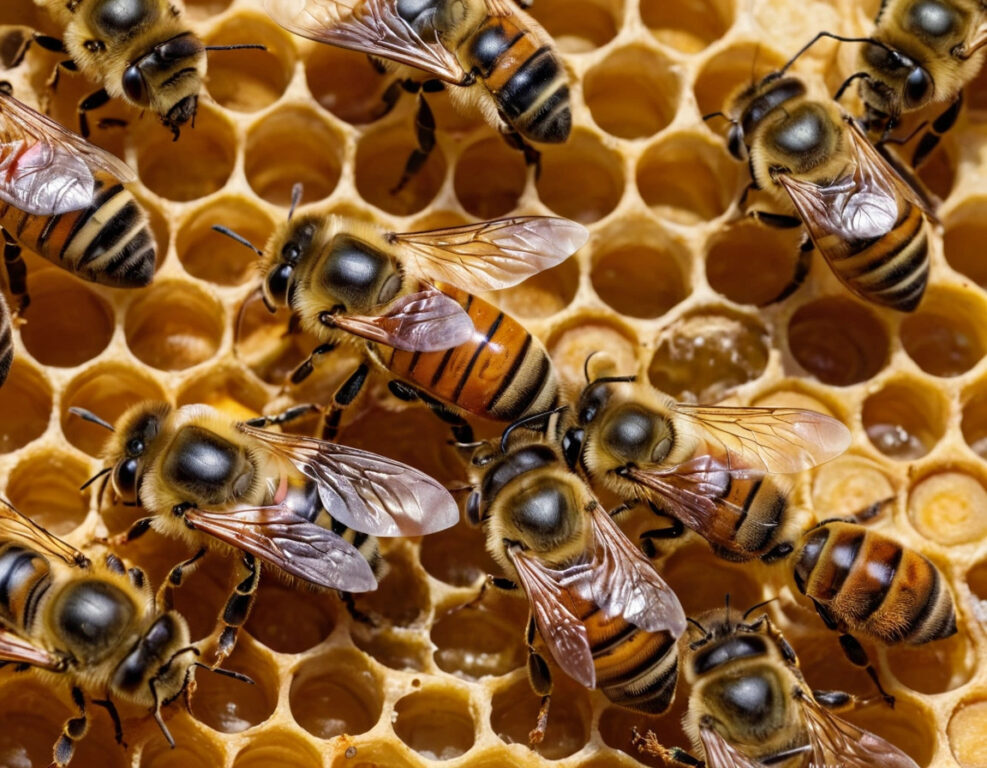
When a bee lands on a flower, it’s not just looking for a snack. It’s collecting pollen to feed its larvae. The pollen sticks to its fuzzy body, especially the branched hairs that honeybees and bumblebees have evolved for exactly this purpose. When the bee moves to the next flower of the same species, some of that pollen rubs off onto the stigma.
That’s fertilization. That’s seed production. That’s the fruit you eat.
Without this mechanical transfer, most flowering plants would be stuck. Wind pollination works for grasses and some trees, but it’s wasteful and unreliable. Bees do it with precision. A single visit can deposit hundreds of pollen grains exactly where they need to go.
This is why bee pollination for flowers isn’t just a nice-to-have. It’s the difference between a plant reproducing and a plant going extinct.
What Happens If Bees Disappear? A Scenario That Should Scare You
Let’s play this out. No bees. Not a single one. Within a year, you’d see almond orchards in California produce almost nothing. Apples, cherries, blueberries, avocados, cucumbers, pumpkins, and melons would all take massive hits. Coffee? Gone. Chocolate? Forget it. Cocoa depends on tiny midges, but many of its companion crops rely on bees.
The impact of the disappearance of bees on plants and flowers wouldn’t stop at human food. Wild plant communities would unravel. Animals that depend on those plants for shelter and food would decline. Birds that eat those animals would follow. It’s a domino effect that ecologists have been warning about for decades.
Some estimates suggest that 75% of leading global food crops depend to some degree on animal pollination. Bees do the heavy lifting. If they vanish, we don’t just lose honey. We lose the foundation of our food system.
How to Attract More Bees to Your Garden (Without Being Weird About It)
You don’t need to become a beekeeper to help. In fact, installing a hive in your backyard is often a bad idea if you’re not trained. What you can do is make your garden irresistible to wild bees.
- Plant native flowers: Lavender, salvia, coneflower, and borage are bee magnets. Native plants are best because local bees evolved with them.
- Skip the pesticides: Neonicotinoids and other common insecticides are neurotoxins for bees. There’s no gentle way to say it. They kill.
- Provide water: A shallow dish with pebbles gives bees a safe place to drink without drowning.
- Leave some ground bare: Many native bees nest in soil, not hives. A patch of undisturbed dirt is a nursery.
- Plant in clusters: A single flower is a snack. A cluster is a meal. Bees prefer efficiency.
These strategies for how to attract more bees to improve pollination in your garden are backed by entomologists and work in urban, suburban, and rural settings. You don’t need a farm. A balcony with the right plants can make a difference.
The Real Threat: Not Just Colony Collapse, But Chronic Decline
Colony Collapse Disorder made headlines years ago, but the bigger story is the slow, grinding decline of bee populations worldwide. Habitat loss, monoculture farming, climate change, and disease are all chipping away at pollinator numbers. It’s not one dramatic event. It’s a thousand small cuts.
And here’s the uncomfortable truth: we can’t just tech our way out of this. Robotic pollinators exist in labs, but they’re nowhere near scalable. Hand pollination is already happening in some parts of China where wild bees have been wiped out. It’s expensive, labor-intensive, and a sign of failure, not innovation.
Protecting bees means protecting habitats. It means changing how we farm. It means caring about something that doesn’t directly benefit us in the short term. That’s a hard sell in a world obsessed with quarterly profits, but it’s the only path that doesn’t end with empty plates.
The Bottom Line: Bees Are Not Optional
You can call them heroes, guardians, or little workers. The label doesn’t matter. What matters is that bees are the most important pollinators for plants and flowers, and their decline is a direct threat to our own survival. Not in some abstract, future-tense way. Right now.
So the next time you see a bee buzzing around your garden, don’t swat it. Don’t run. Just watch it for a second. That tiny insect is doing a job that no human, no robot, and no other animal can replicate at scale. It’s not being dramatic to say we need them more than they need us. That’s just the truth.


