Post actualizado el día octubre 17, 2026 by DeiviSanzPlay
So you’ve decided to grab a padel racket and give it a go. Good call. Padel is the fastest-growing racket sport on the planet right now, and it’s not hard to see why: it’s social, addictive, and you can get decent fast if someone tells you what actually matters. That’s exactly what I’m going to do here, without the fluffy filler you’ll find on most generic blogs.
These padel tips for beginners come from the stuff that genuinely moves the needle in your first few months: gear, positioning, wall play, and the mental game nobody talks about. Read it once, then take it to the court.
1. Pick a beginner padel racket that doesn’t sabotage you
Your first racket is not a status symbol. It’s a tool. The mistake almost every new player makes is buying a diamond-shaped, heavy carbon racket because it looks pro. That’s like learning to drive in a Formula 1 car.
For a beginner padel racket, look for three things: round shape (bigger sweet spot, more control), weight between 350 and 365 grams, and a fiberglass or soft EVA foam build. Carbon fiber is great, but it demands clean technique you don’t have yet. Fiberglass forgives your mishits.
Budget-wise, you can find solid beginner rackets between €60 and €120. Don’t spend more until you know your playing style. If you can, borrow a couple of different rackets from friends before buying.
2. Learn these padel rules before your first match
Nobody expects you to know the rulebook by heart, but walking onto a court clueless makes you that partner. Here’s the bare minimum:
- Serve: underhand only, ball must bounce behind the service line and land diagonally in the opponent’s box. You get two attempts.
- Scoring: same as tennis — 15, 30, 40, game. Sets to 6 games, tiebreak at 6-6.
- Walls: after the ball bounces on your side, it can hit the walls and you can still return it. Off the wall directly (before bouncing) is a fault.
- Volleys: you can volley, but you can’t smash the ball into your own glass and out.
That’s 90% of what you need to not look lost. The rest comes with playing.
3. Your position on the court decides half the points
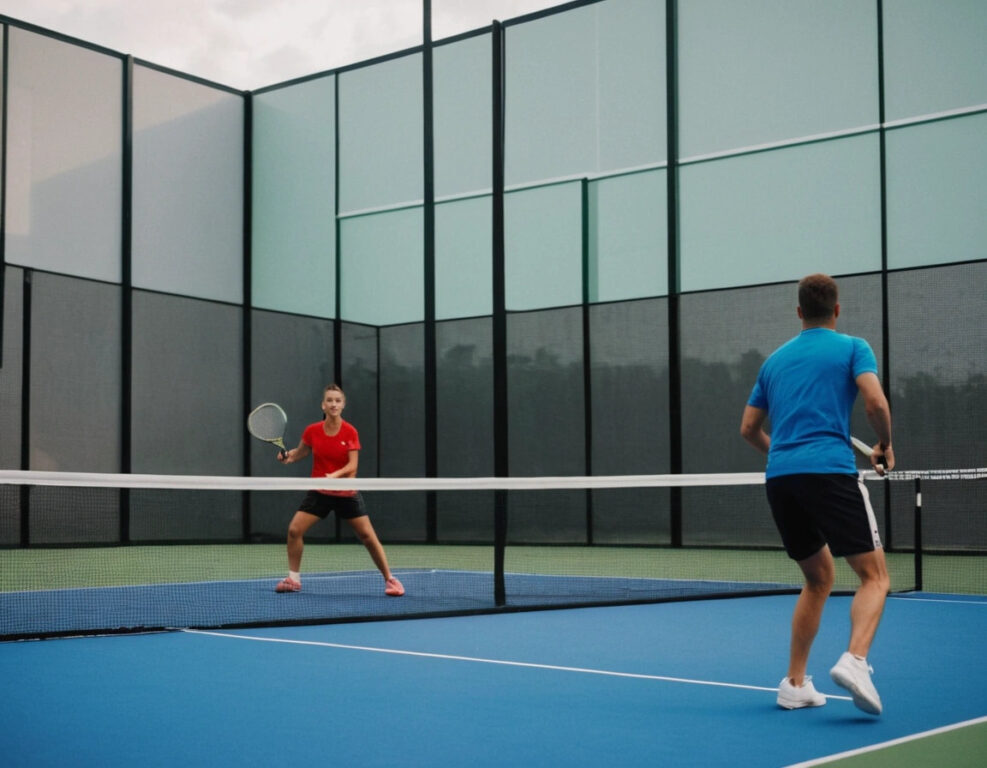
Beginners lose more points by standing in the wrong place than by hitting bad shots. Padel is a game of net dominance. If you and your partner aren’t at the net, you’re defending, and defending in padel is brutal.
The basic setup: both players roughly two meters from the net, shoulder to shoulder, moving as a unit. When the ball goes to your partner’s side, you shift toward the center. When it goes to your side, you cover your half and your partner covers the middle.
Footwork matters here. Stay on your toes, knees slightly bent, racket up. The moment you stand flat-footed, you’ve already lost the point.
4. Master the forehand and backhand before anything fancy
Forget bandejas, viboras, or top-spin smashes for now. You need two shots: a reliable forehand and a reliable backhand.
Forehand: continental grip (like shaking hands with the racket), short backswing, hit the ball in front of your body with the center of the racket. Don’t try to kill it — placement beats power every time.
Backhand: same grip, turn your shoulders early, keep the wrist firm. Most beginners slice it too much. Hit through the ball, not across it.
Drill these two shots for 20 minutes before every match for a month and you’ll jump two levels. I’m not exaggerating.
5. Use the walls — they’re not your enemy
This is the single biggest difference between padel and tennis, and beginners either ignore the walls or panic when the ball hits them. The walls are a weapon.
When the ball goes behind you, don’t turn and chase it. Back up, let it hit the back glass, read the rebound, and play it calmly. The side walls let you open up angles your opponent can’t cover. The back wall buys you time to reposition.
Defensive lobs off the back wall are one of the most underrated shots in beginner padel. Hit a high, deep lob, retreat to the net, and let your opponents deal with the glass.
6. Talk to your partner or lose together
Padel is a doubles sport, and the team that communicates wins. It’s that simple. If you and your partner aren’t calling «mine» or «yours» on every ball down the middle, you’ll clash rackets and lose silly points.
Beyond the basics, agree on a simple strategy: who takes the lobs, who covers the middle, when to switch sides. One short conversation before the match saves you ten points.
7. Your serve is a weapon, not a formality
The padel serve is underhand and low-powered compared to tennis, so beginners treat it like a throwaway. Wrong. A good serve sets up the entire point.
Two things to work on: depth and variety. Aim for the back corner of the service box, close to the glass. Mix in a short serve to the side wall every few points. If your opponent is standing deep, go short. If they’re crowding the net, go deep and low.
You don’t need power. You need placement and a bit of nerve.
8. Don’t skip the warm-up (your body will thank you)
Padel involves sudden lateral movements, twists, and stops. Pulled hamstrings and rolled ankles are the classic beginner injuries. Five minutes of dynamic stretching and a few minutes of gentle rallying before you go full intensity will save you weeks on the sidelines.
Also, wear proper court shoes. Running shoes don’t grip the padel surface properly and roll your ankle on sharp turns.
9. Mindset: lose the ego, keep the patience
Here’s the honest truth: you’re going to lose a lot in your first months. That’s normal. The players who improve fastest aren’t the most athletic — they’re the ones who stay calm, learn from each mistake, and don’t try to win every point with a hero shot.
Play the percentage shot. Aim for depth. Keep the ball in play. In beginner padel, the team that makes fewer unforced errors wins, almost without exception.
And enjoy it. Padel is genuinely fun, and if you’re not having fun, you’re doing it wrong. Get the basics right, play consistently, and within a few months you’ll be the one giving advice to the new guy on court.