Post actualizado el día octubre 26, 2026 by DeiviSanzPlay
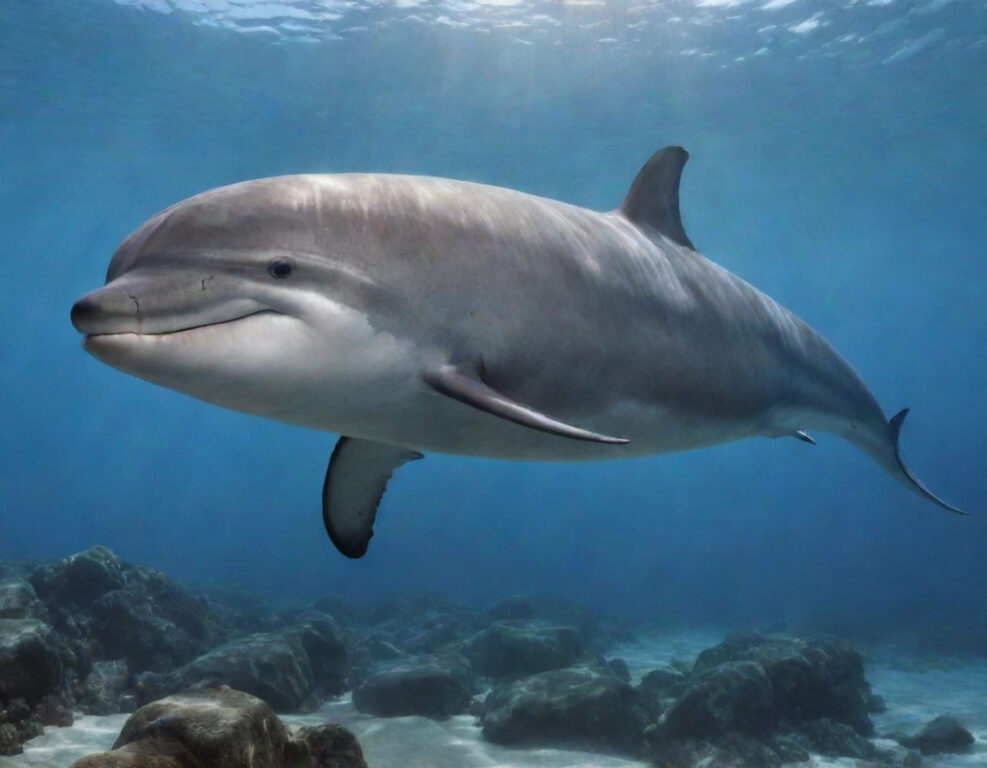
The bottlenose dolphin is probably the first image that pops into your head when you hear the word «dolphin». And there’s a reason for that: this cetacean has managed to sneak into our collective imagination like few others. But beyond the friendly image of Flipper, there’s an animal with unsuspected layers. Let’s break down what really makes it tick, without the sugarcoating.
Habitat: Where the bottlenose dolphin really rules
The bottlenose dolphin (Tursiops truncatus) is a master of adaptability. You’ll find it in temperate and tropical waters around the globe, from the open ocean to coastal lagoons and even river mouths. It’s not picky.
This flexibility is exactly why the bottlenose dolphin thrives in places as different as the Gulf of Mexico, the Mediterranean Sea, and the coasts of Australia. It tolerates a wide range of temperatures and salinities, something many other cetaceans can’t handle.
And that’s precisely the key to its success: while other species cling to specific niches, the bottlenose dolphin colonizes almost any marine environment where there’s food and a bit of peace. Of course, that also puts it right in the path of human activity.
Pod life: a society more complex than you think
Bottlenose dolphins don’t roll solo. They live in groups called pods, whose size swings depending on the environment and how much food is around. In coastal areas, pods tend to be smaller and more stable; in open ocean, they can form massive temporary aggregations.
The social structure of the bottlenose dolphin is surprisingly sophisticated. They form alliances, cooperate to hunt, and even care for injured or sick members. It’s not just herd behavior; there are hierarchies, preferences, and what looks a lot like politics.
Play is a big deal in these pods. You’ll see them leaping, riding bow waves, and interacting with other marine animals just for the hell of it. That playful side is one of the reasons the bottlenose dolphin has earned so much popular admiration, but let’s not confuse charm with simplicity.
What does the bottlenose dolphin eat?
It’s a carnivorous predator. Its diet is based mainly on fish and squid, although it doesn’t turn its nose up at crustaceans or small rays if the opportunity arises. The bottlenose dolphin hunts with a combination of agility, echolocation, and teamwork.
Cooperative hunting is one of its trademarks. In some regions, pods coordinate to herd schools of fish against the coast or into tight balls, making them easy pickings. There are even populations that use sponges as tools to protect their snouts while foraging on the seabed.
That kind of behavior isn’t instinct alone. It’s learned and passed down, which says a lot about how the bottlenose dolphin processes its environment.
Bottle-nosed dolphin vs. common dolphin: not the same beast
There’s a common mix-up between the bottlenose dolphin and the common dolphin. The first thing is size: the bottlenose dolphin is more robust, with a stockier body and a shorter, clearly defined snout that looks like a bottle. Hence the name «bottle-nosed dolphin».
The common dolphin, by contrast, is slimmer and sports that characteristic hourglass pattern on its flanks. Its social behavior is also less complex and its interactions with humans are far less frequent.
Let’s be clear: the bottlenose dolphin is the species that adapts best to captivity and the one most used in shows and therapy programs. That’s not a coincidence; it’s a combination of intelligence, sociability, and physical toughness.
Intelligence: the real ace up its sleeve
We’re talking about one of the most intelligent animals on the planet. The bottlenose dolphin has exceptional learning capacity, long-term memory, and the ability to recognize itself in a mirror. That last one is a big deal: very few species pass that test.
Researchers have documented that they can solve complex problems, understand human pointing gestures, and even learn artificial sign language. Their communication system includes signature whistles that work like names, and they use them to call each other.
This level of intelligence has led to dolphins being trained for therapy, rescue, and even military tasks. Whether that’s ethical is another debate, but it’s undeniable proof of their cognitive firepower.
Ecological role: more than just a pretty face
The bottlenose dolphin is an apex predator in many coastal ecosystems. That means it keeps fish and squid populations in check, preventing imbalances that would ripple through the entire food web.
Its presence is also a bioindicator. If bottlenose dolphin populations are healthy, it’s a sign the marine environment is in decent shape. They need biodiverse, low-contamination waters to thrive, so when they disappear, something’s gone wrong.
Pollution, overfishing, and coastal development are the real threats. The bottlenose dolphin is adaptable, but it’s not invincible. Protecting its habitat isn’t just about saving a charismatic animal; it’s about keeping the whole marine system stable.
Curiosities that not everyone knows
- Bottlenose dolphins can live over 40 years in the wild, and females tend to live longer than males.
- They sleep with one brain hemisphere at a time, keeping the other awake to breathe and watch for danger.
- Some populations have learned to follow fishing boats to snatch easy meals, a behavior passed down through generations.
- They can jump up to 5 meters out of the water, though they don’t always do it for fun; sometimes it’s about communication or dislodging parasites.
So next time you spot a bottlenose dolphin breaking the surface, don’t just think «cute». Think about the complex social life, the hunting strategies, and the ecological weight it carries. It’s not just a pretty face of the ocean; it’s a key piece of the puzzle.