

Post actualizado el día octubre 27, 2026 by DeiviSanzPlay
If you’re hunting for a Cecotec ForceClima 9350 portable air conditioner, you’ve probably noticed the same thing I did: half the internet swears by it, the other half calls it overpriced. I spent a few weeks digging through forums, Amazon reviews and spec sheets to figure out who’s actually right. Spoiler: neither camp is completely honest.
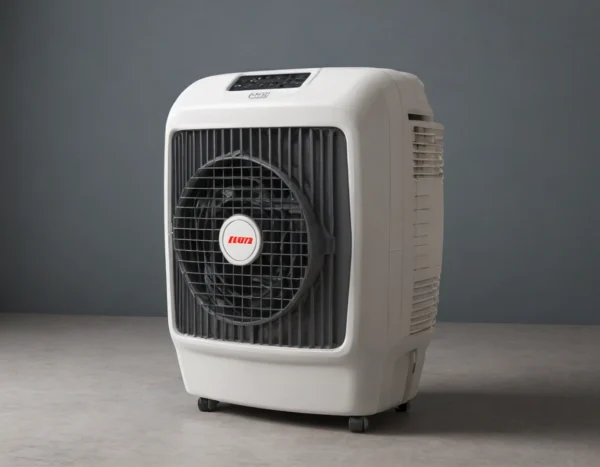
The ForceClima 9350 is a 3-in-1 unit (cool, fan, dehumidify) with a 9,000 BTU cooling capacity, a remote control and a heat pump function depending on the version you grab. That last part matters, because Cecotec sells several SKUs that look almost identical but behave differently.
What the 9,000 BTU number really means for your room
Here’s the thing nobody tells you in the product listing: 9,000 BTU is enough for roughly 15–20 m², and only if the room is well insulated and the hose is installed properly. Cecotec markets it as suitable for up to 25 m², and that’s optimistic at best.
If your bedroom faces south and gets hammered by the sun from noon to six, expect the ForceClima 9350 portable air conditioner to work hard and still leave you at 26°C. It’s not a scam, it’s physics. Portable units always underperform compared to split systems because the compressor sits inside the same room it’s trying to cool.
My honest take: this is a bedroom or small office unit. Nothing more.
Noise levels: is the «Soundless» label legit?
Cecotec uses «Soundless» across several models and people assume it means whisper-quiet. Real-world measurements put the 9350 around 50–53 dB in normal mode and closer to 55 dB at full blast. That’s roughly the volume of a normal conversation.
For sleeping, it’s tolerable but not invisible. Several users on Reddit and Amazon Spain mention a low-frequency hum that becomes noticeable after 30 minutes. If you’re a light sleeper, this could be a dealbreaker.
Compare it to the ForceClima 7100 Soundless, which is quieter but weaker, and you start to see the trade-off Cecotec made: more power, slightly more noise.
The remote control: convenience or gimmick?
Models with a remote (the 9350, the 9100 Soundless and the 7150 Style) let you adjust temperature, fan speed and timer without leaving the sofa. Sounds minor until you’ve had to get up three times in one night to fiddle with the buttons.
The timer function is the real winner here. You can program it to shut off after two hours, which is when most people fall asleep anyway. That saves a decent chunk of electricity over a summer.
Where the remote falls short: no backlight on some versions, and the buttons feel cheap. It works, it just doesn’t feel premium.
Heat pump mode: useful or marketing filler?
The Cecotec ForceClima 9450 and certain 9350 variants include a heat pump. This is genuinely useful for mild winters, especially in Mediterranean climates where temperatures rarely drop below 5°C.
A heat pump consumes less energy than a resistive electric heater for the same output. If you need to heat a 15 m² room in Valencia or Seville during December, it’ll do the job and cut your bill compared to a portable radiator.
But in Burgos, Teruel or anywhere with proper winters, forget it. Below freezing the unit loses efficiency fast and you’ll be reaching for the gas boiler anyway.
No-hose Cecotec units: the myth that won’t die
Every summer someone asks about the Cecotec portable air conditioner without hose. Let me be blunt: those are evaporative coolers, not air conditioners. They blow air over wet pads and rely on dry heat to feel cool.
In Madrid in July with 15% humidity, they work surprisingly well. In Bilbao or any coastal city with 70% humidity, they’re basically a fan with extra steps. They don’t expel hot air because they don’t produce cold air in the first place. Physics again.
If you want real cooling, you need a hose. There’s no way around it.
Installation: the detail that ruins most reviews
Reading user complaints, a pattern jumps out. People who rate the 9350 one star usually installed the exhaust hose badly. If the hose is kinked, too long, or the window kit isn’t sealed, the unit sucks its own hot air back in and cooling drops by half.
Fix: keep the hose as short and straight as possible, seal the window opening with the included kit or cardboard and tape, and place the unit away from direct sunlight. Do this and performance improves noticeably.
Skip it and you’ll be the person writing an angry review about how Cecotec is trash.
Price and value in 2026
Cecotec’s main selling point has always been price. The 9350 typically sits between 280 € and 350 € depending on the retailer and season. During Amazon Prime Day or Black Friday it dips below 250 €, and at that price it’s a solid buy.
Compare that to a Daikin or Mitsubishi portable unit at 500 €+, and the value proposition becomes clear. You’re not buying premium build quality or silent operation, you’re buying acceptable performance for a third of the price.
What you sacrifice: plasticky finish, a remote that feels disposable, and shorter lifespan. What you keep: cold air, a heat pump option and a warranty that, in Spain, Cecotec handles reasonably well.
Who should actually buy this
- Renters who can’t install a split system
- People cooling a bedroom or small office (max 20 m²)
- Anyone in a mild climate who wants heat pump heating in winter
- Budget-conscious buyers willing to accept trade-offs
Who shouldn’t:
- Anyone with a 30 m²+ living room to cool
- Light sleepers who need absolute silence
- People in very humid climates hoping for a no-hose solution
- Anyone expecting a split-system experience in a portable box
The verdict I’d defend in an argument
The Cecotec ForceClima 9350 is a decent portable air conditioner that gets unfairly praised and unfairly trashed. It does exactly what a 9,000 BTU portable unit can do, and nothing more. If you install it correctly, use it in the right room size and buy it on sale, you’ll be happy.
If you expect it to replace central air, you’ll be disappointed. That’s not Cecotec’s fault, that’s a mismatch between marketing and reality that affects every brand in this segment.
My advice: read the one-star reviews carefully, filter out the ones about bad installation, and then decide. Most of what’s left is noise complaints and plastic-feel complaints. If you can live with those, this unit earns its price.
