

Post actualizado el día octubre 17, 2026 by DeiviSanzPlay
If you’ve ever driven past a commercial farm and seen thousands of identical brown birds packed into sheds, you’ve already met the modern laying hen. But what most people don’t know is that these animals are the result of decades of genetic selection, and their characteristics as laying hens go way beyond just producing eggs. Let me break down what’s really going on with these birds.
What exactly makes a hen a «laying hen»?
A laying hen is any female chicken bred specifically for egg output, not meat. That distinction matters. While broilers are selected for rapid muscle growth and slaughtered at around 6 weeks, laying hens are built for a long, sustained reproductive cycle that can stretch up to 90 weeks of commercial production.
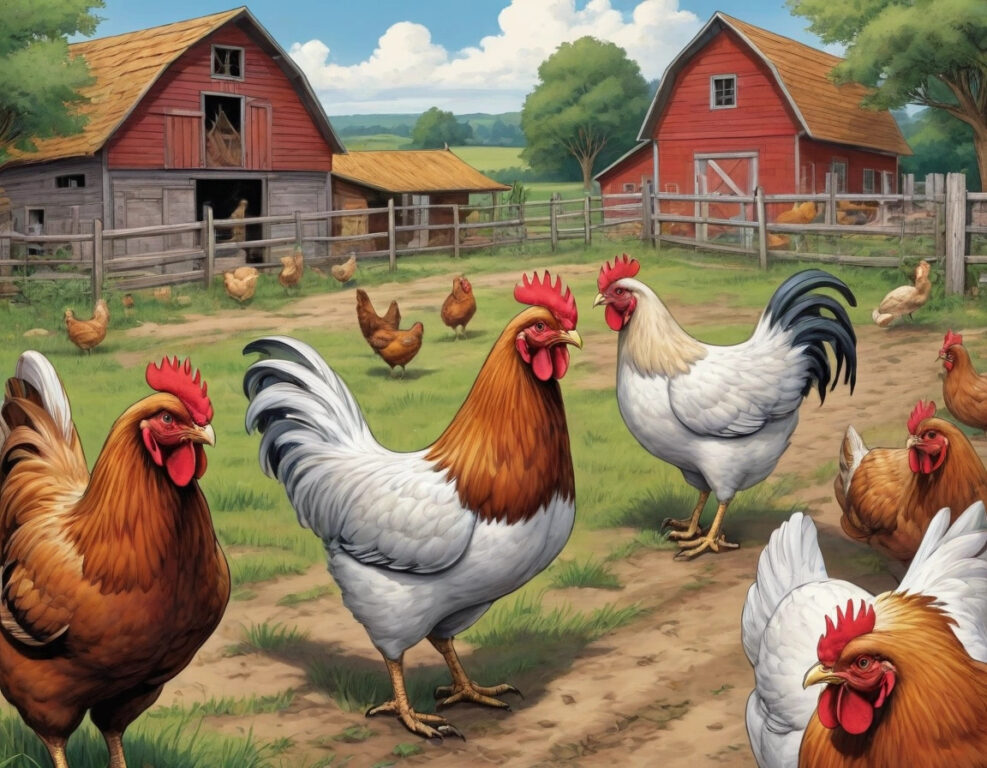
The main breeds used worldwide are the White Leghorn (white eggs, lean body, nervous temperament), the Rhode Island Red and New Hampshire (brown eggs, hardier), and hybrids like the ISA Brown or Lohmann Brown. These hybrids are the real stars: they’re crossbreeds designed to hit peak lay rates of 90-95% during their first year.
Here’s the number that surprises most people: a commercial hybrid laying hen can produce between 280 and 320 eggs per year. That’s roughly one egg every 25 hours during peak cycle. Compare that to a wild jungle fowl, which lays maybe 10-15 eggs a year. That gap is pure human engineering.
Biological traits you can’t ignore
The most distinctive characteristics of laying hens revolve around their reproductive anatomy. Unlike mammals, hens only have one functional ovary (the left one) and a single oviduct. The right ovary stays dormant. That oviduct is basically a 60-70 cm assembly line where the egg white, shell membranes, and calcium carbonate shell get added in sequence over about 24-26 hours.
Another thing: hens don’t need a rooster to lay eggs. They lay regardless. A rooster is only required if you want fertilized eggs that hatch into chicks. This trips up a lot of backyard beginners who think their hens won’t produce without a male around.
Feathers, comb size, and skin color also vary by breed. Leghorns have large floppy combs and white earlobes (which correlate with white eggs). Rhode Island Reds have smaller combs and red earlobes, which usually means brown eggs. It’s not a perfect rule, but it holds in most cases.
Behavior: sharper than most people assume
Laying hens are not the mindless birds people joke about. Research from animal cognition labs (including work published through studies on chicken intelligence) has shown they can recognize over 100 individual faces, both of other chickens and of humans. They also have a pecking order that’s real and enforced, and they communicate through at least 24 distinct vocalizations.
They feel pain, fear, and frustration. They also show signs of boredom when confined without enrichment. That’s why modern welfare standards push for things like perches, dust bathing areas, and nest boxes. A stressed hen simply doesn’t lay well. Cortisol suppresses the ovulation cycle, and you’ll see it in the numbers.
Practical rule: a hen that’s panting, pacing, or plucking feathers is not just «having a bad day.» She’s telling you the environment is wrong.
What they actually need to perform
The characteristics of a high-producing laying hen only show up when the inputs are right. Miss one and production drops fast.
- Light: 14-16 hours of continuous light per day. Below 12 hours, most hens stop laying entirely. Artificial lighting is standard in commercial barns for that reason.
- Temperature: ideal range is 18-24°C (65-75°F). Above 30°C, egg production falls and shell quality worsens.
- Feed: around 110-120 g per hen per day, with 16-18% crude protein and 3.5-4.5% calcium. Calcium is non-negotiable: a hen mobilizes calcium from her own bones to build shells, and without enough in the diet she’ll develop osteoporosis and weak shells.
- Water: hens drink up to 250 ml per day. Cutting water for even a few hours can halt laying for days.
- Space: minimum 750 cm² per hen in cage-free systems, more if you want real welfare.
Get those dialed in and a hybrid hen will reward you with a consistent supply. Get them wrong and you’ll be buying eggs at the supermarket while your coop sits silent.
The productivity curve nobody warns you about
Laying hens don’t produce at the same rate forever. There’s a clear arc.
From around 18-20 weeks (point of lay) to 72-78 weeks, a commercial hen is in her prime. Peak production hits around 28-32 weeks. After that, it slowly declines. By year two, most hybrids drop to 60-70% of peak. By year three, they’re often down to 40-50%.
This is why commercial operations cycle hens out at around 72-80 weeks. The feed cost per egg stops making sense. Backyard keepers usually keep them longer because they’re pets as much as producers, but the economics shift. A hen that laid 300 eggs in year one might lay 180 in year two and 120 in year three.
Some heritage breeds buck this trend. Australorps, Plymouth Rocks, and Wyandottes lay fewer eggs at peak (200-250/year) but hold production longer and live 8-10 years. If you want longevity over raw output, hybrids aren’t the right call.
Health issues that show up in lay
High production isn’t free. Laying hens are prone to specific problems tied directly to their output.
Egg binding, prolapse, and peritonitis are all more common in high-yield hybrids. So is fatty liver hemorrhagic syndrome, which is linked to high-energy diets and sedentary confinement. Keel bone fractures affect up to 80% of commercial layers in some studies, mostly from collisions with perches or cage structures.
Molting is another key cycle. Once a year, usually in autumn, hens stop laying, lose feathers, and rebuild their reproductive tract. It lasts 8-12 weeks. Commercial farms sometimes force-molt with feed restriction to reset the cycle, a practice that’s banned in the EU and heavily criticized elsewhere. Backyard hens molt naturally, and their egg quality often improves afterward.
Are they worth keeping? My take
If you want maximum eggs with minimum fuss, a hybrid like the ISA Brown is unbeatable. You’ll get close to 300 eggs in the first cycle with decent feed and light management.
But if you care about the bird as an animal and not just a machine, hybrids are the wrong choice. They burn out fast, they’re prone to reproductive disease, and by year three many are physically wrecked. Heritage breeds lay less but live longer, forage better, and handle real free-range conditions without falling apart.
Either way, the characteristics of laying hens are a direct reflection of what we’ve bred them to be. They’re astonishing, and they’re also a reminder that extreme productivity always comes with a cost somewhere. Know which trade-off you’re choosing before you buy the chicks.


