Post actualizado el día octubre 24, 2026 by DeiviSanzPlay
Choosing the best crib mattress isn’t a whim of first-time parents. It’s a decision that directly affects the baby’s safety while sleeping. And I’ll tell you straight: there’s no room for improvising here or buying the first one you see at the supermarket.
Most parents focus on the crib, the clothes, or the stroller, and leave the mattress for last. Mistake. The crib mattress is where your child will spend between 12 and 16 hours a day during their first months. If you fail there, you fail at the most basic level.
Firmness: the factor nobody explains properly
A crib mattress must be firm. Very firm. That typical «not too hard, not too soft» doesn’t cut it. The American Academy of Pediatrics repeats it ad nauseam: a soft mattress increases the risk of suffocation and sudden infant death syndrome.
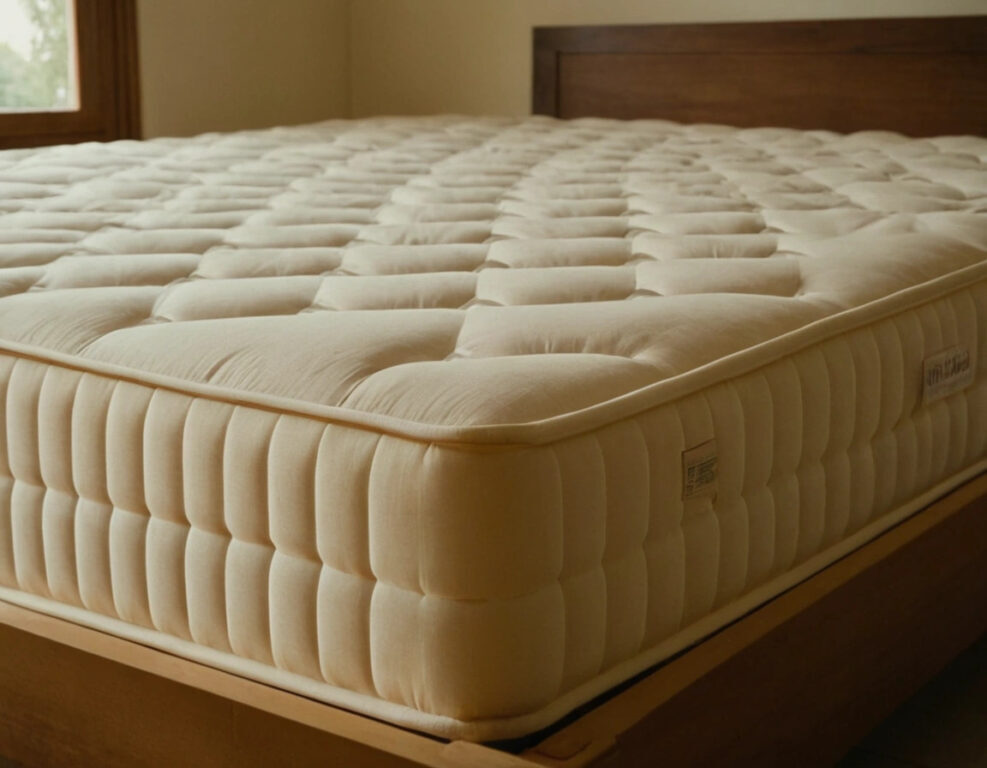
How do you know if it’s firm enough? Do the indentation test. Press the center of the mattress with your hand. If your hand leaves a visible mark that takes time to disappear, that mattress isn’t suitable for a baby. A firm crib mattress regains its shape instantly.
Watch out for high-density foam mattresses sold as «firm.» Some are so soft that the baby sinks a couple of centimeters. That’s not firm, that’s a trap. Real firmness is measured in density: look for foams of at least 35 kg/m³ or pocket springs with a firm foam layer on top.
Foam vs. springs: there’s no tie here
Foam and spring mattresses are the two options you’ll find on the market. Each has its audience, but they’re not the same.
High-density foam is lighter. That matters when you have to change sheets at 3 in the morning after a diaper leak. It also tends to be more affordable and doesn’t make noise when the baby moves.
Spring crib mattresses are sturdier and last longer. But be careful: springs can make noise when moving and some cheap models have a top padding that’s too soft. If you choose springs, make sure they’re pocket springs and that the top foam layer is firm.
My personal recommendation: for the first 2 years, high-density foam. It’s easier to clean, lighter, and usually meets firmness standards better. I’d leave springs for large bed mattresses, not cribs.
Ventilation and breathability: the detail that prevents mold and bad odors
A crib mattress that doesn’t breathe becomes a nest of moisture. The baby sweats, the diaper leaks, and that moisture stays inside. Result: mold, dust mites, and an odor you can’t get rid of even by washing the cover.
Look for mattresses with a perforated core or air channels. Open-cell foam ventilates better than compact foam. And if the mattress has a breathable cover that’s washable at 60 degrees, even better.
Ventilation isn’t an extra. It’s a necessity. A well-ventilated crib mattress keeps the baby cool, reduces the risk of overheating, and extends the product’s lifespan.
Exact measurements: the mistake almost everyone makes
The mattress has to fit like a glove. No gaps. No spaces. If you can fit two fingers between the mattress and the edge of the crib, that mattress isn’t safe.
The problem is that cribs don’t have a universal size. The most common measurements in Spain are 120×60 cm and 140×70 cm, but there are cribs of 115×55, 125×65, and a long etcetera. Measure your crib on the inside, with precision, before buying.
And don’t trust the nominal measurement. A crib that claims to be 120×60 may actually be 119.5×59.5. That half-centimeter difference can make the mattress loose. If in doubt, choose a slightly larger mattress and cut it yourself if it’s foam. Yes, you read that right: some manufacturers allow cutting the foam to fit. Find out beforehand.
Materials and certifications: what really matters
Not all crib mattresses are equal when it comes to materials. Some have anti-dust mite treatments, others are hypoallergenic, and a few are certified by organizations like OEKO-TEX Standard 100.
That certification means the mattress doesn’t contain substances harmful to health. For a baby, this isn’t a luxury. It’s a guarantee. Look for the OEKO-TEX seal or similar. If it doesn’t have it, be suspicious.
Also important: avoid mattresses with strong chemical treatments or strange odors when unpacking. A new crib mattress may smell slightly of foam, but if the smell is penetrating and doesn’t go away within 48 hours, return it.
How much should you spend on a crib mattress?
Here I’ll be direct: you don’t need to spend 200 euros, but don’t buy the 25-euro one from the bargain store either. A decent crib mattress is between 60 and 120 euros.
Below 50 euros, you’re buying low-density foam, without certifications, and with measurements that rarely match your crib. Above 150 euros, you’re paying for brand and marketing more than real quality.
The sweet spot is high-density foam mattresses, with a breathable and washable cover, OEKO-TEX certification, and exact measurements. That covers 100% of what your baby needs.
Maintenance: what nobody tells you about cleaning
The crib mattress is going to take a beating: drool, vomit, diaper leaks, sweat. If you don’t take care of it, in six months you’ll have a serious hygiene problem.
Always use a waterproof and breathable protective cover. Not those plastic ones that make noise and give off heat. There are breathable polyurethane ones that let air through but block liquids.
Wash the mattress cover at least every two weeks, and the protector every week. If there’s an accident, clean immediately with warm water and mild soap, and let it dry completely in the air before using it again. Never put a foam mattress in the washing machine: it deforms and loses firmness.
Mistakes I see every day in parenting forums
The first: buying the mattress before the crib. That way you make sure it doesn’t fit. Buy the crib first, measure, and then look for a mattress.
The second: reusing the older sibling’s mattress. If it’s more than 2 years old, is deformed, has lost firmness, or has absorbed moisture, don’t use it. A used crib mattress can be dangerous.
The third: trusting Amazon reviews without checking the measurements. Many positive reviews are from people whose crib happened to fit. Yours may not be the same.
Conclusion, no beating around the bush
The best crib mattress is the one that’s firm, breathable, the exact size of your crib, and certified. Neither the most expensive nor the cheapest. The one that meets those four requirements.
If you have to prioritize, prioritize firmness and measurements. Brand matters least. And if you’re torn between two models, choose the one with a washable cover and OEKO-TEX certification. Your baby will sleep safely, and so will you.