Post actualizado el día octubre 26, 2026 by DeiviSanzPlay
You’ve tried every position, stacked three regular pillows, and still end up staring at the ceiling at 3 a.m. If that sounds familiar, you’re not alone. The right pregnancy pillows aren’t a luxury item—they’re the difference between dragging yourself through the day and actually getting restorative sleep. I’m going to cut through the marketing noise and tell you what actually works, what doesn’t, and how to pick the one that fits your body, not some generic catalog description.
Why Your Regular Pillows Betray You After Week 20
Here’s the thing nobody tells you clearly: once your belly starts growing, your center of gravity shifts forward. Sleeping on your back becomes uncomfortable and, past the first trimester, it’s discouraged because the weight of the uterus can compress the vena cava, the big vein that returns blood to your heart. That can make you dizzy, short of breath, and can reduce blood flow to the placenta.
So you roll onto your side. Great. But now your hips are stacked unevenly, your top leg drops forward, and your lower back twists. That’s where the pain comes from. A maternity support pillow fixes the alignment problem by filling the gap between your knees, supporting your bump, and keeping your spine neutral. It’s not magic—it’s basic biomechanics.
U-Shaped vs C-Shaped vs Wedge: Pick Based on How You Sleep
Stop buying based on what’s trending on TikTok. Buy based on your sleep style. I’ll break it down without the fluff.
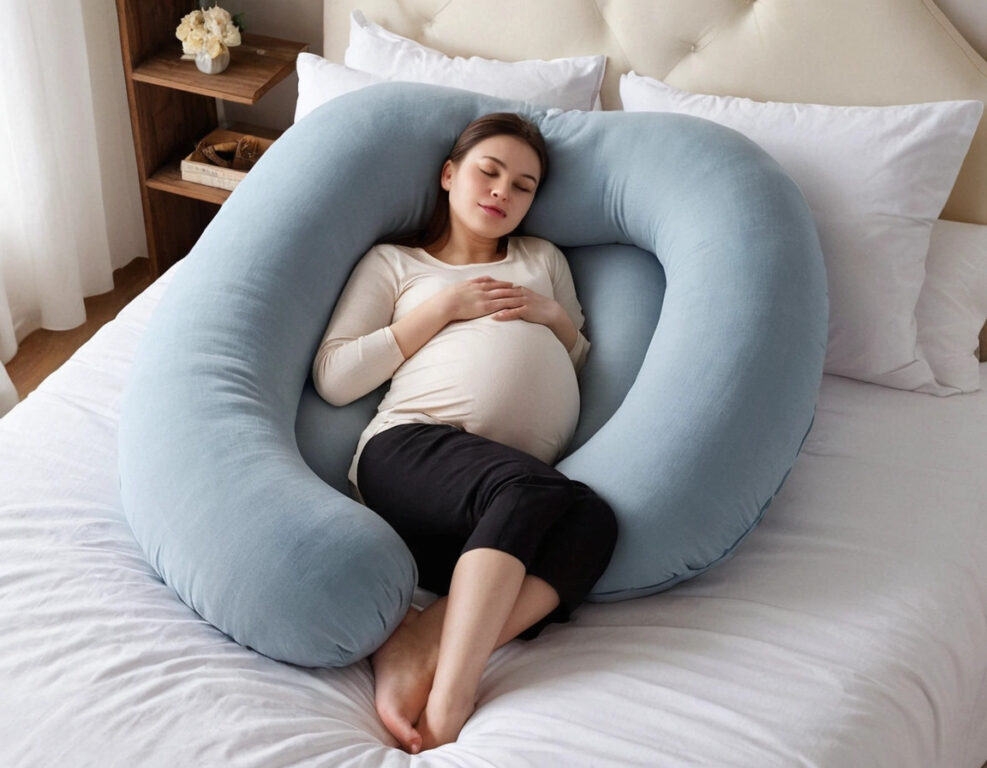
- U-shaped pillows: These wrap around your entire body and support back, belly, and legs at once. Best if you toss and turn and need something on both sides. Downside: they take up serious bed space and can get hot.
- C-shaped pillows: Open on one end, so you can still cuddle your partner or roll out easily. Great for side sleepers who mainly need belly and back support.
- Wedge pillows: Small, targeted, and perfect for heartburn or reflux, which hit hard in the third trimester. They elevate your torso without swallowing the whole bed.
- Full-body pregnancy pillows: Long, straight, and ideal if you mainly need knee and hip support. Cheaper and easier to store.
My honest take: if you have the space and budget, a U-shaped full body pillow for pregnancy covers almost every need. If your bed is small or you sleep hot, go with a C-shape plus a separate wedge for reflux. Two tools beat one oversized pillow that makes you sweat.
The Fill Material Matters More Than the Shape
This is where most buyers get burned. A perfect U-shape stuffed with cheap polyester will flatten in three weeks and leave you right back where you started. Look for these fills:
- Shredded memory foam: Moldable, holds shape, and you can add or remove fill to adjust firmness. My top pick for pregnancy pillow support.
- Microbeads: Lightweight and cool, but they shift around and can feel noisy.
- Solid memory foam: Very supportive but heavy and can sleep warm.
- Polyester fiber: Cheap, but expect to replace it. Fine if you’re on a tight budget and only need it for a few months.
Also check the cover. You want something machine-washable and breathable—bamboo or cotton blends work well. Night sweats during pregnancy are real, and a non-breathable cover turns your supportive pillow into a heat trap.
How to Actually Use It So It Works
Buying the pillow is step one. Using it wrong is why some women say it did nothing. Here’s the setup that works for most side sleepers:
- Lie on your left side. This position improves circulation to the placenta and helps with kidney drainage.
- Tuck the lower curve under your bump so it supports the belly from below.
- Place the upper part behind your back so you can’t roll onto it in your sleep.
- Put a section between your knees to keep hips level.
- If you have heartburn, add a wedge under your upper chest.
Give it a week. Your body needs to adjust to a new sleep posture, and the first two nights might feel awkward. If after a week you’re still hurting, the pillow is wrong—not you. Return it and try a different shape or fill.
What Doctors and Physios Actually Recommend
Ask any prenatal physiotherapist and they’ll tell you the same thing: side sleeping with proper support reduces lower back pain, pelvic girdle pain, and sciatica symptoms. A 2020 review published in Sleep Medicine Reviews found that sleep disturbances increase significantly as pregnancy progresses, and positional support is one of the few non-pharmacological interventions that consistently helps.
“The goal isn’t to sleep like a princess. The goal is to keep your spine neutral and your belly supported so your body can actually rest.”
That’s the whole point. A pillow to relieve pain during pregnancy isn’t about comfort fluff—it’s about preventing the chain reaction of bad alignment that leads to morning stiffness, headaches, and that worn-out feeling you can’t shake.
Budget vs Premium: Where to Spend Your Money
You don’t need to spend $150 on a pillow you’ll use for six months. But you also shouldn’t grab the $20 option and expect miracles. Here’s my breakdown:
- Under $40: Basic full-body pillows with polyester fill. Fine for late first trimester or if you just need light knee support.
- $40–$80: The sweet spot. Shredded memory foam C or U shapes with washable covers. This is where most women should shop.
- $80–$150: Premium foams, cooling covers, adjustable fill. Worth it if you have chronic back pain or sleep extremely hot.
One more tip: buy from a retailer with a generous return policy. Pregnancy bodies are unpredictable, and what works at 20 weeks might not work at 35. A 30-day return window is non-negotiable.
When a Pregnancy Pillow Isn’t Enough
Let’s be real. If you have severe pelvic girdle pain, restless legs, or sleep apnea symptoms, a pillow alone won’t fix it. Talk to your OB or a prenatal physiotherapist. Sometimes you need a support belt, stretches, or in serious cases, a referral to a sleep specialist. The pillow is a tool, not a cure-all.
But for the vast majority of pregnant women dealing with ordinary discomfort—hip pressure, belly weight, lower back ache—the right pregnancy pillow changes everything. You’ll wake up without that stiff, achy feeling. You’ll fall back asleep faster after bathroom trips. And honestly, you’ll feel more human.
So skip the generic advice. Figure out how you sleep, pick the shape and fill that matches, set it up correctly, and give it a fair shot. Your body is doing incredible work—it deserves a decent night’s rest while it does it.