

Post actualizado el día octubre 26, 2026 by DeiviSanzPlay
Most people think a wildcat is just a feral house cat that got tough. It’s not. A wildcat vs domestic cat comparison isn’t about attitude, it’s about genetics, survival instincts, and thousands of years of divergent evolution. If you’ve ever spotted a stocky, thick-tailed cat in the woods and wondered what you were looking at, this is the breakdown you need.
The wildcat (Felis silvestris) is a genuine wild species. The domestic cat (Felis catus) descends from one branch of it. They look similar on the surface, but their behavior, habitat, and biology are worlds apart. Confusing the two is a mistake that leads to bad decisions, whether you’re a hiker, a farmer, or someone thinking about adopting a «wild» kitten.
What Exactly Is a Wildcat, and Where Does It Live?
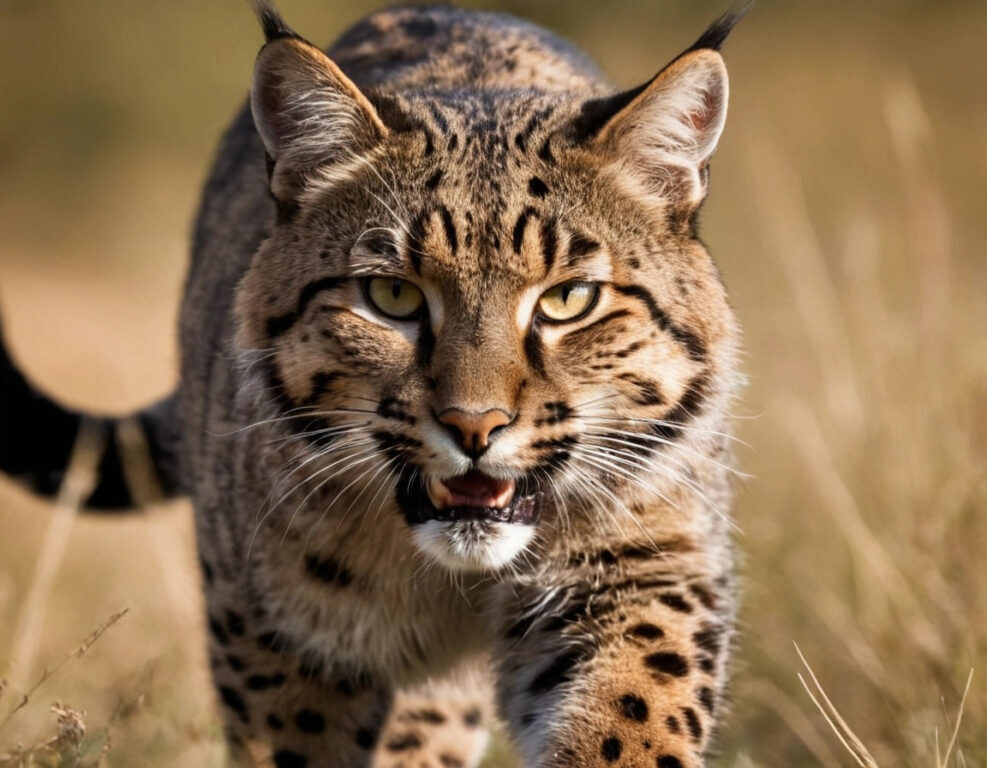
The wildcat is a small feline native to Europe, western Asia, and Africa. It’s stockier than a house cat, with a broader head, longer legs, and a distinctive thick tail with black rings and a blunt black tip. That tail is the fastest way to tell a true wildcat from a domestic tabby: house cats have tapered, pointed tails.
Its habitat ranges from Scottish highlands and Iberian forests to African savannas and Middle Eastern scrubland. It avoids humans whenever possible. According to the IUCN, the European wildcat population is estimated at around 400,000 adults across the continent, though habitat fragmentation is a real threat in several countries.
Wildcats are solitary and territorial. They don’t form colonies like feral domestic cats do. A single wildcat may hold a territory of several square kilometers and will fight intruders, including domestic cats, often to the death. This territorial aggression is one of the clearest differences in the wildcat vs domestic cat debate.
Why You Can’t Just Domesticate a Wildcat
People ask if you can tame a wildcat. Short answer: no, not in any practical sense. Wildcat kittens raised by humans stay unpredictable. They hiss, scratch, and bolt. They don’t bond the way domestic cats do, and they don’t respond to human social cues.
The reason comes down to domestication. Domestic cats were selected over roughly 10,000 years for traits like tolerance, sociability, and reduced fear response. Wildcats never went through that bottleneck. Their genes still code for survival in the wild, not for curling up on your sofa.
Domestication isn’t training. It’s genetic change across generations. A wildcat is not an untrained cat, it’s a different animal with a different evolutionary path.
That’s why wildlife rehab centers handle wildcats with gloves, nets, and minimal contact. They release them back into the wild. Keeping one as a pet is illegal in most countries and cruel in all of them.
Hunting Skills: Wildcat vs Domestic Cat Behavior
A domestic cat hunts for fun. A wildcat hunts to eat, and it’s brutally efficient. Its diet is made up of small mammals like mice, voles, and rabbits, plus birds, reptiles, amphibians, and insects depending on where it lives. It hunts alone, mostly at dusk and dawn, and it doesn’t waste energy.
Wildcats have sharper senses tuned for survival. Their hearing picks up frequencies rodents use to communicate. Their night vision is exceptional thanks to a reflective layer behind the retina. Their camouflage is better too: wildcats have thicker, denser coats that blend into forest and scrub, while domestic tabbies often carry bolder markings bred for looks.
Domestic cats still have the hardware. Give a house cat outdoor access and it will hunt, often wiping out local bird populations. But it does so opportunistically. A wildcat’s entire existence depends on successful hunting. Miss too many meals and it dies.
How Did Domestic Cats Descend From the Wildcat?
Domestic cats come from the African wildcat (Felis silvestris lybica), not the European one. Around 10,000 years ago in the Near East, humans started storing grain. Grain attracted rodents. Rodents attracted wildcats. The boldest, least fearful cats stuck around human settlements and got fed, indirectly, by the rodent problem.
Over centuries, those tolerant cats bred with each other. Humans didn’t deliberately domesticate them at first. The cats domesticated themselves, more or less, by choosing to live near us. Later, ancient Egyptians venerated them, and traders carried them across the Mediterranean and beyond.
Genetic studies published in journals like Nature Ecology & Evolution confirm that all domestic cats trace back to that single Near Eastern wildcat lineage. The European wildcat contributed almost nothing to modern house cats, which is why interbreeding between the two is a conservation concern. Hybridization dilutes wildcat genetics.
Habitat: Where Each Cat Actually Thrives
Domestic cats can survive almost anywhere humans live. Apartments, farms, warehouses, city streets. They’re flexible because we made them that way. We feed them, shelter them, and protect them from predators.
Wildcats need cover, prey, and distance from people. Forests with dense undergrowth, rocky hillsides, and scrubland work best. They avoid open fields and urban areas. In Scotland, wildcats are now so rare that conservation groups are running breeding and release programs to prevent extinction. Fewer than 300 pure wildcats may remain there.
This habitat split is the real divide in the wildcat vs domestic cat story. One species adapted to us. The other adapted away from us. Both strategies work, but they don’t overlap.
How to Tell Them Apart in the Field
- Tail: Wildcat tails are thick, ringed, and blunt-tipped. Domestic tails taper to a point.
- Build: Wildcats are stockier with longer legs and a broader head.
- Coat: Wildcat fur is denser and duller, built for camouflage, not show.
- Behavior: A wildcat will flee or fight. A domestic cat, even a feral one, may approach or beg.
- Location: Deep forest or remote scrubland points to wildcat. Near buildings, it’s almost certainly domestic or feral.
If you’re not sure, don’t approach. Take a photo from a distance and report it to a local wildlife authority. In places like Scotland, verified sightings help conservationists track the few remaining pure wildcats.
The Bottom Line on Wildcats and House Cats
A wildcat is not a tougher version of your pet. It’s a separate wild species with its own ecology, its own survival rules, and its own conservation status. Domestic cats share its ancestry but not its nature. They’ve traded survival instincts for sociability, and that trade worked out well for them.
Understanding the difference matters. It matters for conservation, for wildlife policy, and for anyone tempted to bring a wild animal into a home. Admire wildcats from a distance. Keep your domestic cat indoors where it’s safe and where it won’t hybridize with what’s left of the wild population. That’s the clean, defensible line, and it’s the one that actually helps both animals.


