Post actualizado el día octubre 26, 2026 by DeiviSanzPlay
You think you know the solar system? Think again. It’s not just a bunch of balls spinning around a star. It’s a chaotic, violent, and breathtaking place that keeps throwing curveballs at astronomers. And 2026 is shaping up to be a killer year for discoveries. So buckle up, because we’re diving into the real story of the solar system and its planets.
The solar system: a cosmic mosh pit, not a neat diagram
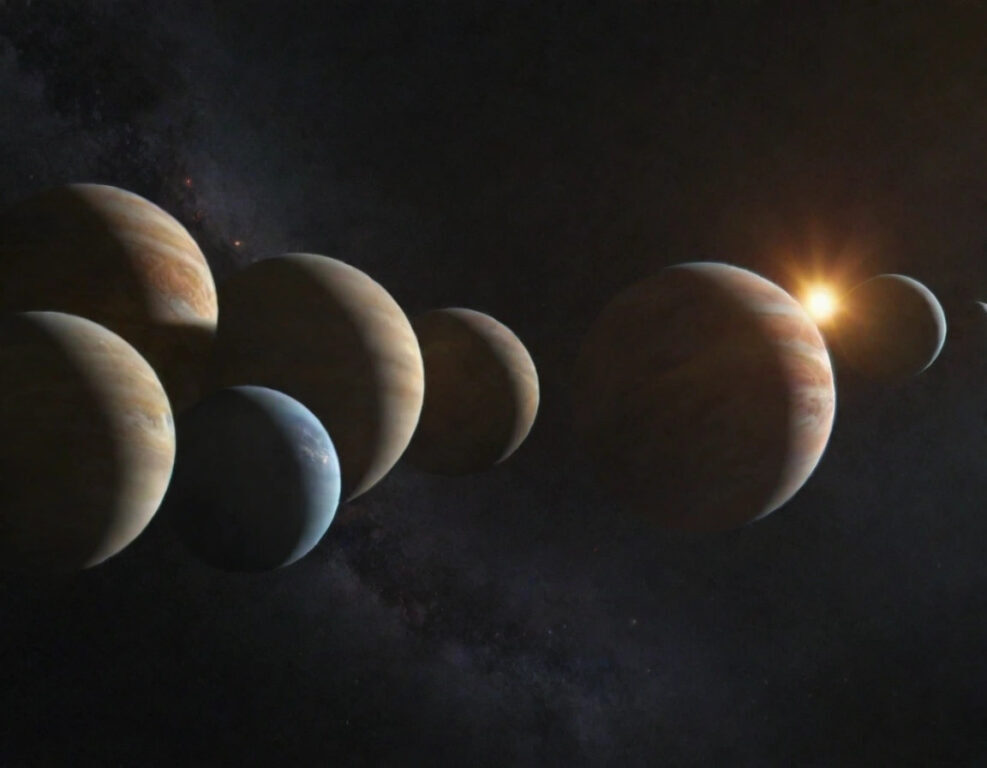
Forget that tidy illustration from your school textbook. The solar system is more like a mosh pit at a punk concert. Planets, moons, asteroids, and comets are all shoving each other around. The Sun, a massive ball of plasma, holds 99.8% of all the mass in the system. Its gravity is the invisible leash that keeps everything in check.
But here’s the kicker: the solar system isn’t just the eight planets. It’s also dwarf planets like Pluto, hundreds of moons, and millions of asteroids. The Kuiper Belt and the Oort Cloud are like the system’s attic—full of icy leftovers from its formation. And that’s where things get weird.
Rocky vs. gaseous planets: two different breeds
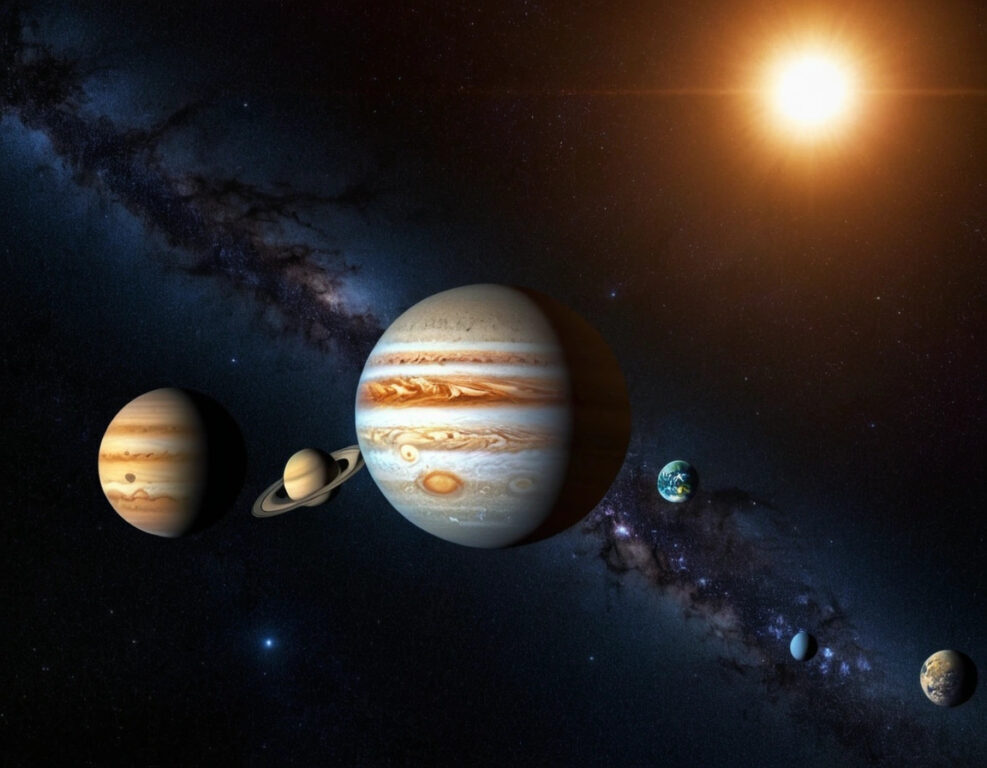
You’ve got your rocky planets—Mercury, Venus, Earth, and Mars—clustered near the Sun. They’re small, dense, and have solid surfaces. Then you’ve got the gas giants—Jupiter, Saturn, Uranus, and Neptune—way out there, huge and mostly made of hydrogen and helium. But wait, there’s a twist: Uranus and Neptune are actually ‘ice giants’ because they contain more ices like water, ammonia, and methane.
Why the split? It’s all about the early solar system. Close to the Sun, it was too hot for gases to condense, so only rocks and metals could form planets. Farther out, it was cold enough for volatile compounds to stick together, building massive cores that sucked in gas. So the difference between rocky and gaseous planets is literally baked into their birth environment.
Mercury: the scorched sprinter
Mercury is the smallest planet and the closest to the Sun. It’s a cratered hellscape with no atmosphere to speak of. Days on Mercury are brutal: 800°F (430°C) during the day, and -290°F (-180°C) at night. It’s also the fastest planet, zipping around the Sun in just 88 Earth days. But here’s a fun fact: a single day on Mercury (from sunrise to sunrise) lasts 176 Earth days. So a Mercury day is twice as long as its year. Mind-blowing, right?
Venus: Earth’s evil twin
Venus is often called Earth’s twin because they’re similar in size. But that’s where the similarity ends. Venus has a runaway greenhouse effect, with surface temperatures hot enough to melt lead—about 900°F (475°C). Its atmosphere is 96% carbon dioxide, and the clouds are made of sulfuric acid. You’d be crushed, burned, and dissolved in seconds. Yet, it’s the brightest natural object in our sky after the Sun and Moon. So next time you see that brilliant ‘evening star’, remember: it’s a hellish world.
Earth: the oddball that got lucky
Earth is the only place we know that has life. But why? It’s not just about being in the ‘Goldilocks zone’—where water can exist as a liquid. It’s also about our magnetic field, which shields us from solar radiation, and our large Moon, which stabilizes our axial tilt and gives us stable seasons. Plus, plate tectonics recycle carbon, keeping our climate in check. So Earth is a rare gem. And we’re trashing it. But that’s another story.
Mars: the rusty frontier
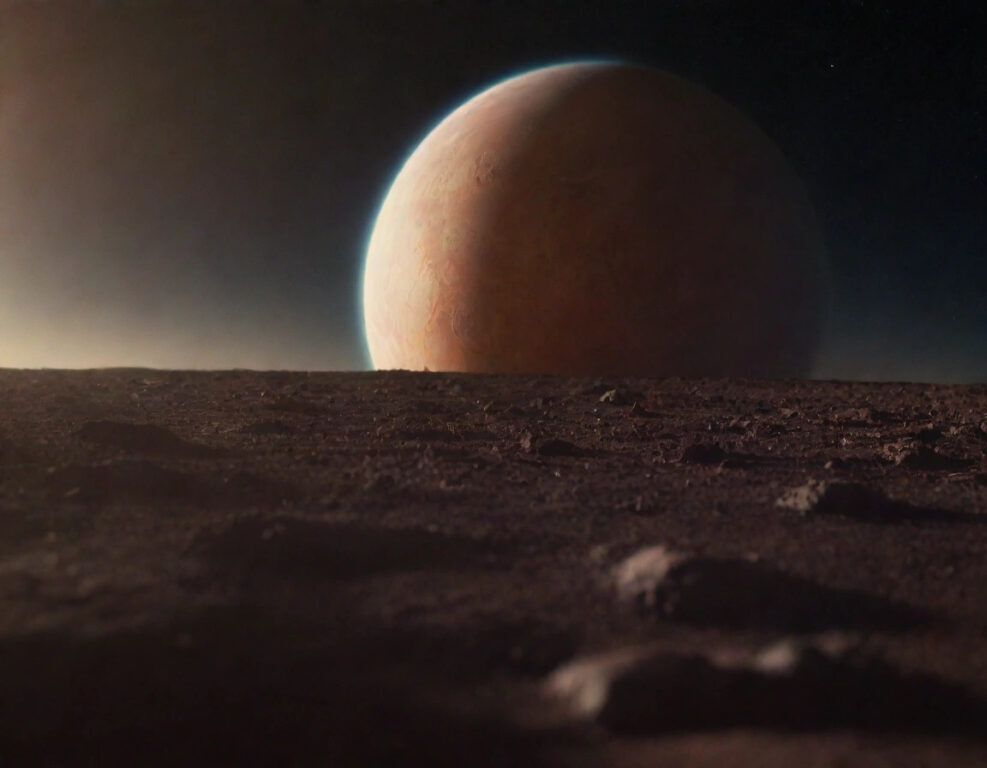
Mars is the most explored planet beyond Earth. It’s a cold desert with a thin atmosphere, but it’s got water ice at its poles and evidence of ancient rivers and lakes. The red color comes from iron oxide—rust. And yes, we’ve sent rovers there. In 2026, we’re still hunting for signs of past microbial life. The big question: did Mars ever host life? If we find evidence, it changes everything.
Jupiter: the giant vacuum cleaner
Jupiter is so massive that it could swallow all the other planets combined. Its Great Red Spot is a storm bigger than Earth that’s been raging for centuries. But Jupiter’s real job is acting as a cosmic shield, its gravity flinging comets and asteroids away from the inner solar system. Without it, Earth might get pummeled way more often. So thank your lucky stars for Jupiter.
Saturn: the ringed wonder
Saturn’s rings are its claim to fame, but they’re not solid. They’re made of billions of chunks of ice and rock, ranging from dust grains to house-sized boulders. And they’re disappearing. Yes, Saturn’s gravity is pulling the rings into the planet, and they’ll be gone in about 100 million years. So enjoy them while they last. Also, Saturn has more moons than any other planet—over 140 confirmed as of 2026. Titan, its largest moon, has lakes of liquid methane. Wild.
Uranus and Neptune: the ice giants
Uranus is the weirdo that rotates on its side, likely due to a massive collision early in its history. It’s also the coldest planet, with temperatures dropping to -370°F (-224°C). Neptune, the farthest planet, is a deep blue world with supersonic winds—up to 1,200 mph (2,000 km/h). Both are called ice giants because their interiors contain hot, dense fluids of water, ammonia, and methane. They’re not just gas; they’re slushy and mysterious.
Pluto: the underdog
Pluto got demoted in 2006, but it’s still a fascinating world. New Horizons showed us it has mountains of water ice, a heart-shaped glacier, and a thin atmosphere. It’s now classified as a dwarf planet, along with Eris, Haumea, Makemake, and others. So Pluto isn’t alone; there’s a whole club of dwarf planets out there. And some might be even bigger than Pluto.
How did the solar system form?
About 4.6 billion years ago, a giant cloud of gas and dust collapsed under its own gravity. Most of it formed the Sun, and the rest flattened into a spinning disk. Small particles stuck together, forming planetesimals, which then collided to build planets. This process took millions of years. And leftovers are still around as asteroids and comets. So the solar system is a construction site that never fully cleaned up.
FAQs about the solar system and its planets
What is the solar system? It’s the Sun and everything gravitationally bound to it: planets, moons, asteroids, comets, and more.
How many planets are there? Eight: Mercury, Venus, Earth, Mars, Jupiter, Saturn, Uranus, and Neptune.
Why is Pluto no longer a planet? Because it hasn’t cleared its orbit of other debris, so the IAU reclassified it as a dwarf planet in 2006.
What is the largest planet? Jupiter, with a diameter of about 139,820 km.
What is the hottest planet? Venus, due to its thick atmosphere and runaway greenhouse effect.
What are the rocky planets? Mercury, Venus, Earth, and Mars.
What are the gas giants? Jupiter, Saturn, Uranus, and Neptune.
What is a comet? A body of ice, dust, and rock that develops a tail when near the Sun.
Why is Mars red? Because of iron oxide (rust) on its surface.
How long does Earth take to orbit the Sun? About 365.25 days.
Which planet has the most moons? Saturn, with over 140 confirmed moons as of 2026.
What is the asteroid belt? A region between Mars and Jupiter with many asteroids.
What is a meteor shower? When Earth passes through debris from a comet, causing streaks of light in the sky.
What is a black hole? A region where gravity is so intense that nothing can escape, not even light.
How was the solar system formed? From a collapsing cloud of gas and dust about 4.6 billion years ago.
Why does Uranus rotate on its side? Likely due to a massive impact early in its history.
What is the Milky Way? The galaxy that contains our solar system, with billions of stars.
What is a dwarf planet? A spherical object that orbits the Sun but hasn’t cleared its orbit. Examples: Pluto, Eris.
What is the largest moon? Ganymede, a moon of Jupiter.
What is the Sun? A star at the center of the solar system that holds everything in orbit.
How many planets have rings? Four: Jupiter, Saturn, Uranus, and Neptune.
What is an astronomical unit (AU)? The average distance from Earth to the Sun, about 150 million km.
Why are there seasons on Earth? Because of Earth’s axial tilt and its orbit around the Sun.
Is there life on other planets? We haven’t found any yet, but we’re looking, especially on Mars and Europa.
What is a solar eclipse? When the Moon blocks the Sun’s light from reaching Earth.
Which planets can I see with the naked eye? Mercury, Venus, Mars, Jupiter, and Saturn.
So there you have it. The solar system is not just a static map; it’s a dynamic, evolving place full of surprises. And the more we learn, the more we realize how much we don’t know. Keep looking up.