Post actualizado el día octubre 26, 2026 by DeiviSanzPlay
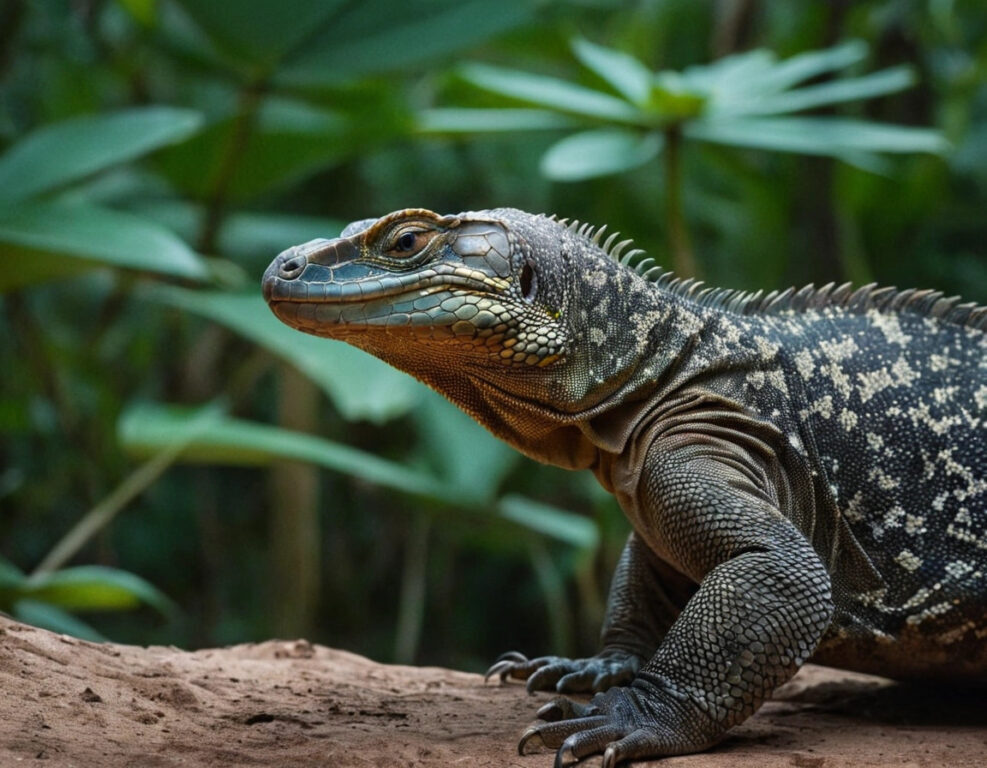
You don’t need to watch Game of Thrones to see a dragon. There’s one alive right now, walking on a few volcanic islands in Indonesia, and it can bring down a water buffalo. The Komodo dragon (Varanus komodoensis) isn’t a myth: it’s the largest living lizard on the planet, and in 2026 it’s still fighting for its spot on Earth.
I’m not here to sell you the postcard version. I’m here to tell you what’s real, what’s exaggerated, and why this animal matters more than most people think.
How Big Is a Komodo Dragon Really?
Let’s kill a myth first: they don’t reach 3 meters. That number comes from a specimen measured in the 1930s with a stretched hide. Real adult males usually sit between 2.3 and 2.6 meters and weigh 70 to 90 kilos. Females are noticeably smaller, rarely passing 2 meters.
That said, a 90-kilo lizard with bone-crushing jaws is still terrifying. Its skull is flexible, its teeth are serrated like a shark’s, and its neck muscles are built to rip chunks out. The Komodo dragon size debate matters because exaggerating it hides the real problem: these animals are big enough to dominate an entire island ecosystem, and that’s already impressive.
Its skin is armored with osteoderms, tiny bone plates under the scales. That’s why adults have almost no natural predators. The forked tongue? Not decoration. It’s a chemical sampling tool that picks up particles from the air and tells the dragon if dinner passed by an hour ago.
Where Do Komodo Dragons Live (and Why So Few Places)
The Komodo dragon habitat is restricted to five islands in East Nusa Tenggara: Komodo, Rinca, Padar, Gili Motang, and Flores (the last one only in small coastal pockets). That’s it. Nowhere else on the planet.
Why so limited? Because these lizards need a very specific combo: dry tropical savanna, monsoon forest, and open beaches where they can sunbathe. They don’t do well in dense rainforest or in areas with too many humans.
Within Komodo National Park, the population sits around 3,000 to 3,500 individuals, according to the latest ranger estimates. On Flores, outside the park, numbers are shakier. And here’s a detail people ignore: the islands are volcanic and seismically active. A single bad eruption or a disease outbreak could wipe out a subpopulation overnight.
What Do Komodo Dragons Eat and How Do They Hunt?
The Komodo dragon diet is pure carnivore, but not in a Hollywood way. They’re ambush predators and scavengers. Adults hunt deer, wild boar, water buffalo, and even smaller Komodos. Yes, they’re cannibals. Around 10% of their diet is other dragons, usually juveniles.
The hunting strategy is brutal and efficient. They don’t chase. They hide in tall grass, wait for hours, then launch a single explosive attack aimed at the tendons or belly. If the prey escapes, the dragon doesn’t need to catch it again. It just follows.
For years, scientists said the bite was lethal because of bacteria in the saliva. That’s outdated. Research by Bryan Fry in 2009 showed the real weapon is venom, produced by glands in the lower jaw. It causes anticoagulation, shock, and rapid blood loss. The bacteria story was a myth that survived for decades because nobody bothered to check.
The Komodo dragon doesn’t need to be fast. It needs to be patient, and it’s the most patient killer on those islands.
Parthenogenesis: When Females Don’t Need Males
Here’s the weirdest thing about Komodo dragon reproduction: females can reproduce without a male. It’s called parthenogenesis, and it was confirmed in 2006 at two UK zoos (Chester and London). A female named Flora laid viable eggs with no contact with a male.
How does it work? The female produces eggs that double their own genetic material and develop as embryos. The offspring are always male. This isn’t a replacement for sex, it’s a survival backup. If a female ends up alone on an island, she can still produce a male and restart the population.
Normal reproduction happens between May and August. Males fight for territory, females lay 20 to 30 eggs in September, and incubation lasts 7 to 8 months. Juveniles are born vulnerable and immediately climb trees to avoid being eaten by adults. Nature doesn’t do sentimentality.
Is the Komodo Dragon Endangered in 2026?
Yes. The IUCN upgraded it from Vulnerable to Endangered in 2021, and the situation hasn’t improved. The main threats are habitat loss on Flores, rising sea levels affecting coastal nesting areas, and a warming climate that shrinks the dry savanna they depend on.
Tourism is a double-edged sword. Komodo National Park brings in money that funds rangers and anti-poaching patrols. But overtourism has consequences: stressed animals, disrupted mating, and illegal feeding. In 2019, the Indonesian government even floated a plan to close the park temporarily and relocate villagers from Komodo Island. It was scrapped after backlash, but the debate is still alive.
There’s another risk nobody talks about: inbreeding. With such a small geographic range, genetic diversity is low. A single epidemic could be catastrophic.
Why This Lizard Still Matters
The Komodo dragon is the last surviving member of a lineage of giant monitor lizards that once roamed Australia and Southeast Asia. It’s not just a tourist attraction. It’s a living fossil, an apex predator that keeps deer and boar populations in check, and a species that teaches us how evolution works under extreme isolation.
If we lose it, we don’t just lose a big lizard. We lose the only place on Earth where you can still watch a real dragon hunt. And that’s not something you can recreate in a zoo.
So no, I don’t need to ask if you’d like to see one in person. The real question is whether it’ll still be there when you finally decide to go.