Post actualizado el día octubre 26, 2026 by DeiviSanzPlay
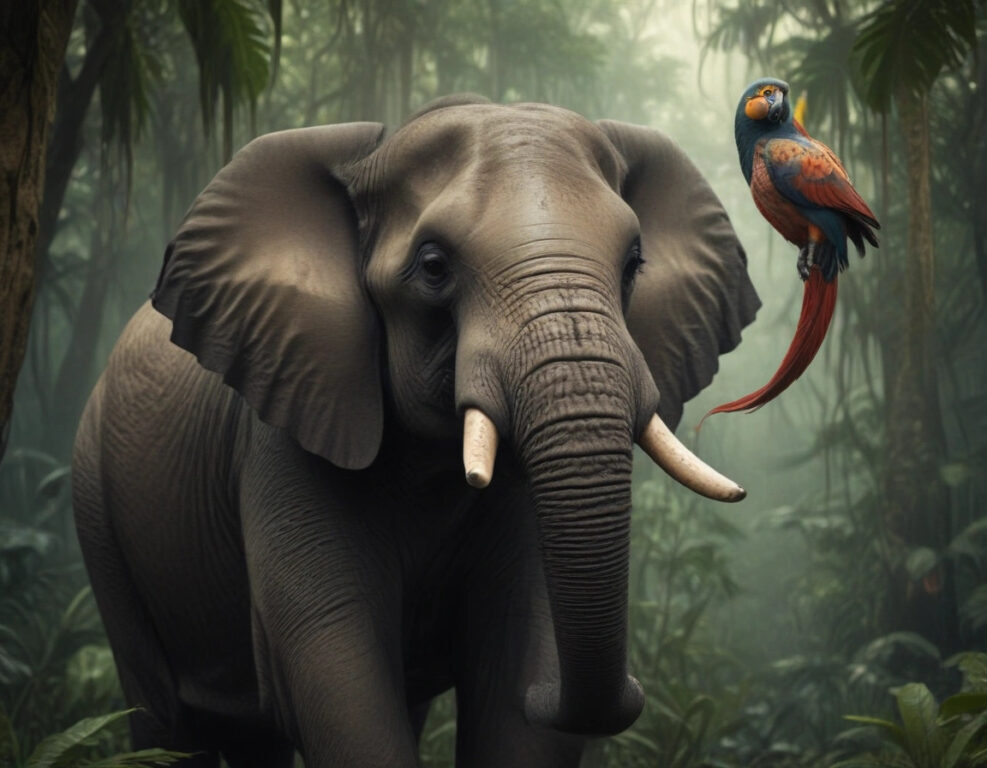
If you’ve ever watched an elephant at a zoo and wondered when the hell it actually lies down to sleep, you’re not alone. The truth is weirder than most people expect: elephants sleep around 2 to 4 hours a day in the wild, and often even less. That’s it. No eight-hour beauty sleep, no lazy afternoon naps. Just a few stolen hours between eating, walking, and staying alive.
The «how many hours do elephants sleep» question has a short answer and a long one. The short one: between 2 and 6 hours depending on whether they’re wild or captive. The long one involves brain chemistry, predator pressure, and a digestive system that basically runs on chewing.
Two Hours? Yeah, Science Says So
A landmark 2017 study published in PLOS ONE tracked two wild African elephants in Botswana’s Chobe National Park for 35 days using implanted actiwatches. The result blew up the old assumption that big animals need lots of sleep. These elephants averaged just 2 hours of sleep per day, often resting between 2 a.m. and 6 a.m.
On some nights, they went nearly 46 hours without sleeping at all. They walked up to 30 kilometers in a single day. That’s not a sleep schedule — that’s a survival marathon.
What’s even crazier: they sometimes slept standing up. Wild elephants rarely lie down for long, because getting back on their feet takes energy and leaves them exposed. When they do lie down, it’s usually for deep REM sleep, which happens every 3 or 4 days in the wild.
Elephants may be the shortest sleepers among all mammals studied so far. Even giraffes, which are famous for sleeping little, clock in around 4.6 hours.
Why Elephants Sleep So Few Hours
There are three real reasons, and none of them are romantic.
- Food, food, food. An adult elephant eats up to 150 kg of vegetation per day. They spend 16 to 18 hours just chewing. Sleep is what’s left over.
- Body size and metabolism. Large herbivores burn enormous energy, but their digestion is inefficient. They can’t afford long downtime.
- Predator pressure. Even though adult elephants have almost no natural enemies, calves are vulnerable to lions, hyenas, and crocodiles. The herd stays semi-alert 24/7.
So when someone asks how many hours of sleep does an elephant need, the honest answer is: as few as possible. Their biology is built around being awake.
Captive vs. Wild: A Big Difference
Here’s where things get interesting. Elephants in zoos and sanctuaries usually sleep more — around 4 to 6 hours. Some studies of captive Asian elephants recorded up to 6.5 hours, mostly at night, with occasional naps during the day.
The reason is simple: no predators, no 30-km walks, food delivered on schedule. Take away the survival pressure, and elephants behave more like the mammals we expect.
But there’s a dark side. Captive elephants often show abnormal sleep patterns, including nighttime waking and stereotypical behaviors. Some researchers argue that poor sleep in captivity contributes to the health issues seen in zoo elephants, from obesity to foot problems.
Do Elephants Dream? Probably, But Not Like You
Elephants do enter REM sleep, but only in short bursts, and almost exclusively when they lie down. In the wild, that means REM happens maybe once every few days.
There’s anecdotal evidence from keepers who’ve watched elephants twitch their trunks and legs during deep sleep — the same movements dogs make when they dream. Whether they actually dream in the human sense, nobody knows. But their brains do cycle through sleep stages, just compressed into a fraction of the time ours take.
If you want to dig deeper into animal sleep science, the Wikipedia entry on non-human sleep is a decent starting point, though it’s thin on elephants specifically.
The Real Reason Their Sleep Matters
Here’s the part most articles skip: elephant sleep is not just a curiosity — it’s a conservation issue.
Wild elephants are losing habitat fast. When they’re forced into smaller ranges, they walk less, eat lower-quality food, and their sleep patterns change. Some researchers think chronic sleep disruption could be an early warning sign of stress in fragmented populations.
In captivity, the opposite problem shows up. Elephants that sleep too much or too little often have underlying health issues. Monitoring their rest is becoming a tool for zookeepers and veterinarians.
So the next time you see a headline about how many hours elephants sleep, remember it’s not trivia. It’s a window into whether that elephant is doing okay.
Quick Answers to the Most Googled Questions
- How many hours does an elephant sleep per day? Wild: 2 to 4. Captive: 4 to 6.
- Do elephants sleep standing up? Yes, most of the time. They only lie down for REM sleep.
- Do elephants sleep at night? Mostly yes, between 2 a.m. and 6 a.m., but it’s broken up.
- Can elephants go without sleep? They can go 46+ hours without it, based on the Botswana study.
- Why do elephants sleep so little? Because eating, walking, and watching for danger take almost all their time.
These aren’t random facts — they’re the result of millions of years of evolution shaping an animal that literally can’t afford to be lazy.
What This Means for You
There’s a takeaway here that has nothing to do with elephants. Sleep isn’t one-size-fits-all. Big animals sleep less, small ones sleep more, and humans sit somewhere in the middle. The elephant’s 2-hour schedule works because its body and brain are wired for it.
Yours isn’t. Don’t try to copy the elephant.
But do pay attention to sleep — in animals and in yourself. If an elephant can survive on 2 hours a day and still walk 30 km, imagine what a well-rested human could pull off.
And if you ever get the chance to watch a wild elephant herd at dawn, do it. You’ll see them standing still, half-awake, trunks curled. That’s their version of a good night’s sleep. It lasts about as long as your morning coffee break.