

Post actualizado el día September 27, 2026 by DeiviSanzPlay
The first time I tried it as an adult, it was almost by accident. My nephew forgot his movie or becoming a professional athlete. I’m talking about that change little by little. A free.
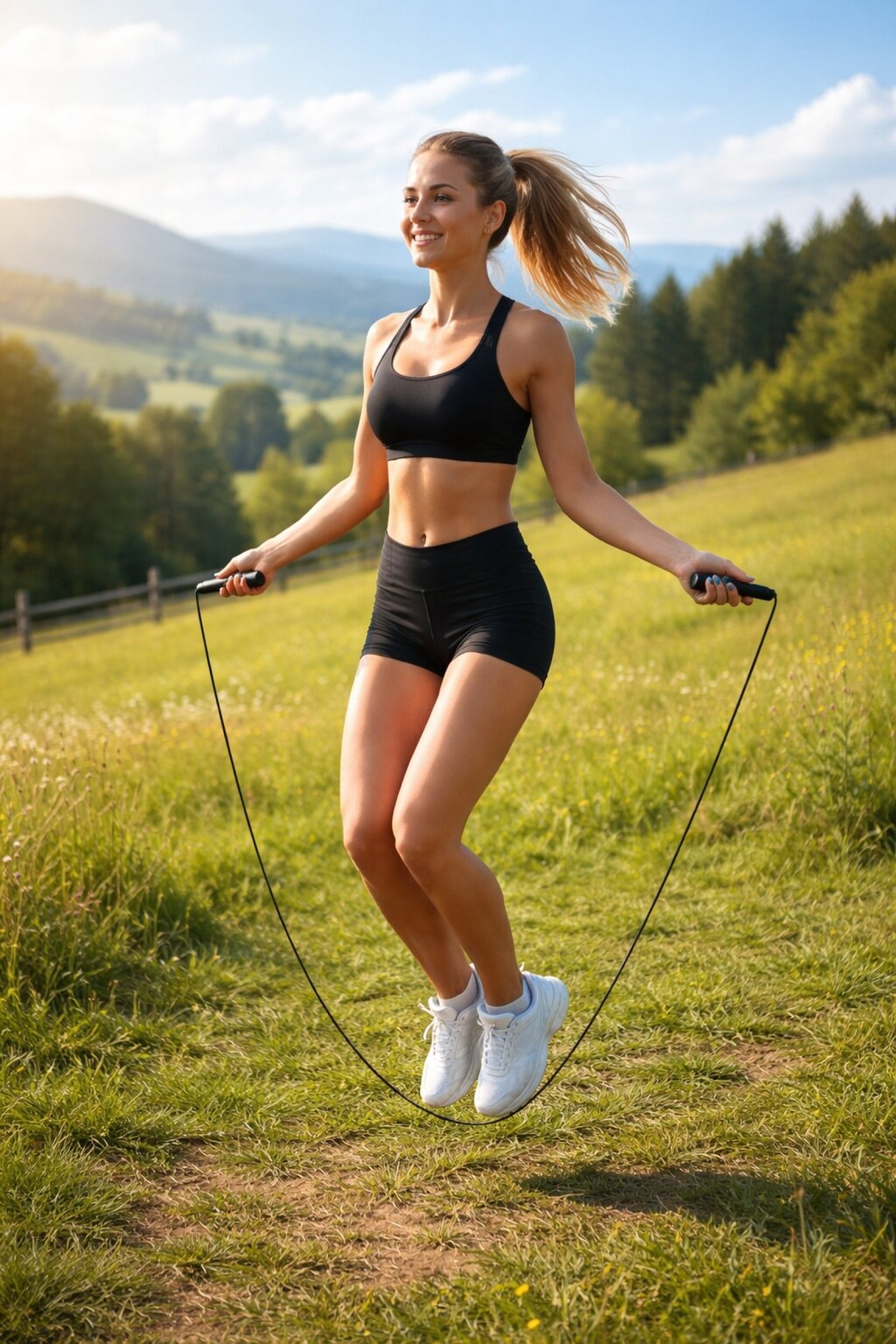
It’s not just running vertically. People think it’s going up and down, but it’s a dance. You have to listen to the tac, tac against the silly; it’s a clever exercise. This answers the classic question: what is the jump rope for. It’s good for much more than sweating.
In fact, one of the first things that improves is coordination. Your feet, your arms, and your head have to work together. It’s a kind of brain-muscle connection that’s fairly rudimentary, but tremendously effective. You also start to notice an improvement in balance, agility, speed, and cardiovascular is probably one of the most obvious changes. The to improve. Also your .
The most unexpected part was the mental one. I’m the type to overthink everything. But with the rope, it’s impossible. You have to focus on the rhythm, on not tripping, on breathing. It’s a meditation in heel strikes.
I read about a study with teenagers who, after math class, jumped rope in various ways. Those who did these difficult jumps retained what they learned better. It’s not magic; it’s that the brain, when it coordinates body and rhythm, wakes up and organizes itself.
It happens to me: after jumping, my ideas come more clearly. The benefits of jumping rope are also cognitive. And there’s another thing: nobody tells you that the rope can become a strange way to disconnect.
Of course, it’s not all sunshine and roses. If you jump like an elephant on pure concrete, you’re going to destroy your knees. The trick is to barely leave the ground. A few centimeters are enough. And wear shoes with good cushioning.
The ideal surface is wood or those rubber tracks in parks. Asphalt is your enemy. You also need to learn the technique. Maintain good posture. Don’t jump as if you’re trying to escape an explosion.
And please, don’t turn this into an ego competition. You don’t have to do double unders on the first day. Start with basic jumps. Let your calves, your quads, and your glutes get used to the movement.
Later will come the strength. The jump strength. The speed. You can even start working your muscles, your musculature, and, with a more complete strength training program, your muscle mass. Don’t expect brutal hypertrophy from jumping rope, because let’s not kid ourselves. But it is a good way to move your body.
The best thing is that it doesn’t forgive, but it doesn’t ask permission either. You don’t need a gym, or a free hour, or special clothes. A decent rope fits in any bag. I’ve jumped in parking lots, in a corner of the office, on the rooftop.
In ten minutes, you can do a training routine that leaves you exhausted and happy. You can do cardio, try a bit of HIIT cardio, or work at high intensity. You can also do a little training with different types of jumps and jumping.
If you’re a beginner—or you simply haven’t done anything for years—start slowly. One minute jumping. Thirty seconds of rest. Repeat. Then increase the time. There’s no medal for passing out in your living room.
And yes, you can also burn calories. Lots of them. Calorie burning is one of the reasons so many people start jumping rope. You can burn anywhere from 200 to more than 500 calories in half an hour, depending on the intensity.
But in the end, the numbers matter less than the feeling: it’s effective, fast, and it doesn’t bore you. Well, except on the day when you’ve been at it for four minutes and start wondering who told you to get into this.
If your goal is to lose fat, lose weight, slim down, or drop pounds, the rope can be a very interesting tool. Not because there’s a magic exercise that melts fat while you sleep—I wish—but because it combines movement, intensity, and a fairly high energy expenditure.
And here’s where metabolism comes in. Many people talk about speeding up metabolism as if it were a button you can press. It doesn’t work exactly like that. But it is true that moving more, training, and creating a routine can help you improve your physical condition and your well-being.
I started noticing results in areas I wasn’t even thinking about. My legs felt stronger. My abs seemed a bit firmer. My arms, shoulders, and forearms were working too. Even my calves started reminding me they existed.
I’m not talking about a magazine-style defined body. But I am talking about a little definition. About a flatter stomach. About feeling your body a bit firmer. About feeling that you’re starting to tone and strengthen.
And this is where the famous body change appears. That small physical change you notice when you look at yourself and think: “Ah. This is working.” Progress isn’t always measured in kilos. Sometimes you notice it in the fact that you’re no longer out of breath.
You may also notice a cardiovascular improvement, a physical improvement, and an overall improvement in health. Circulation gets going. The body wakes up. And after training, that strange feeling of well-being appears that makes you think that maybe, just maybe, you haven’t wasted the day.
And here’s something important: 10 minutes a day is easier to maintain than an hour-long workout you never do. The problem with many routines is that they start with spectacular motivation and end up turned into a towel hanging from a machine.
With the rope, you can do cardiovascular exercise, aerobic exercise, cardio, and a bit of high-intensity work in a ridiculous amount of space. You can strengthen your legs, improve your endurance, and work on coordination.
In the end, I think its greatest benefit is that it reminds you of your own rhythm. Not the music’s, but yours. You start stumbling, finding a basic beat, and then, if you dare, you try crossing your arms, lifting your knees, imitating that boxer’s step.
Every small achievement—20 jumps in a row, 50, 100—gives you a pat on the back. It’s small progress. A small result. And sometimes that’s exactly what you need.
Because yes, jumping rope can help you improve your footwork, agility, endurance, cardiovascular health, and aerobic capacity. It can help you burn calories, lose fat, tone, and strengthen your body.
But it can also give you something harder to measure: the feeling that you’re doing something for yourself.
That’s the essence of the benefits of jumping rope. It doesn’t promise you miracles. It doesn’t tell you that in a week you’ll have an athlete’s body. What it does is show up there, on the floor, waiting for you to jump.
And when you do, even if it’s only 10 minutes, something starts to change. A little more endurance. A little more strength. A little more coordination. And, perhaps, that radical physical change that doesn’t come all at once, but jump by jump.
In a world of complicated apps, machines with a thousand buttons, and training plans that look like they were written by NASA, there’s something deeply simple about going back to basics: a rope, the floor, and the desire to get up a little lighter.
That’s the essence of jumping rope. It brings you back to your own rhythm. And, in my case, it also brought me back to myself.