Post actualizado el día October 25, 2026 by DeiviSanzPlay
Sleeping in the car is no longer a matter of improvising with a blanket and a pillow. The car mattress has become the star accessory for those who go on road trips, camping, or simply want to save a night at a hotel without giving up a decent rest.
I have tried several models and have spoken with travelers who sleep in their vehicle more than 100 nights a year. The conclusion is clear: not all mattresses work for any car or for anyone. Here I tell you what really matters, without the fluff.
What is a car mattress and why has it become so popular
A car mattress is an inflatable or foldable foam surface designed to fit in the trunk or on the folded rear seats. Its goal is to turn the cabin into a functional bed for sleeping.
The craze for caravanning and #vanlife has skyrocketed its demand. According to data from the Spanish Camping Association, more than 30% of domestic travelers have spent the night at least once in their vehicle during 2025. It is not a passing fad: it is a freer and cheaper way to travel.
The key is compatibility. A mattress that does not fit the dimensions of your car is a nuisance. That is why, before buying, measure the available space with the seats folded down. Do not trust generic sizes.
Materials: PVC, foam, or hybrids. Which one lasts longer?
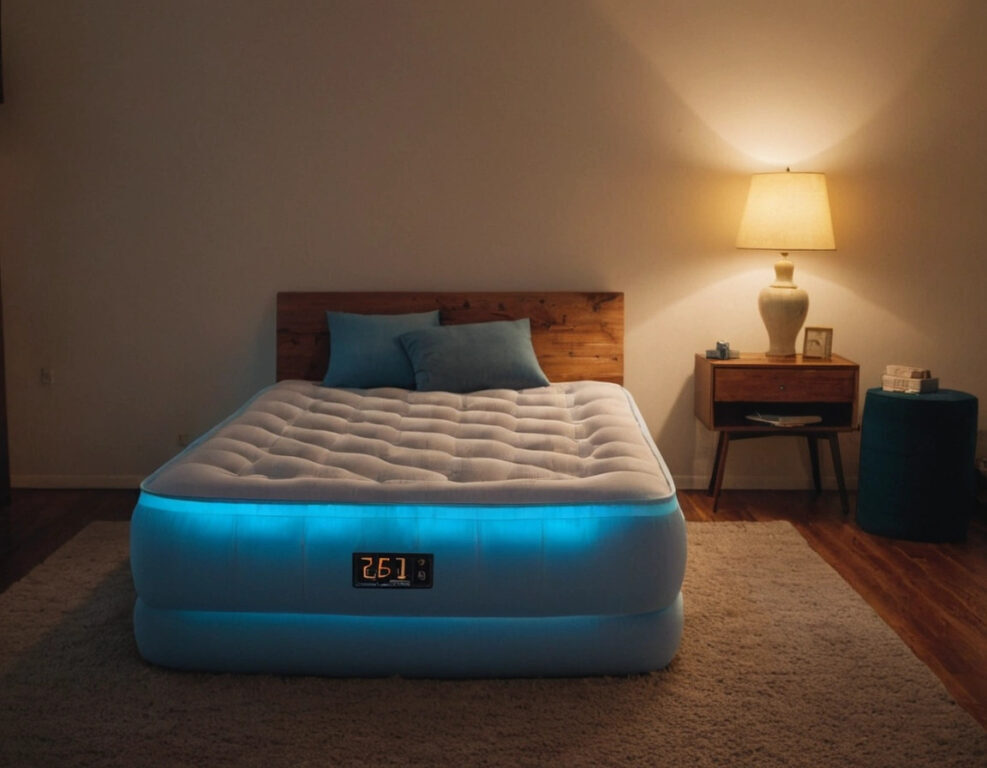
The best-selling car mattresses are inflatable PVC ones. They are cheap, lightweight, and can be stored in any corner. But beware: thin PVC punctures easily and some models smell of plastic for weeks.
High-density foam is another story. It does not puncture, it is more comfortable, and you do not need a pump. The problem is that it takes up a lot of space when you are not using it. If you travel alone and your trunk is packed to the brim, foam can be a nuisance.
There are hybrid models: a foam base with air cells. They offer the best comfort-to-storage ratio, although their price is around €120-180. For me, it is the most balanced option if you are going to sleep more than 20 nights a year.
A €30 PVC mattress can get you out of a jam, but if you use it every weekend, you will end up buying a foam one in less than six months. I have seen it dozens of times.
Dimensions and compatibility: the most common mistake
Mistake number one is buying a car mattress without checking the real dimensions. Manufacturers usually list generic dimensions that do not always match the space between the wheel arches.
For example, in an SUV like a Nissan Qashqai, the space with the seats folded down is around 170×130 cm. In a compact car like a Seat Ibiza, it drops to 140×100 cm. If the mattress is too big, it folds and you lose comfort; if it is too small, it moves and you wake up with back pain.
My advice: measure the length, width, and height of the trunk with the seats folded down. Then look for a mattress that fits those dimensions with a margin of ±5 cm. Some brands such as Quechua or Robens offer specific car sizes.
Inflating pumps: electric or manual?
Most inflatable car mattresses come with a manual or foot pump. Inflating them takes between 5 and 10 minutes. If you arrive at a rest area at night, that feels endless.
Models with a built-in electric pump inflate in 2-3 minutes. Of course, you need to plug it into the car’s cigarette lighter or a power station. If your vehicle does not have an accessible 12V outlet, forget it.
I have tried €15 hand pumps and €40 electric pumps. The difference in speed is enormous. If you travel frequently, pay for the electric one. If you go out twice a year, the manual one is enough.
Tips for sleeping well in the car with a mattress
A car mattress does not work miracles. You need to control temperature, humidity, and posture. Here are my tricks after many nights:
- Ventilation: leave a gap in the windows and use mosquito nets. Without air, the car turns into an oven or a sauna.
- Insulation: place a thermal blanket under the mattress. The trunk floor is cold and will steal your body heat.
- Leveling: park on flat ground. If the car is tilted, you will slide to one side all night.
- Darkening: use opaque sunshades on the windows. The light from streetlamps or the sun at 6 AM will wake you up.
Another detail: do not inflate the mattress to the maximum. A little less air prevents you from bouncing and improves contact with the surface. Try it before sleeping.
Is it worth buying a car mattress in 2026?
If you take long trips, sleep in rest areas, or enjoy free camping, yes. A decent car mattress costs between €60 and €150. A hotel night in high season can cost €80. It pays for itself in two or three trips.
However, if you are only going to sleep one night a year, do not overcomplicate things. A camping mat and a sleeping bag will get you out of a jam for less than €40.
The trend for 2026 points to mattresses with recycled materials and USB-C pumps. There are already models that inflate with a power bank. It is the future: lighter, faster, and more sustainable.
In the end, the decision depends on how much you value your rest. For me, sleeping well in the car completely changes the travel experience. And a good mattress makes the difference between arriving exhausted or arriving ready for adventure.