
Post actualizado el día September 27, 2026 by DeiviSanzPlay
What did operating a naval cannon on a warship involve?
Operating a naval cannon was a task that involved precision, coordination, and a deep understanding of the <a href="https://www.chusmeando.com/preguntas-y-respuestas/como-funcionaban-los-molinos-de-viento-que-principios-mecanicos-permitian-su-operacion-y-como-han-evolucionado-a-lo-largo-de-los-siglos/" title="Cómo funcionaban los molinos de viento, qué principios mecánicos permitían su operación y cómo han evolucionado a lo largo de los siglos”>principles of artillery.
I recommend you check out this interesting article: How to Request Balance on Movistar.
Each cannon on a warship, especially on the ships of the line of the 18th and 19th centuries, required a crew of up to 14 men, depending on the size and weight of the cannon. The roles of each member of the crew were essential for the effective operation of the cannon, from aiming to firing and subsequent cleaning.
The largest and heaviest cannons, such as 24- or 36-pounders, were fundamental in naval combat and could decide the outcome of a battle. The ability to fire quickly and accurately was vital, and each action had to be executed with almost mechanical precision to maintain the rate of fire and maximize effectiveness in combat.
How was a naval cannon prepared and loaded for firing?
The loading process of a naval cannon was complex and required following a specific sequence of steps to guarantee both the effectiveness of the shot and the safety of the crew. The preparation began with the insertion of a cartridge of gunpowder into the bore of the cannon, followed by the placement of the projectile, whether a solid shot or grapeshot.
- Introduction of the gunpowder cartridge: using a rammer, a gunpowder cartridge was pushed to the bottom of the cannon.
- Loading of the projectile and wadding: After the cartridge, one or more projectiles were inserted, depending on the target, and it was tamped with oakum to prevent the projectile from moving.
- Pricking of the cartridge: Through the touch hole of the cannon, the gunpowder cartridge was pierced to allow the ignition to be transmitted effectively.
What was the firing process of a naval cannon and what precautions were taken?
Once the cannon was loaded, the next step was firing, which required precision to aim and synchronization with the movement of the ship. Ignition was achieved by means of a match or, more commonly in later times, by means of a flintlock mechanism.
- Priming and firing: The touch hole of the cannon was primed with fine gunpowder, and then a lock or a linstock was used to initiate ignition.
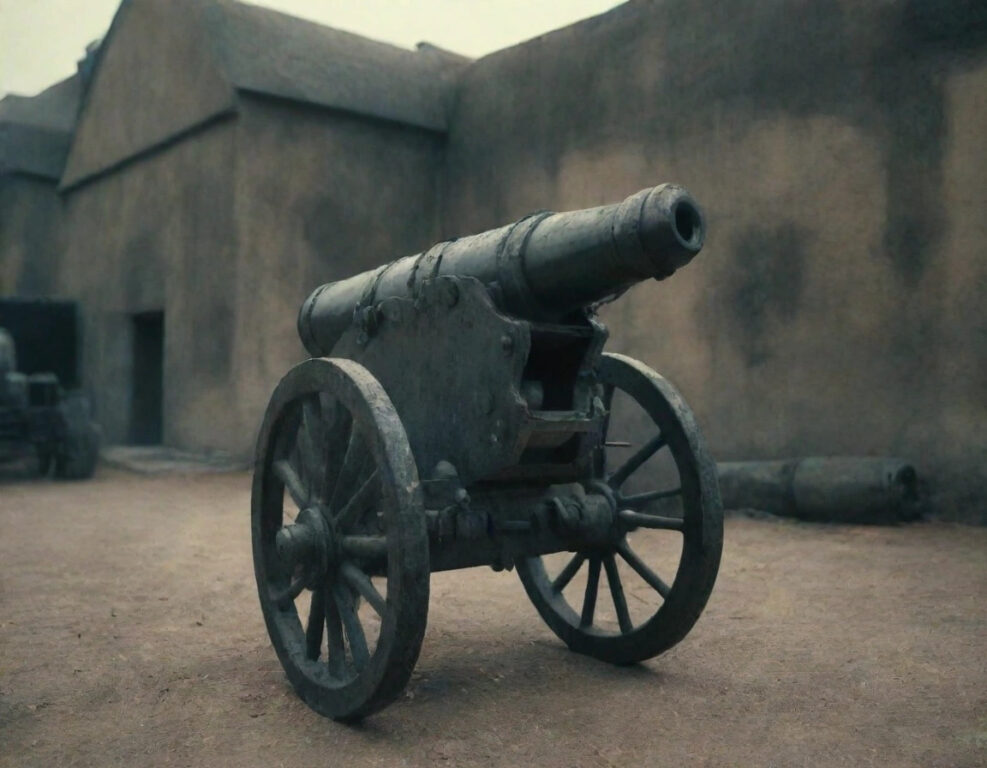
- Recoil management: The cannons were mounted on wheeled carriages to manage the strong recoil after firing. Immediately afterward, the gun port was lowered to protect the crew and prepare for the next shot.
How was the proper <a href="https://www.chusmeando.com/informatica-y-tecnologia/actualizar-radio-android-china-guia-completa-para-mejorar-tu-dispositivo/" title="Actualización de Radio Android China: Guía completa para acelerar el funcionamiento de tu dispositivo”>functioning of the cannons on board maintained and ensured?
The maintenance of the cannons was crucial to ensure their optimal functioning and the safety of the crew. After each shot, it was necessary to clean the bore of the cannon to remove residue and prevent accidents.
- Cleaning with a wet sponge: This helped cool the cannon and clean any gunpowder residue.
- Regular inspection and maintenance: This included checking the carriages, wheels, and other components to ensure everything was in good condition and ready for the next use.
Naval cannons were more than simple tools of war; they were examples of advanced engineering and human cooperation under extreme conditions. The operation process of a naval cannon is a testament to the discipline, technical knowledge, and skill required by the gunners of the era. Although modern technology has surpassed these ancient war machines, the study of their operation offers a fascinating insight into maritime history and the evolution of military technology.