

Post actualizado el día September 27, 2026 by DeiviSanzPlay
I’ll teach you the differences between gross and net in salary or in invoices, gross is the total amount before taxes and deductions. It includes Navarra!
I recommend you check out this interesting article: How to remove a tick from a dog.
Have you ever looked at your payslip and wondered why the big number at the top (your gross salary) looks nothing like the amount that finally lands in your bank account? This confusion is more common than you think and doesn’t only apply to salaries, but also to invoices, products, and any company’s accounts.
Understanding the fundamental difference between gross and net is essential for managing your personal finances, understanding what things really cost, and making informed decisions, whether you’re negotiating a salary or analyzing an investment. Throughout this article, we’ll break down these concepts clearly and without unnecessary jargon.
<a href="https://www.chusmeando.com/preguntas-y-respuestas/sabes-que-means-tralalero-tralala-descubre-su-origen-en-la-unesco-como-se-usa-en-memes-y-por-que-todos-lo-cantan-te-sorprendera/” title=”"🎵 What on Earth Does 'Tralalero Tralalá' Mean? (The Answer Will Make You Laugh)”>What do gross and net really mean?
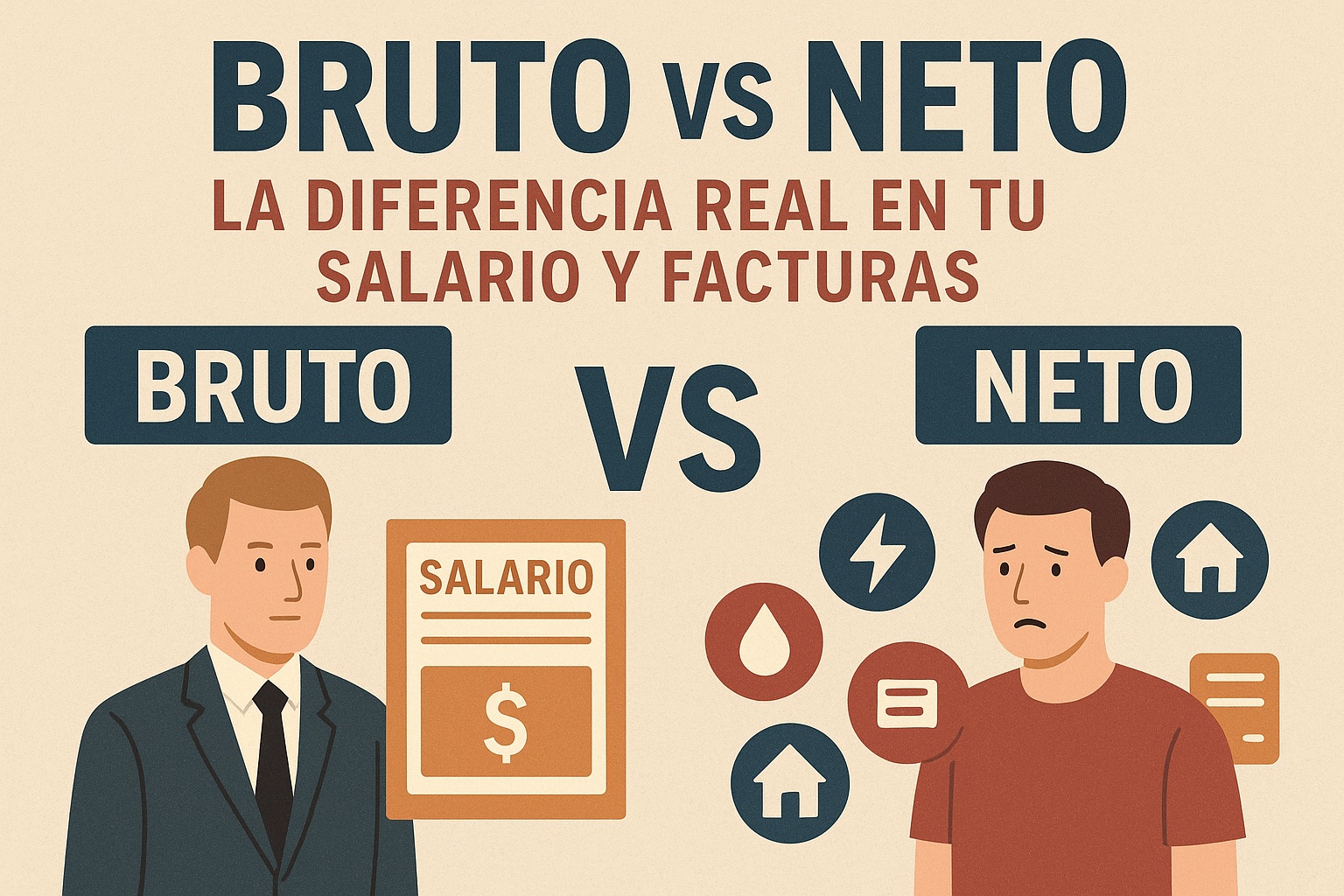
In simple terms, gross always refers to a total amount, complete, before any type of deduction, discount, or tax. It’s the “raw” amount. On the other hand, net always refers to the final result, what’s left after subtracting all those expenses, taxes, and mandatory deductions. It’s the liquid, clean, and definitive amount you receive or pay.
This distinction is universal and applies in various contexts, from a country’s economy to the weight of a bag of rice at the supermarket. Ignoring this difference can lead you to overestimate your real income or underestimate the true cost of a product or service. For example, in a job offer, focusing only on the annual gross is a classic mistake that later leads to unpleasant surprises when you see your first payslip.
The origin of these terms is interesting. “Gross” comes from the Latin brutus, meaning “coarse” or “rough,” while “net” comes from the Italian netto, meaning “clean” or “pure.” This perfectly reflects their financial meaning: from the coarse (gross) amount, after the necessary cleanings, you get the pure (net) amount.
What’s the difference between gross and net salary?
This is, without a doubt, the most frequent question among workers. The difference between gross and net salary is, basically, the set of withholdings and contributions that are applied to your payslip by law before the money reaches you. Gross salary is the sum of all the items you’re paid for (base, supplements, prorated extra payments, etc.) before any deductions.
Net salary, on the other hand, is the famous “net payable.” It’s the money that finally gets deposited into your bank account and that you can use for your expenses, savings, and investments. The gap between both numbers can be significant and depends on several factors, such as your total salary, your personal and family situation, or the autonomous community where you reside, something crucial as we’ll see later with the case of Navarra.
To give a simple example: if your contract states an annual gross salary of 30,000 euros, don’t expect 2,500 net euros per month. After deductions, your monthly net income will most likely be around 1,800-1,900 euros, depending on the circumstances. This difference is what many people discover with frustration when they receive their first payslip.
How net salary is calculated from gross
The process of transforming gross into net isn’t black magic, but a series of regulated calculations. To calculate net salary from gross, you mainly have to subtract two large blocks of mandatory deductions.
The first block is <a href="https://www.chusmeando.com/preguntas-y-respuestas/%f0%9f%91%89-un-extranjero-de-argentina-que-se-va-a-espana-a-vivir-y-trabajar-como-puede-traer-las-cotizaciones-de-la-social–security-to-spain/” title=”👉 An Argentine foreigner moving to Spain to live and work: how can they bring their Social Security contributions to Spain?”>Social Security contributions. These contributions are made by both the company and the worker (a portion is deducted from your gross) and entitle you to future benefits such as unemployment, retirement, or sick leave. They include items such as Common Contingencies, Unemployment, Professional Training, and Fogasa. The website of the General Treasury of Social Security offers official information and calculators to estimate these contributions.
The second block, and usually the largest, is the withholding on account of personal income tax (IRPF). This isn’t a final tax, but an advance payment made to the tax authority throughout the year. The amount withheld depends on your salary and your personal circumstances (age, disability, etc.) and is adjusted through the data you provide in form 145. The withholding percentage is applied by your company to your salary and can vary greatly from one person to another.
In the end, the operation is simple: Net Salary = Gross Salary – (Social Security contributions + IRPF withholding). There are numerous online calculators, such as the one from Bankinter, that allow you to simulate this calculation approximately.
What’s the difference between gross and net in the Kingdom of Navarra?
This is an important nuance that generates a lot of confusion. Navarra, along with the Basque Country, has a special tax regime protected by the Constitution and regulated by the Economic Agreement. This means that tax powers, including personal income tax, are managed by the Foral Administration of Navarra itself and not by the state Tax Agency (AEAT).
Therefore, the difference between gross and net in the Kingdom of Navarra may vary slightly compared to the rest of Spain. The IRPF withholding scales, tax rates, and regional deductions are different. The withholding tables are established by the Government of Navarra each year. This means that two people with the same gross salary and the same family situation, one in Madrid and another in Pamplona, will have slightly different withholdings and, therefore, a different net salary.
To find out the exact withholdings applicable in Navarra, you must consult the foral regulations directly on the page of <a href="https://www2.navarra.es/home_es/Temas/Portal+de+la+Ciudadania/Hacienda+Tributaria/” target=”_blank” rel=”noreferrer noopener”>Tax Authority of Navarra. This peculiarity is a key factor when evaluating a job offer in this community.
Gross weight vs net weight: a tangible difference
We leave the world of salaries to enter a much more concrete one. The difference between gross and net weight is fundamental in logistics, transportation, and product packaging. Gross weight is the total weight of a merchandise including its container, packaging, wrapping, and any other element that accompanies it (pallets, containers, etc.).
Net weight is the weight of the product itself, without any type of packaging. Tare is precisely the difference between the two: the weight of the container and the packaging. When you buy a package of pasta, the weight indicated on the bag (500 g) is the net weight. The weight of the plastic bag and the cardboard box containing it would be the tare, and if you weighed everything together on a scale, you would get the gross weight.
This concept is strictly regulated to protect the consumer. The Metrology Law requires that labeling clearly indicates the net content so that you know exactly what quantity of product you are buying.
Understanding invoices: gross amount and net amount
When you receive an invoice from a professional or a business, the concepts of gross and net are also present. The net amount on an invoice is the base sum of the products or services sold, before taxes. The corresponding taxes, such as VAT (Value Added Tax), are applied to this base.
The gross amount is the total to be paid, that is, the sum of the net amount plus VAT and any other applicable taxes. For example, if a service costs 100 euros (net) and a 21% VAT (21 euros) is applied, the gross amount of the invoice will be 121 euros. This is the final price that the customer will pay.
Distinguishing between the two is crucial for the accounting of self-employed workers and companies, since the VAT paid and charged is declared periodically before the Tax Agency. A correctly itemized invoice must always clearly show the taxable base (net), the VAT rate applied, and the total to be paid (gross).
Gross margin and net margin
To analyze the profitability of a business, it is vital to differentiate between gross and net profit. Gross profit (or gross margin) is the result of subtracting the direct cost of producing the goods or services sold (raw materials, direct labor, etc.) from sales revenue. It measures productive and commercial efficiency.
Net profit is the final result after subtracting all expenses and taxes for the period: not only the cost of sales, but also administrative salaries, rent, marketing, debt interest, depreciation, and corporate tax. It is the real profit of the company, the money that can effectively be reinvested or distributed among shareholders.
The difference between both margins shows the weight of the company’s structure and operating expenses. A company can have a high gross margin (it sells its products with a large profit) but a low net margin if its general expenses (such as R&D or advertising) are enormous.
Frequently Asked Questions (FAQ)
What is the difference between gross and net salary?
The main difference between gross and net salary lies in the deductions applied. Gross is the total amount agreed upon before taxes and social security contributions, while net is the final amount the worker receives in their bank account after deducting the personal income tax withholding and Social Security contributions.
How can I calculate my gross to net salary?
To calculate your gross to net salary approximately, you must subtract from your gross monthly salary the Social Security contributions (which account for around 6-7%) and the applicable personal income tax withholding (which varies according to your salary and personal situation, ranging from 8% to 45% or more). It is advisable to use official online calculators or consult with an accountant for an accurate estimate.
What is a company’s P/E ratio and how does it relate to net profit?
The P/E (Price-to-Earnings Ratio) is a stock valuation indicator that relates the price of a share to the net profit per share generated by the company. It is calculated by dividing the market capitalization by the annual net profit. A high P/E may indicate that the market expects strong future growth in those profits, while a low one could suggest the opposite or a possible undervaluation.
Why is net salary always lower?
Net salary is always lower than gross because it is the result after applying the mandatory legal deductions established by law. These deductions, mainly Social Security contributions and personal income tax withholding, are deducted directly from the payroll to finance public services and the tax system.
Which autonomous communities have a different difference between gross and net?
The autonomous communities of Navarra and the Basque Country have a foral regime that grants them powers in tax matters, which means that the personal income tax withholding and, therefore, the difference between gross and net salary, may be slightly different from that of the common regime managed by the state Tax Agency.