
Post actualizado el día September 27, 2026 by DeiviSanzPlay
What is a 3D Printer and How Does It Operate?
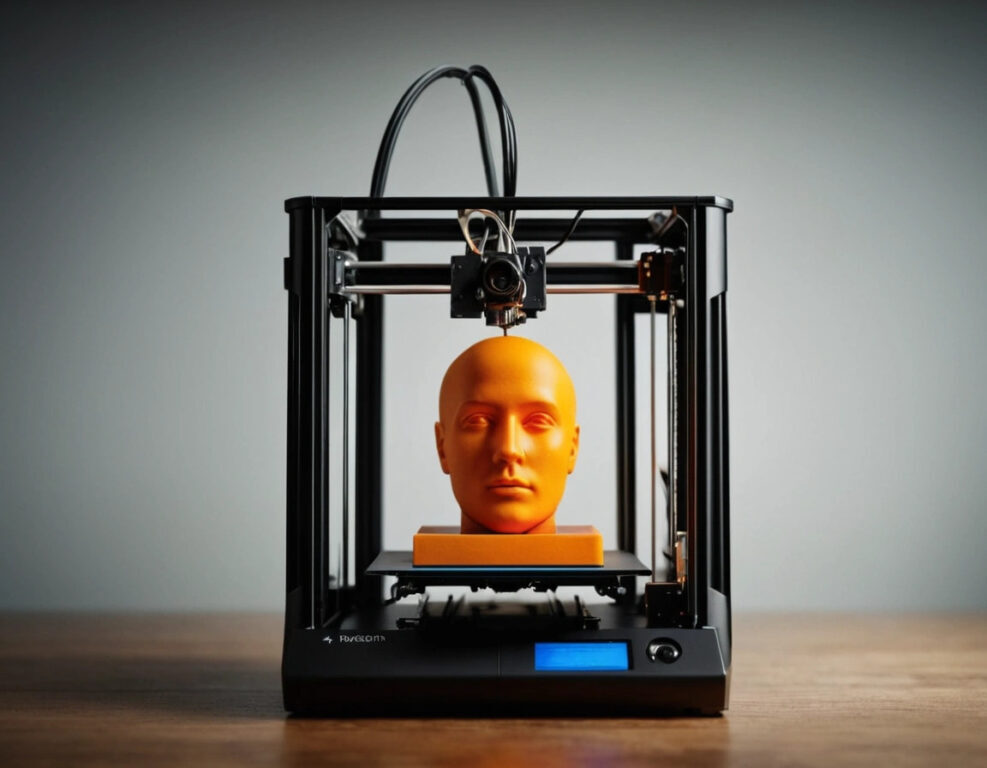
A 3D printer is a machine capable of manufacturing three-dimensional objects physical from a digital design.
I recommend you check out this interesting article: The Best Indoor Plants That Almost Need No Care.
It uses a process known as additive manufacturing, where material is deposited layer by layer until the object is complete. It is a <a href="https://www.chusmeando.com/informatica-y-tecnologia/tiktok/como-utilizan-los-educadores-tiktok-como-tool-de-ensenanza/” title=”¿Cómo utilizan los educadores TikTok como herramienta de enseñanza?”>revolutionary tool that <a href="https://www.chusmeando.com/informatica-y-tecnologia/no-es-el-fin-del-world-podcast-porque-esta-en-auge/” title=”Esto no es el fin del mundo de los pódcast, porque están prosperando”>opens up a world of possibilities for designers, engineers, artists, and hobbyists.
Principles of 3D Printing
The heart of 3D printing is the creation of objects from digital models, usually designed in 3D modeling software or scanned with a 3D scanner. These models are then divided into horizontal layers in a process called slicing, which is managed by specialized software that prepares the data to be printed.
<a href="https://www.chusmeando.com/preguntas-y-respuestas/como-funcionaban-los-primeros-ferrocarriles-que-tecnologias-utilizaban-y-como-han-evolucionado-a-lo-largo-del-tiempo/" title="Cómo funcionaban los primeros Ferrocarriles, qué technologies utilizaban y cómo han evolucionado a lo largo del tiempo”>3D Printing Technologies
There are several 3D printing technologies, each suited to different applications and materials:
- Fused Deposition Modeling (FDM): Uses a plastic filament that is melted and extruded through a hot nozzle.
- Stereolithography (SLA): Cures liquid resins with UV light to form the object’s layers.
- Selective Laser Sintering (SLS): Uses a laser to melt and solidify plastic powder.
Commonly Used Materials
Materials vary depending on the printing technology:
- Plastics such as PLA and ABS are the most common in FDM.
- Resins are used in SLA.
- Plastic powders are typical in SLS.
Benefits of 3D Printing
The advantages of 3D printing are significant:
- It allows for mass customization of products.
- It reduces <a href="https://www.chusmeando.com/informatica-y-tecnologia/seguridad-vpn/que-uso-le-dan-los-desarrolladores-y-equipos-de-ti-a-las-vpns-en-entornos-de-produccion/" title="¿Qué uso le dan los desarrolladores y equipos de TI a las VPNs en entornos de production?”>production costs and material waste.
- It accelerates prototype development.
Applications of 3D Printing
In Industry
In the industrial field, 3D printing is revolutionizing production. It is used to manufacture everything from aircraft components to custom medical prosthetics, offering rapid production of complex parts that would be difficult or impossible to create with traditional manufacturing methods.
At Home and in Education
For hobbyists and educators, 3D printers are valuable tools that foster creativity and hands-on learning. They allow students to visualize and create physical models of their ideas, which improves comprehension and retention of scientific and design concepts.
Maintenance and Care of a 3D Printer
Recommended Maintenance Routines
Keeping a 3D printer in good condition is crucial for optimal operation:
- Regular cleaning of the nozzle and the print bed.
- Calibration of the bed and the extruder to ensure print accuracy.
- Updating the firmware and software to improve functionality and security.
Troubleshooting Common Issues
The most common problems include filament jams, prints that don’t adhere to the bed, and layer errors. Learning to diagnose and resolve these issues can save a lot of time and material.
Ethical and Environmental Considerations of 3D Printing
Environmental Impact
Although 3D printing is generally seen as a sustainable technology due to reduced waste, the type of materials used and their disposal are important environmental concerns. Biodegradable and recycled materials are being explored to mitigate these impacts.
Copyright Issues
The ease with which objects can be replicated through 3D printing also raises legal and ethical issues related to copyright and intellectual property. It is vital to respect the creativity and rights of designers and manufacturers.
In conclusion, 3D printing is a fascinating technology that offers endless possibilities for almost every aspect of modern life. From revolutionizing industries to democratizing custom production, 3D printing is a tool that continues to change the world. Explore, learn, and create, and you’ll see how 3D printing can transform the way you think about manufacturing and design.