
Post actualizado el día September 27, 2026 by DeiviSanzPlay
Having a chameleon as a pet is a unique experience, but it’s not for everyone. If you’ve ever been curious about these mysterious reptiles, get ready, because here I’ll tell you everything you need to know.
I recommend checking out this interesting article: Benefits of Black Garlic: The Best Kept Secret for Your Well-Being.
Imagine a being that changes color according to its mood, that uses its tongue as a projectile to hunt, and whose eyes can move independently. Yes, having a domestic chameleon is almost like caring for a creature from another world. But before you rush out to buy one, you should know a few secrets about their care.
Chameleons in captivity require very specific environmental conditions. It’s not as simple as putting them in a box with leaves. They need a terrarium with good ventilation, controlled humidity, and an adequate temperature. You can find detailed information on sites like National Geographic, Reptile Magazine, Animal Planet, and World Animal Protection.
If you’re looking for an exotic pet, the chameleon can be a great choice, but you must be prepared. They aren’t animals that enjoy being handled like a dog or a cat. They’re more for observing and admiring. Many believe chameleons are aggressive, but in reality, they tend to be shy and prefer to avoid human contact. This doesn’t mean you can’t interact with them, but you should respect their space.
One of the keys to caring for these reptiles is their diet. A pet chameleon feeds on live insects such as crickets, locusts, and worms. You can’t just give it lettuce or fruit like other reptiles. Additionally, it’s important to dust their food with calcium and vitamin supplements to prevent health problems.
Another fundamental aspect is lighting. Chameleons at home need a source of ultraviolet light (UVB) to synthesize vitamin D3 and prevent bone diseases. Without adequate lighting, they can develop serious problems in their bones and joints.
If you’ve made it this far, you’re probably wondering: What’s the best type of chameleon for a beginner? The panther chameleon and the veiled chameleon are two of the most recommended species for those who have never had one before. They’re relatively easy to care for and adapt better to life in captivity.
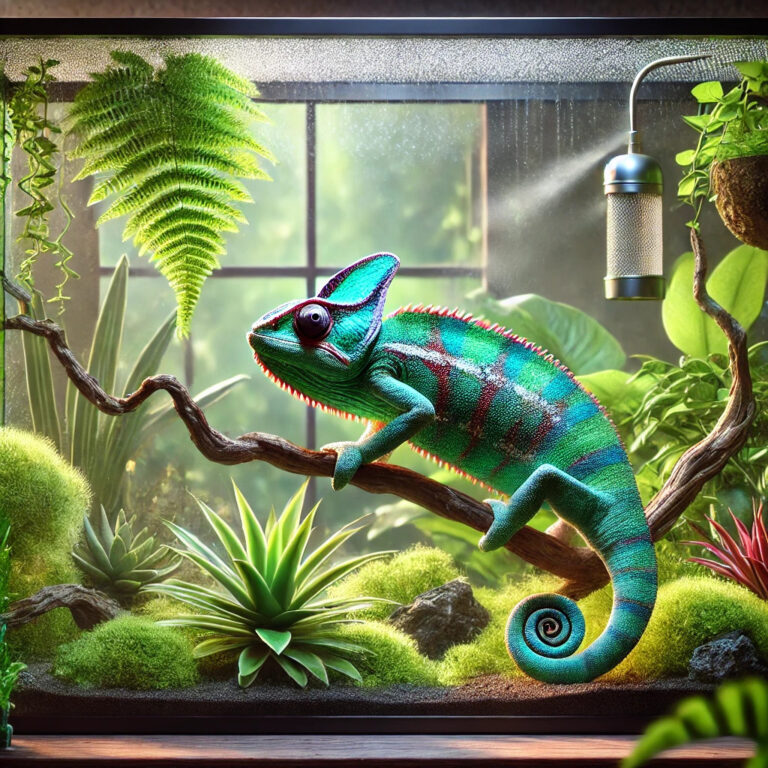
The terrarium is another crucial point. A habitat for chameleons should be vertical, with branches and natural or artificial plants so they can climb. Make sure ventilation is excellent, since a humid environment without air circulation can encourage the appearance of fungi and respiratory diseases.
Shedding skin is a natural process in chameleons. During this period, it’s vital to maintain good humidity in their environment to facilitate the removal of dead skin. Don’t try to pull it off yourself, as you could hurt them. If you notice they’re having difficulty, a slight increase in water spraying can help.
As for socialization, it’s important to know that chameleons are solitary animals. Don’t try to put two in the same terrarium, as they can become aggressive toward each other. Even males can fight to the death if they feel threatened.
If you decide that a chameleon is the ideal pet for you, be prepared to learn constantly. They’re fascinating animals, but they require commitment and specific care. With the right information and the right resources, you can enjoy the company of this incredible reptile for many years.
Is It Legal to Have a Chameleon as a Pet?
If you’ve ever wondered whether it’s legal to own a chameleon as a pet, then this article is for you. Before you get carried away by the excitement of having one of these incredible reptiles at home, there are several things you should know.
The legality of chameleons in captivity varies depending on the country or even the state you live in. In some places, these animals are completely permitted, while in others they may require special permits or even be prohibited. It’s essential that you consult official sources such as CITES, U.S. Fish and Wildlife Service, WWF, or Animal Legal & Historical Center to verify whether you can legally have a domestic chameleon.
Many wonder whether a chameleon as a pet is suitable for beginners. The truth is that, although they aren’t impossible to care for, these reptiles require meticulous attention. They’re not like a dog or a cat; they need a specific environment to survive and stay healthy.
A common question is whether chameleons at home can adapt to life in captivity. The answer depends on the type of chameleon you choose. Some species, such as the panther chameleon or the veiled chameleon, are more resilient and can acclimate better to a domestic environment, as long as they’re provided with an adequate habitat.
The habitat for chameleons must be designed with great care. Any old cage won’t do; these animals need a terrarium with branches, adequate UVB lighting, and specific temperature and humidity levels to thrive.
In terms of diet, a pet chameleon feeds mainly on live insects. It’s not enough to feed them occasionally; they require a balanced diet and vitamin supplements to avoid nutritional deficiencies. Additionally, it’s important to keep in mind that these reptiles can easily become stressed if their environment isn’t managed properly.
Something many don’t know is that some chameleons in captivity can live more than 5 years with proper care. However, due to their solitary nature, they aren’t the type of pet that seeks affection or constant interaction with its owner. They’re creatures that prefer observation over handling.
Now then, what happens if you decide to acquire a chameleon without knowing the regulations? Depending on the region, you could face fines and even confiscation of the animal. In some countries, the trade of exotic reptiles is strictly regulated to prevent the exploitation of endangered species. Buying a chameleon from an uncertified source can contribute to illegal trade and harm wild populations.
If you really want a chameleon, the best thing is to make sure it comes from a certified breeder or a store specializing in exotic pets. Additionally, you should verify that it has the necessary documentation to support its legality.
In conclusion, having a chameleon at home can be a fascinating experience, but it’s not a decision that should be taken lightly. Before doing so, research well, consult the laws of your country, and make sure you can offer it an adequate home. This way you’ll avoid legal problems and guarantee a dignified life for your new pet.
How to Care for a Pet Chameleon at Home
Caring for a pet chameleon at home is no easy task, but it’s not impossible either. If you’re thinking about getting one or already have one, you need to know that it’s not like caring for a dog or a cat. These small reptiles have very specific needs, and if you don’t meet them, they could get sick quickly. But don’t worry, I’m going to tell you everything you need to know.
First, the right terrarium for a chameleon is essential. You can’t just put it in an old fish tank and expect it to be fine. It needs a tall space with good ventilation, branches to climb, and plenty of humidity. Lighting is also key: it requires UVB lamps to absorb calcium and prevent diseases such as metabolic bone disease in chameleons.
As for feeding, it’s not enough to give it just any insect. Ideally, you should provide it with crickets, locusts, or worms, making sure they have a calcium supplement for chameleons. Also, a chameleon won’t drink water from a dish, so you’ll need a drip system to simulate dew in the wild.
If you believe its health is at risk, it’s essential to go to a veterinarian specializing in reptiles. Common diseases in chameleons can be silent, and when you notice the symptoms, sometimes it’s already too late. Sunken eyes, lack of appetite, or changes in color can be signs that something is wrong.
For your little reptile to be healthy and happy, you must make sure its environment mimics its natural habitat as closely as possible. Temperature and humidity are crucial, so you’ll need to monitor these factors daily with a hygrometer and thermometer for chameleons. If these values aren’t correct, your chameleon could become stressed and get sick.
One of the most intriguing things about these animals is their ability to camouflage themselves. But be careful, they don’t always change color to blend in. Sometimes they do it to regulate their body temperature, express their mood, or even to attract a mate. It’s not magic, it’s pure biology.
By the way, a common myth is that chameleons are sociable. They’re not. They’re territorial and prefer solitude. If you decide to have more than one, it’s better in separate terrariums. Otherwise, they could become stressed to the point of getting sick or fighting.
If you’re wondering how long your new friend can live, the answer depends on its species and the care it receives. In general, with proper care and a controlled environment, a chameleon can live between 5 and 10 years. But if you neglect its feeding, lighting, or habitat, its life expectancy can be drastically reduced.
To learn more about their care, consult reliable sources such as:
Caring for a chameleon at home is a challenge, but also a fascinating experience. With the right information and the right commitment, you can enjoy the company of one of the most amazing reptiles on the planet.
FAQ, Questions and Answers
❓ Can chameleons live at home?
Answer: Yes, chameleons can live at home, but they need a specific environment to thrive. It’s essential to provide them with a suitable terrarium with temperature and humidity control and an appropriate diet. They must also have enough space to move around and branches to climb.
❓ How much does it cost to keep a chameleon?
Answer: The cost of keeping a chameleon varies depending on the type of chameleon and the care required. On average, initial expenses include the terrarium, lighting, heating, and decorations, which can range between 100 and 300 USD. Monthly costs include food and supplements, which can be 30 to 50 USD per month.
❓ What care does a baby chameleon need?
Answer: A baby chameleon needs specific care such as a suitable terrarium, with a controlled temperature between 25-30°C during the day and cooler nighttime temperatures. It’s also crucial to provide them with UVB light to prevent bone health problems. Additionally, they should be fed small insects, such as crickets or flies, and misted with water to maintain humidity.
❓ How many years does a chameleon live in captivity?
Answer: In captivity, a chameleon can live between 5 and 10 years, depending on the species and the quality of care. Some species, such as the panther chameleon, have a shorter life expectancy, while others, such as the veiled chameleon, can live longer if properly cared for.
❓ Can I touch my chameleon?
Answer: Chameleons are not very sociable pets and don’t like to be touched frequently. While some may get used to contact, it’s important not to force them and to respect their space. Handling them excessively can cause them stress, so it’s recommended to interact with them calmly and in a limited way.
❓ What type of light does a chameleon need?
Answer: Chameleons need UVB light to synthesize vitamin D3 and maintain their bone health. This light must come from a specialized UVB lamp, and it should be on for 10-12 hours a day. Additionally, it’s necessary to have a heat source, such as a heat lamp, to maintain the proper temperature in the terrarium.
❓ Is it easy to have a chameleon as a pet?
Answer: No, chameleons are not easy pets to care for. They require a very specific environment and can be sensitive to stress. They need daily attention, temperature and humidity control, as well as an appropriate diet and supplements. They are ideal for people with experience in reptile care or who are willing to learn about their needs.