
Post actualizado el día September 27, 2026 by DeiviSanzPlay
How Old Steamships Operated
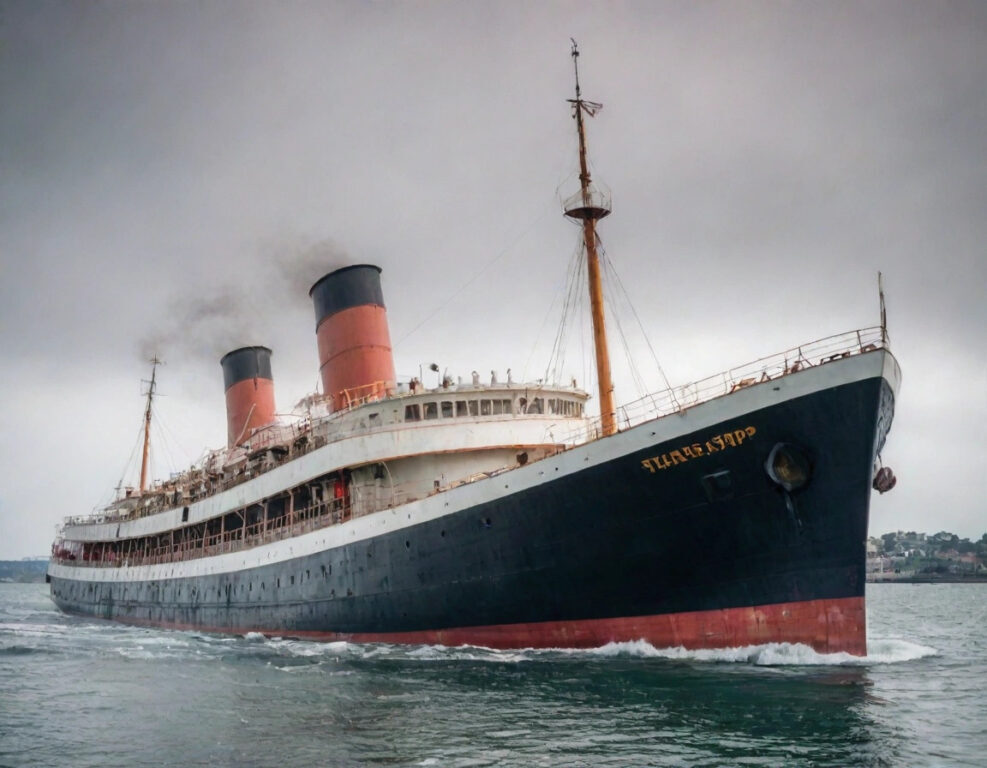
Hello! Today we are going to dive into the fascinating history and technology behind steam ships, those giants of the past that plied the rivers and seas powered by the force of steam.
I recommend you check out this interesting article: The Secret of Longevity: Average Lifespan of the Wild Canary.
Have you ever wondered how these floating colossi managed to move? Well, you’re in the right place to find out.
What Mechanisms Propelled a Steamship?
Steamships, a revolution in 19th-century water transport, <a href="https://www.chusmeando.com/preguntas-y-respuestas/como-worked-los-molinos-de-viento-que-principios-mecanicos-permitian-su-operacion-y-como-han-evolucionado-a-lo-largo-de-los-siglos/” title=”Cómo funcionaban los molinos de viento, qué principios mecánicos permitían su operación y cómo han evolucionado a lo largo de los siglos”>worked thanks to an ingenious system that turned water into steam using fuels such as coal, wood, or oil. This steam, upon expanding, moved pistons or turbines that, in turn, propelled the paddle wheels or propellers of the ship.
Generation of Steam
The heart of a steamship was its boiler. Here, the fuel was burned in a furnace with a controlled air supply, which generated heat. The heat passed through tubes or directly into the water stored in the boiler, turning it into high-pressure steam. This process not only required constant attention to maintain the proper temperature and pressure but also careful handling to avoid explosions, which were a real risk in those days.
<a href="https://www.chusmeando.com/preguntas-y-respuestas/sonar-con-mucha-agua-en-movement/” title=”Soñar con mucha agua en movimiento ¿Qué puede significar esto?”>From Steam to Motion
Once generated, the steam was directed toward the steam cylinders, where its expansion moved pistons connected to connecting rods and cranks. These, through complex mechanical transmissions, transformed the linear motion of the pistons into rotary motion, necessary to drive the paddle wheels or propellers. The efficiency of these systems was not very high by today’s standards, but at the time they represented the cutting edge of technology applied to transport.
Control and Steering
The ship’s pilot controlled the direction by means of a rudder, while speed could be adjusted by regulating the amount of steam produced in the boiler or by means of valves that affected the flow of steam to the pistons. Communication between the rudder area and the engine room was vital and was done through acoustic signals or, later, through telegraph systems.
<a href="https://www.chusmeando.com/preguntas-y-respuestas/impact-del-buque-cuauhtemoc-contra-el-puente-de-brooklyn/” title=”Impacto del buque Cuauhtémoc contra el puente de Brooklyn”>Impact and Evolution
Steamships had an enormous impact on economic development, enabling navigation against the current on rivers and significantly improving travel times on maritime and river routes. Over time, the technology behind these ships evolved and they became safer and more efficient until they were gradually replaced by diesel and turbine engines in the 20th century.
This journey through the mechanics and history of steamships shows us not only how these impressive vessels worked, but also how they drove significant changes in navigation and international trade. A true revolution of the industrial era!