

Post actualizado el día September 27, 2026 by DeiviSanzPlay
What was Gutenberg’s printing press and what were its key innovations?
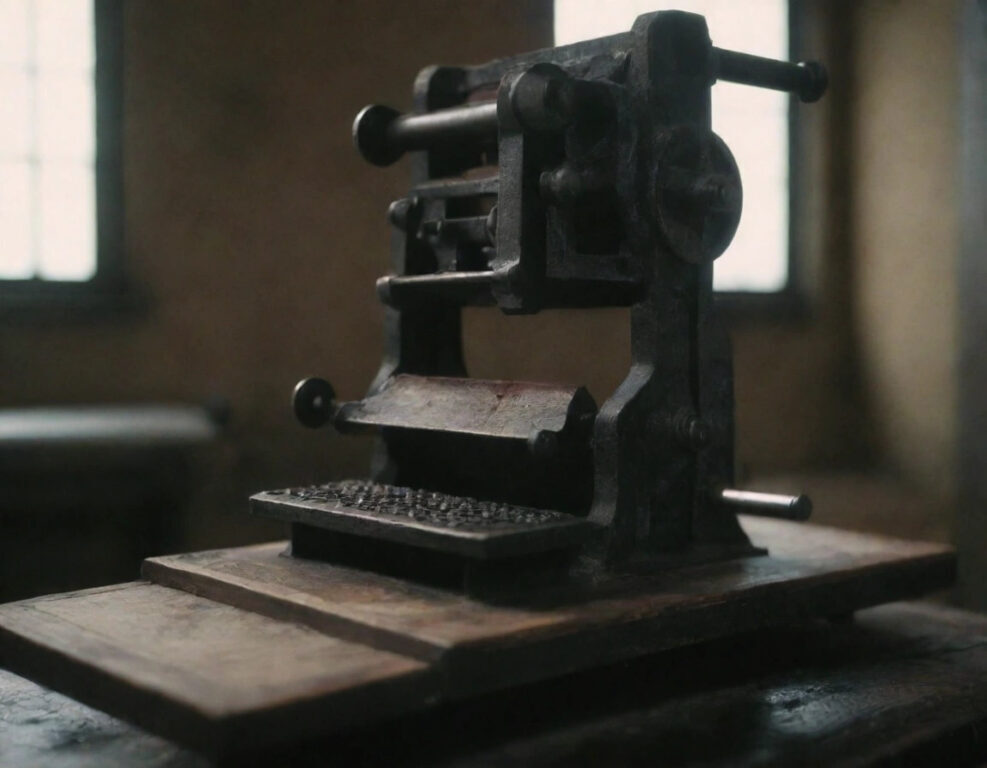
Johannes Gutenberg’s printing press, developed around 1440 in Mainz, Germany, was the first of its kind to make use of movable type and a mechanical press for the mass <a href="https://www.chusmeando.com/informatica-y-tecnologia/seguridad-vpn/que-uso-le-dan-los-desarrolladores-y-equipos-de-ti-a-las-vpns-en-entornos-de-produccion/" title="What use do developers and IT teams give to VPNs in production environments?">production of books.
I recommend you check out this interesting article: Have you ever wondered what the fastest animal in the world is?.
This technology was revolutionary because it allowed for the rapid and relatively inexpensive reproduction of printed pages.
Gutenberg’s main innovation was the <a href="https://www.chusmeando.com/preguntas-y-respuestas/la-segunda-guerra-mundial-causas-development-y-consecuencias/" title="World War II. Causes, development and consequences">development of movable metal type, which could be rearranged and reused to create different texts. These types were durable, precise, and uniform, which allowed for clear and consistent prints.
Additionally, Gutenberg modified wine presses to apply pressure uniformly over the ink and paper, a method that remained in use with few modifications until the 19th century. This combination of movable type and mechanical press meant unprecedented efficiency in book production.
How was the printing process carried out on Gutenberg’s printing press?
The printing process with Gutenberg’s printing press was meticulous and laborious, although much more efficient than the previous manuscript method. It began with the creation of the movable types, each one representing a character, which were placed in a matrix to form words and lines of text.
Once the types were in place, ink was applied to them using leather rollers. The paper was then placed over the inked types and the press was lowered to transfer the ink to the paper. This process was repeated for each page of the book.
After printing, the pages were left to dry and later bound to form a complete book. This process not only accelerated book production but also ensured that each copy was practically identical.
What was the impact of Gutenberg’s printing press on society?
The impact of Gutenberg’s printing press was monumental and multifaceted. First, it democratized knowledge, making it accessible to a much broader audience than before. Books became cheaper and more common, which facilitated the spread of education and learning.
The printing press also had a profound impact on religion; the Gutenberg Bible was one of the first mass-produced books, which contributed to the Reformation and allowed more people to read sacred texts for themselves instead of depending on clergy to interpret them.
Additionally, the printing press stimulated the development of vernacular languages and literatures. With more people reading, the demand for books in local languages grew, which in turn helped standardize those languages and spread culture.
How has printing technology evolved since Gutenberg?
Since Gutenberg’s days, printing technology has advanced dramatically. In the 19th century, the invention of the steam press greatly increased the speed and volume of production, freeing printing from the limitations of human or animal power.
The 20th century saw the birth of offset and digital printing, which offer even more speed and flexibility. Today, 3D printers are once again revolutionizing the way we think about printing, allowing the creation of three-dimensional objects directly from digital designs.