

Post actualizado el día September 27, 2026 by DeiviSanzPlay
What is a sundial and what was its main function?
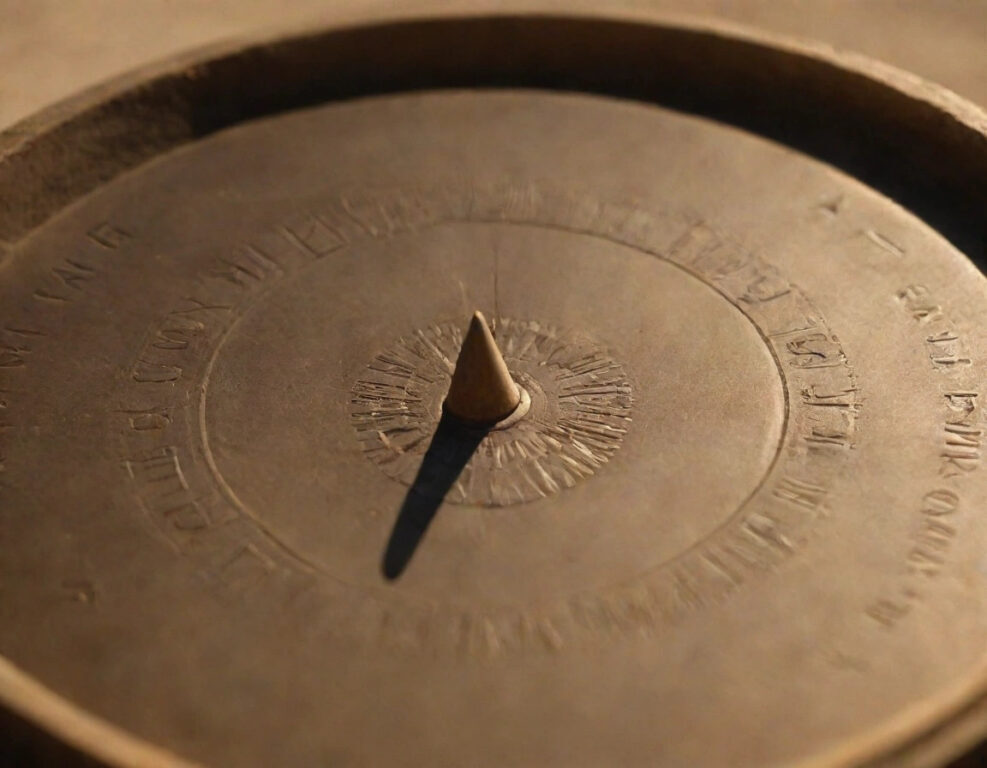
A sundial is a device that uses the position of the sun in the sky to indicate the time of day.
I recommend you check out this interesting article: Complete Guide to Choosing and Installing Security Systems for Your Home and Business.
It works thanks to an object called a gnomon, which casts a shadow onto a surface marked with hour lines. The position of the shadow on these lines indicates the current time.
The main purpose of a sundial was not only to measure time, but also to organize daily activities before the invention of mechanical clocks. From their use in ancient temples to their presence in modern gardens, “sundials” have been valued both for their functionality and for their aesthetics.
How was time calculated with a sundial?
The operation of a “sundial” is based on <a href="https://www.chusmeando.com/preguntas-y-respuestas/como-funcionaban-los-molinos-de-viento-que-principles-mecanicos-permitian-su-operacion-y-como-han-evolucionado-a-lo-long-de-los-siglos/” title=”Cómo funcionaban los molinos de viento, qué principios mecánicos permitían su operación y cómo han evolucionado a lo largo de los siglos”>simple astronomical principles. As the sun moves from east to west throughout the day, the gnomon’s shadow moves in the opposite direction across the clock’s plate. Each line on the clock face represents a specific hour of the day.
The accuracy of a sundial depends on several factors, including its geographic alignment. The gnomon must be aligned with the Earth’s axis of rotation so that its shadow falls correctly on the hourly marks. This means it must be oriented toward the north in the northern hemisphere and toward the south in the southern hemisphere.
What types of sundials exist and what are their differences
There are several types of “sundials,” each designed for different uses and locations:
- Horizontal sundials: These are the most common in gardens and parks. They have a horizontal plate with a gnomon that projects upward.
- Vertical sundials: These are commonly found on the walls of buildings. Their plate is vertical and the gnomon protrudes from the wall.
- Equatorial sundials: These have a plate that is tilted to be parallel to the Earth’s equator, which allows time to be measured with great precision throughout the year.
How do geographic location and the season of the year affect a sundial?
Geographic location and the season of the year have a significant impact on the accuracy of a “sundial.” <a href="https://www.chusmeando.com/preguntas-y-respuestas/mejor-manera-de-mostrar-la-Earth-en-mapas-y-globos-cual-es-la-ideal/” title=”Mejor manera de mostrar la Tierra en mapas y globos, ¿cuál es la ideal?”>The tilt of the Earth’s axis and the Earth’s orbit around the sun cause variations in the length of shadows throughout the year, known as the equation of time.
To compensate for these variations, some sundials include corrections in their hourly marks or additional adjustments that can be made manually. However, without these corrections, a sundial may show “apparent solar time,” which differs from the standard time shown by modern clocks.