

Post actualizado el día September 27, 2026 by DeiviSanzPlay
What is an astrolabe and what were its main uses?
The astrolabe is an astronomical and navigation instrument dating back to antiquity.
I recommend you check out this interesting article: How to humanize a ChatGPT text to make it more approachable and natural.
Used by both astronomers and sailors to measure the height of celestial bodies above the horizon, the astrolabe became an indispensable tool for navigation before the invention of the sextant and modern GPS.
The main uses of the astrolabe included locating and predicting the position of the sun, the moon, the stars, and the planets. It was also used to determine local time and latitude, critical aspects for planning maritime navigation and understanding the constellations for calendars and horoscopes.
How was an astrolabe built and operated?
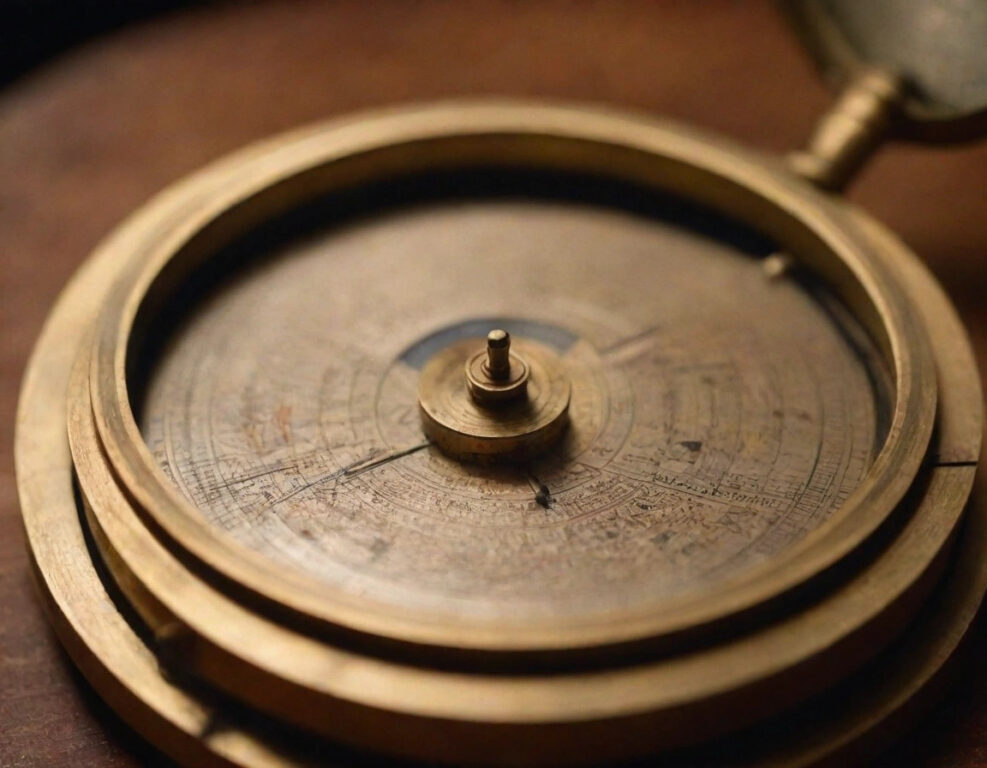
The astrolabe was typically a flat disc, usually made of brass, that contained a representation mobile of the sky on its surface. The main part of the astrolabe, called mater, contained a plate engraved with a grid that represented the local sky at a specific latitude.
On this base, a series of interchangeable plates, known as tympanums, were placed, each of which was valid for a different latitude. A movable rule called an alidade was used to measure the angle of the stars or the sun above the horizon.
What innovations did the astrolabe bring to science and navigation?
The astrolabe was one of the first tools to use a physical representation of mathematical principles to solve practical real-world problems. Its ability to transform celestial measurements into useful geographic information revolutionized both navigation and astronomy.
Sailors could use the astrolabe to identify stars and planets and, by extension, determine their direction and position at sea. This capability was invaluable in an era when traveling across open oceans was extremely risky and depended enormously on celestial navigation.
How and why did the use of the astrolabe decline?
Despite its usefulness, the use of the astrolabe began to decline in the 18th century with the invention of the sextant, an instrument that allowed greater precision in measuring celestial angles. The sextant was easier to handle in conditions of rough seas and provided more direct and precise measurements, which made it more suitable for maritime navigation.
Furthermore, the advancement of clock technology, especially with the invention of precise marine chronometers, decreased the dependence on astronomical instruments for determining longitude, marking the end of the astrolabe era in navigation.