
Post actualizado el día September 27, 2026 by DeiviSanzPlay
What is an hourglass and what was its use?
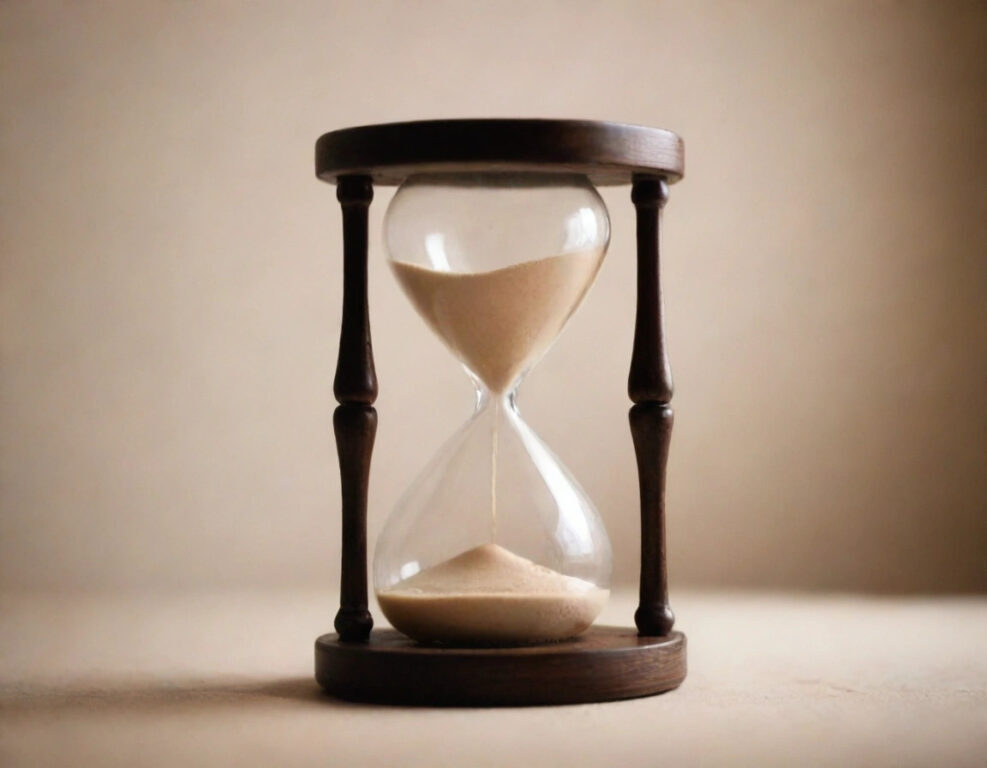
The hourglass is a device composed of two glass containers connected vertically by a narrow neck that allows the sand to pass from one container to the other.
I recommend you check out this interesting article: Change Gmail’s Language and Password with Ease.
Traditionally, the sand inside the hourglass flows from one bulb to the other in a fixed time, which allows measuring the passage of time.
The main purpose of the hourglass has been to measure specific intervals of time, such as an hour, half an hour, or minutes. It has been used in a variety of contexts, from <a href="https://www.chusmeando.com/informatica-y-tecnologia/como-usar-un-bloqueador-de-anuncios-en-chrome-y-mejorar-tu-experiencia-de-navegacion/" title="¿Cómo usar un bloqueador de anuncios en Chrome y mejorar tu experiencia de navegación?”>maritime navigation to determine the speed of a ship, to the kitchen to measure cooking time.
How did <a href="https://www.chusmeando.com/preguntas-y-respuestas/como-the hourglass work-un-barco-a-vapor-desde-la-ciencia-detras-de-su-motor-hasta-el-impacto-global-de-esta-tecnologia/” title=”Cómo funcionaba un barco a vapor, desde la ciencia detrás de su motor hasta el impacto global de esta tecnología”>work?
The operation of the hourglass is surprisingly simple yet effective. It is based on gravity and the uniform rate at which the grains of sand pass from one compartment of the bulb to the other. When the hourglass is inverted, the sand begins to accumulate in the lower bulb at a constant pace, providing a visual measure of time.
The consistency of the sand’s flow rate is crucial for the accuracy of the hourglass. This is achieved by using finely graded sand and a closely calibrated neck that regulates the flow of sand. Humidity and the quality of the sand can also affect accuracy, so the design of the hourglass must take into account these factors.
What factors influence the accuracy of the hourglass?
Several factors can influence the accuracy of the hourglass. The size and shape of the neck are critical, since a neck that is too wide will allow the sand to flow too quickly, while one that is too narrow can become clogged or slow the flow.
The quality of the sand is another crucial factor; it must be uniform in size and weight to ensure a constant flow. Additionally, ambient humidity can cause the grains of sand to stick to each other, altering the pace of the flow. For these reasons, the hourglass must be calibrated and stored properly to maintain its accuracy.
How has the use of the hourglass evolved over time?
Although today hourglasses are more often decorative or educational objects, they have played a crucial role in various practical applications throughout history. In navigation, for example, they were essential for measuring sailors’ watch time and for estimating a ship’s speed at sea. In the kitchen, they helped measure cooking time before mechanical or digital timers existed.
Today, the hourglass remains a symbol of the fleeting nature of time and is used in everything from board games to meditation practices, where measuring time visually rather than digitally can help focus the mind and calm the spirit.