

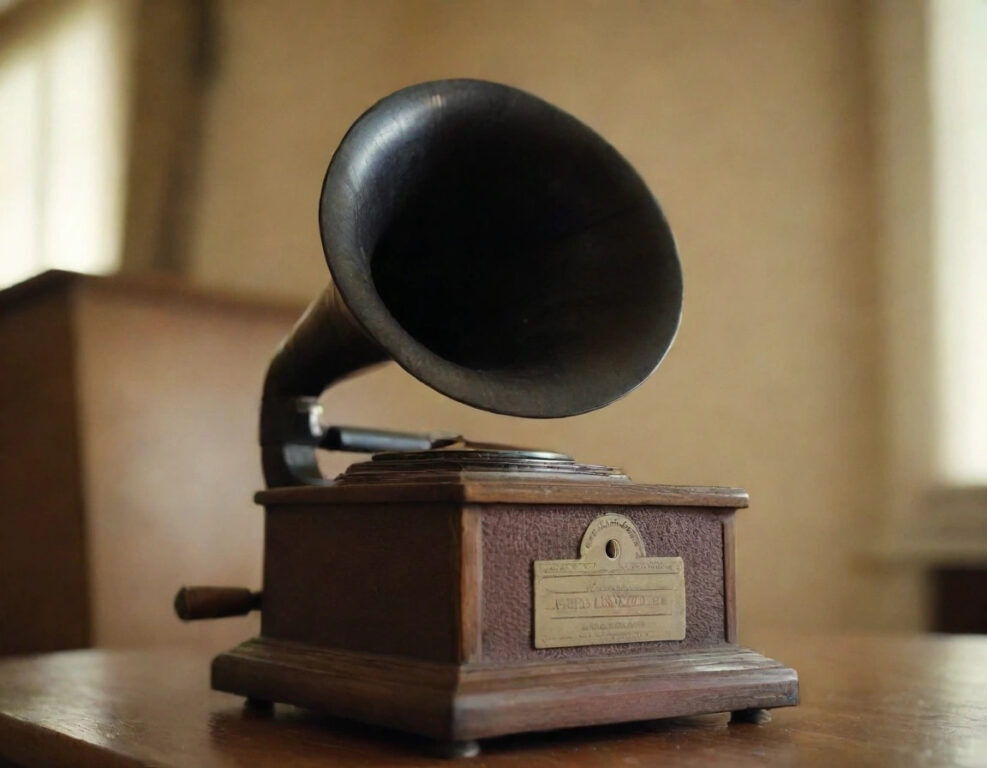
Post actualizado el día September 27, 2026 by DeiviSanzPlay
What was the phonograph and what was its original purpose?
The phonograph was the first <a href="https://www.chusmeando.com/informatica-y-tecnologia/actualizar-radio-android-china-guia-completa-para-mejorar-tu-device/” title=”Updating Chinese Android Radio: Complete Guide to Speed Up Your Device’s Performance”>device capable of recording and reproducing sounds.
I recommend you check out this interesting article: The Christmas Island Flying Fox: Why Is This Pollinator Disappearing?.
Invented by Thomas Edison, this device not only captured sounds but also allowed them to be reproduced as many times as desired. Its original purpose was quite broad, from recording speeches and music to serving as an office tool for dictation and transcription.
This device <a href="https://www.chusmeando.com/preguntas-y-respuestas/como-worked-un-barco-a-vapor-desde-la-ciencia-detras-de-su-motor-hasta-el-impact-global-de-esta-tecnologia/” title=”How a Steam Ship Worked, from the Science Behind Its Engine to the Global Impact of This Technology”>worked by recording vibrations of sound onto a cylinder coated with tin or wax. Edison’s initial invention used paper covered in tin foil before more durable and practical methods were developed.
How was sound recorded and reproduced on the phonograph?
Edison’s phonograph recorded sounds through a mechanical method. A diaphragm coupled to a needle vibrated with the sounds of the environment. These vibrations were transferred to the needle, which inscribed a spiral groove into a rotating cylinder covered with a soft material such as wax.
To reproduce the sound, the process was reversed. The needle traveled along the already recorded grooves, and the vibrations this generated moved the diaphragm. This, in turn, moved the air around it, recreating the original sounds that had been recorded. The sound was amplified through a horn or speaker coupled to the diaphragm.
What <a href="https://www.chusmeando.com/alarmas-y-videovigilancia/que-innovations-en-almacenamiento-afectan-los-sistemas-de-videovigilancia/” title=”What Storage Innovations Affect Video Surveillance Systems?”>innovations and improvements were made to the original phonograph?
Edison’s original phonograph underwent several innovations and improvements over the years. Alexander Graham Bell, Charles Tainter, and Chichester Bell improved the original design by introducing the use of wax cylinders, which provided superior sound quality and durability compared to Edison’s tin foil ones.
Additionally, improvements were introduced in the quality of sound reproduction and in the durability of the materials used for the cylinders and needles. These advances made the phonograph more practical and accessible to a broader public, increasing its popularity and commercial viability.
What was the cultural and social impact of the phonograph?
The cultural and social impact of the phonograph was profound. For the first time in history, music could be recorded and listened to anywhere and at any time. This democratized access to musical performances and allowed the music of famous artists to reach audiences who could never have attended live concerts.
The phonograph also had a significant impact in other areas, such as education and home entertainment. It facilitated the creation of audiobooks and accessible educational materials, and it became a source of entertainment and companionship in homes, changing the dynamics of family and social activities.