
Post actualizado el día September 27, 2026 by DeiviSanzPlay
Does your poinsettia look wilted or damaged? Don’t worry! With the right care, you can revive it and make it look spectacular again. <a href="https://www.chusmeando.com/flores-y-plantas/por-que-se-caen-las-leaves-de-mi-flor-de-pascua/” title=”Why are my poinsettia leaves falling off?”>How to revive a poinsettia? Reviving a poinsettia involves improving its <a href="https://www.chusmeando.com/informatica-y-tecnologia/impresiones-con-rayas-o-colores-feos-aprende-a-limpiar-el-cabezal-de-tu-impresora-paso-a-paso/" title="How to clean the printer head to keep your printer in perfect condition“>conditions of light, watering, and nutrients, removing damaged parts, and stimulating its growth.
I recommend checking out this interesting article: What Does a Fighter Feel When Receiving a KO? Discover the Reality of Combat Sports».
What to do if the poinsettia loses its leaves?
It’s common for the poinsettia to lose leaves after the Christmas holidays. This happens because the plant enters a natural rest period. The first thing you should do is check if the roots are healthy and if the substrate drains properly. If the roots are in good condition, you can proceed to cut the dry branches and leave only the strongest stems.
To stimulate its recovery, place the plant in a bright spot, but avoid direct exposure to the sun. Indirect light is ideal for the plant to start developing new shoots. Also, reduce the frequency of watering during this period to avoid waterlogging.
If you notice that the remaining leaves are yellow or soft, this may be a sign of excess water. In this case, check the drainage of the pot and adjust the amount of water you provide. A proper balance of humidity is essential to revive the poinsettia.
How to prune to help recovery?
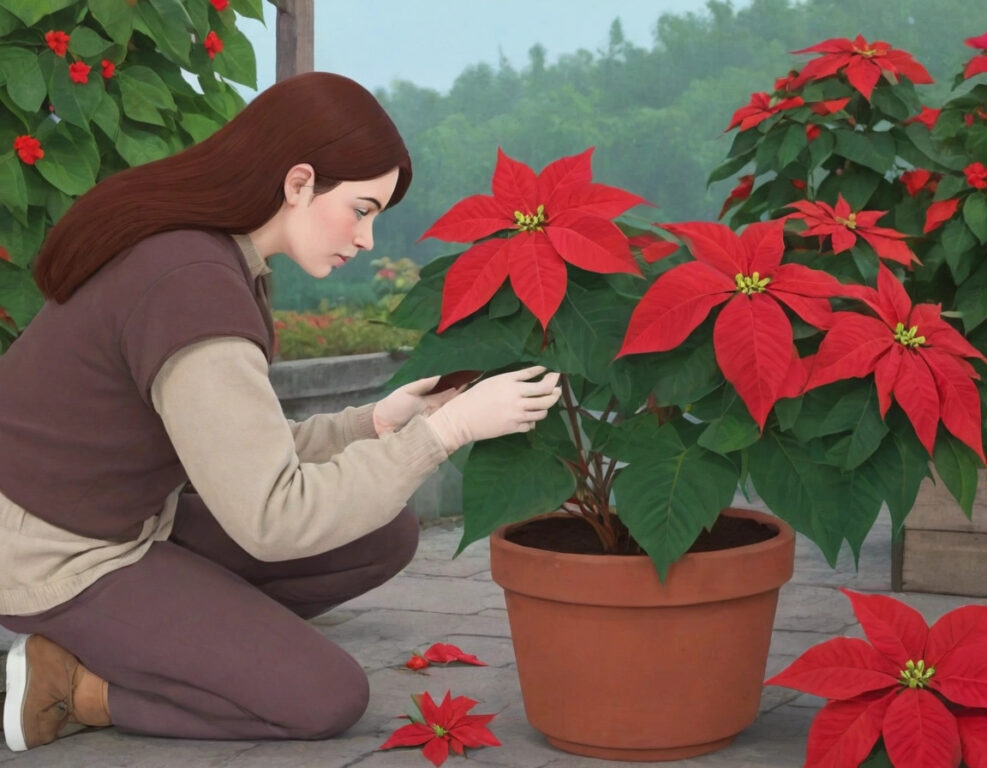
Pruning is a crucial step when you’re looking for how to revive a poinsettia. Removing wilted or damaged parts allows the plant to concentrate its energy on healthy stems. Use well-sharpened and disinfected scissors to avoid infections.
Cut the weak or dry branches, leaving approximately 10 cm of each main stem. This will give space for new strong shoots to grow. Also, don’t forget to remove the wilted flowers, as these consume energy that could be used for recovery.
Once the pruning is done, water the plant moderately and apply a mild fertilizer to stimulate its growth. The additional nutrients are especially useful during the recovery phase.
What additional care does a recovering poinsettia need?
In addition to pruning and proper watering, it’s important to adjust the plant’s location. Place it in a spot where it receives indirect light and is protected from drafts or sudden temperature changes. Stable conditions are essential for the plant to recover.
Using a specific fertilizer for indoor plants can be a great help. Apply it once a month during spring and summer to provide the necessary nutrients. It’s also advisable to change the substrate if the plant has been in the same soil for a long time, as this improves air circulation in the roots and prevents compaction.
Another aspect to consider is environmental humidity. If the environment is very dry, use a humidifier or place a dish with water near the plant to increase humidity. An adequate humidity level favors recovery and prevents the leaves from drying out.
How long does it take for a poinsettia to recover?
The recovery of a poinsettia depends on its initial condition and the care it receives. With the right treatment, you can start noticing improvements in a few weeks. However, the complete process for the plant to regain its shape and vitality can take several months.
Patience is key. During this time, make sure to closely observe the plant and adjust the care as needed. If you notice that the stems begin to sprout again, it’s a sign that you’re on the right track. Consistency in care is fundamental to achieving a successful recovery.
What mistakes should you avoid when trying to revive a poinsettia?
When learning how to revive a poinsettia, it’s important to avoid certain common mistakes. One of the most frequent is overwatering, which can cause root rot. Another mistake is exposing the plant to sudden temperature changes, which can worsen its condition.
Also avoid using overly concentrated fertilizers, as this can burn the roots and damage the plant even more. If you decide to change the substrate, make sure to do it carefully so as not to damage the roots. Gentle handling is crucial during this process.
With these steps and tips, you can bring back the life to your poinsettia and enjoy its beauty for many more seasons.