
Post actualizado el día September 27, 2026 by DeiviSanzPlay
seguridad-y-optimizar-ventas-en-tu-negocio/” title=”What Is a POS Terminal and What Is It Used For? A Guide for Businesses”>What mechanisms do atomic reactors use to generate energy?
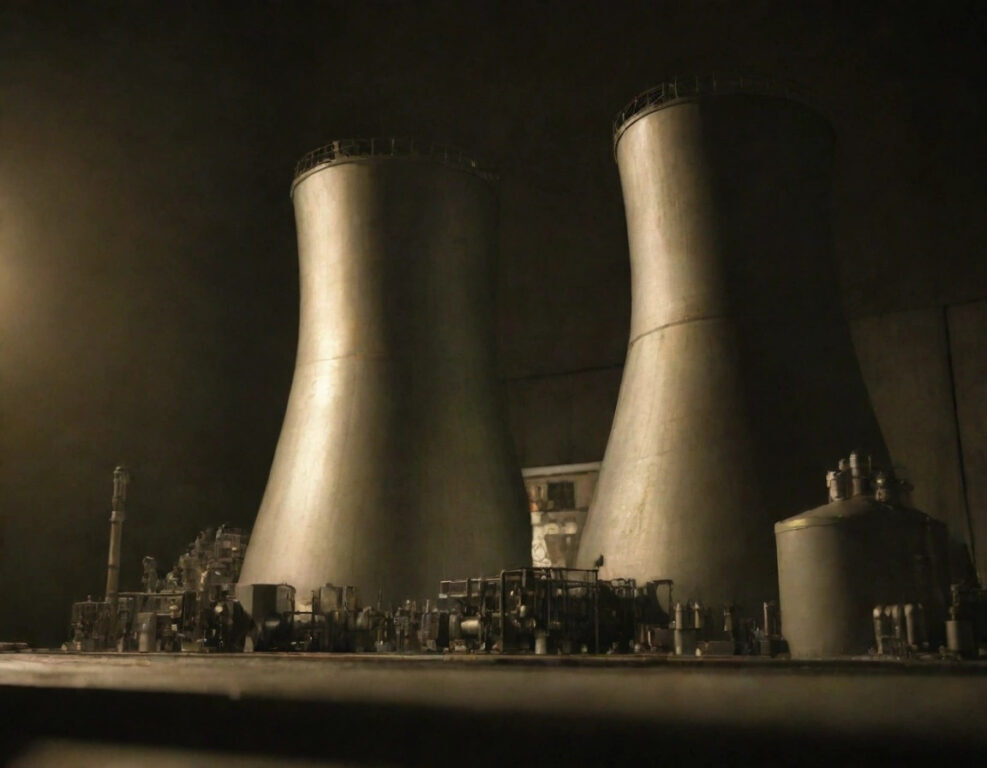
Imagine you hold the power of the sun in your hands, but instead of a gigantic star, it is a contained structure capable of powering entire cities. That is, in essence, what a nuclear reactor does. vapor-desde-la-ciencia-detras-de-su-motor-hasta-el-impacto-global-de-esta-tecnologia/” title=”How a steam ship worked, from the science behind its engine to the global impact of this technology“>The heart of this technology is nuclear fission, a process in which uranium atoms split when struck by neutrons. Each time a uranium atom breaks apart, it releases more neutrons that go on to strike other uranium atoms, creating a self-sustaining chain reaction.
This bombardment releases an extraordinary amount of energy in the form of heat. Heat is essential, since it is used to turn water into steam. Now, why is steam important? Because steam is what actually does the hard work. It drives the turbines, which are like large windmills that, instead of spinning with the wind, spin with steam. And as they spin, these turbines activate generators that transform mechanical energy into electricity.
The engineering behind these reactors is complex and fascinating. Control systems are needed to ensure that the chain reaction does not get out of control. To do this, control rods made of materiales/” title=”Everything you need to know about glassware: history, types, and materials”>materials that absorb neutrons are used. These rods can be inserted more or less into the core of the reactor to regulate the number of neutrons striking the uranium, and with it, the energy released.
A crucial aspect of the operation of a nuclear reactor is the cooling system. Since a great deal of heat is generated, it is essential to keep the reactor at a safe temperature to avoid overheating that could trigger a meltdown of the core, colloquially known as a ‘meltdown’. This is where the coolant circuit comes into play, which can be water or even gas, circulating constantly around the core to absorb excess heat.
How is safety ensured in nuclear facilities?
Talking about nuclear energy immediately leads to thinking about safety. And the fact is that safety is the backbone of nuclear plants. It is not simply a matter of protocols; it is a culture, an ecosystem of precautions and advanced technologies that intertwine to protect both people and the environment.
First of all, a strategy known as defense in depth is employed. This strategy is like the layers of an onion, with multiple safety barriers ranging from the reactor core to the outside of the plant. In the reactor core, where the nuclear fuel is located, high-strength materials are used that can contain radioactivity even under extreme conditions.
Around the core, we find the primary containment system. This is a physical barrier, generally an enormous structure of steel and concrete, that hermetically seals in radioactivity. In the unlikely event that something went wrong, this containment is the last line of defense that prevents radioactive materials from being released into the environment.
Continuing with safety, redundant cooling systems are fundamental. No single source of cooling is relied upon; there are multiple systems ready to spring into action if one fails. Redundancy is key; it is like having several parachutes when you jump out of a plane, knowing that if one does not open, you have others in reserve.
Nuclear plant operators are also an integral part of the safety equation. These highly trained professionals constantly monitor the plant’s systems and are trained to make quick and effective decisions in emergency situations. Regular simulations and training ensure that they are prepared for any scenario.
In addition, nuclear plants are designed to withstand extreme events, from earthquakes to floods. Engineers use historical data and advanced models to foresee the type of natural catastrophes that could affect the plant and build with this in mind. Thus, resistance to natural disasters is incorporated from the very heart of the design.
In short, nuclear safety is not static; it is dynamic and always evolving, adapting to new knowledge and technologies. The priority is clear: protect life and preserve our planet, ensuring that nuclear energy is not only efficient, but also reliable and safe for present and future generations.
What is the environmental impact of nuclear reactors?
When thinking about nuclear energy, it is common to pay special attention to the environmental impact of this energy source. And although it may seem contradictory, nuclear energy is one of the forms of electricity production that emits the least CO2. Why? Well, because once a nuclear reactor is in operation, it does not burn fossil fuels to generate electricity, as coal or natural gas plants would.
However, we must be fair and acknowledge that the full life cycle of a nuclear plant does have associated emissions. From uranium mining to fuel processing and enrichment, greenhouse gas emissions are generated. But even including these stages, the carbon footprint of nuclear energy is significantly lower compared to traditional fossil energy sources.
The treatment of nuclear waste is another crucial point. This is perhaps one of the most challenging aspects, but science and engineering have made remarkable advances. High-level waste is stored in sealed containers and managed with extreme caution. Deep geological storage is presented as a long-term solution for this waste, enclosing it in stable rock formations that can contain radioactivity for thousands of years.
But not everything is a challenge. Nuclear energy also offers environmental benefits. For example, by occupying much less land than other energy sources such as wind or solar to produce the same amount of electricity, it preserves natural habitat and biodiversity. Additionally, modern reactors are designed to use fuel more efficiently and produce less waste.
Moreover, some advances promise to transform the environmental impact of nuclear reactors even further. We are talking about research into fourth-generation reactors and nuclear fusion, which could reduce radioactive waste production and increase operational safety. Nuclear fusion, in particular, is like the holy grail of nuclear energy, with the potential to generate massive amounts of energy without the long-lived waste of nuclear fission.