
Post actualizado el día September 27, 2026 by DeiviSanzPlay
Did you know that the anteater is a fascinating animal that has a crucial role in its ecosystem? This mammal, known for its characteristic snout and its ability to feed on ants and termites, is one of the most interesting creatures in South American wildlife. But beyond its appearance and diet, the anteater and its ecosystem are closely linked, and understanding its <a href=”https://www.chusmeando.com/descubre-reino-animal/cual-es-el-habitat-natural-de-las-frogs-y-donde-viven-comunmente/” title=”What is the habitat natural habitat of frogs and where do they commonly live?”>natural habitat is essential to understand how it adapts to its environment.
<a href=”https://www.chusmeando.com/descubre-reino-animal/tigres/tigre-blanco-donde-lives-este-majestuoso-felino/” title=”White Tiger: Where Does This Majestic Feline Live?”>Where does the anteater live? Although it is often associated with tropical forests, this animal has a much more diverse habitat. The geographic areas where the anteater lives include everything from the jungles of Central America to the plains and dry forests of South America. These animals can be found in countries such as Brazil, Venezuela, and Bolivia, where the warm, humid climate offers the ideal conditions for their survival.
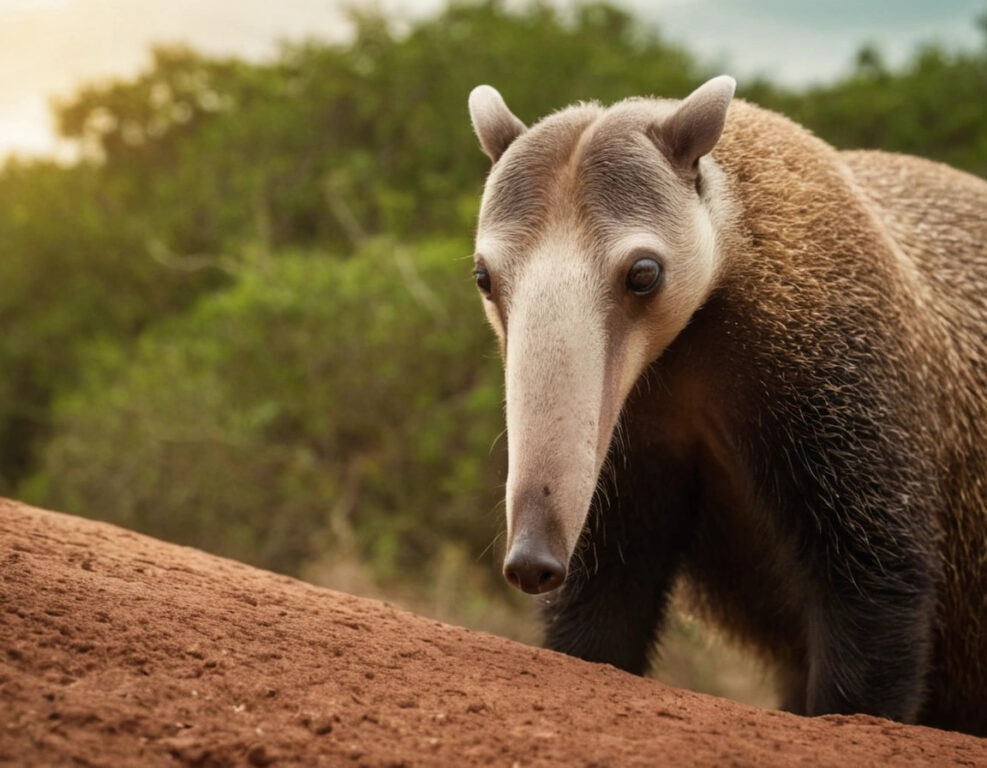
The <a href=”https://www.chusmeando.com/descubre-reino-animal/que-caracteristicas-characteristics-a-las-ranas-de-otros-anfibios/” title=”What characteristics distinguish frogs from other amphibians?”>characteristics of the anteater are unique and perfectly adapted to its natural habitat. This animal has long, strong claws that it uses to break open termite and ant nests, which are its main food source. In addition, its long, sticky tongue allows it to reach the most difficult-to-reach insects. In this way, the anteater plays an important role in regulating populations of insects in its environment.
The diet of the anteater in its habitat is directly related to its behavior. These animals are generally solitary and spend a lot of time searching for their food, which they consume in large quantities to meet their energy needs. They feed on insects, but they can also consume fruits and other small animals, depending on what they find available in their habitat.
One of the most amazing things about the anteater is how the anteater adapts to its habitat. Its dense fur protects it from insect bites, and its excellent sense of smell allows it to detect ant and termite colonies from a great distance. These adaptations are essential for its survival, since without them, it could not live in the diverse habitats it occupies.
The anteater in nature has an important ecological function. Its activity of feeding on insects helps control ant and termite populations, which, in turn, favors the health of the ecosystem where it lives. This behavior makes the anteater considered a key species for biodiversity in its habitats.
In summary, the anteater and its role in the ecosystem are fundamental to maintaining the balance of nature in the areas it inhabits. From its unique adaptations to its ability to regulate insect populations, this animal demonstrates how nature has complex mechanisms that guarantee the survival of all species, large and small.