
Post actualizado el día September 27, 2026 by DeiviSanzPlay
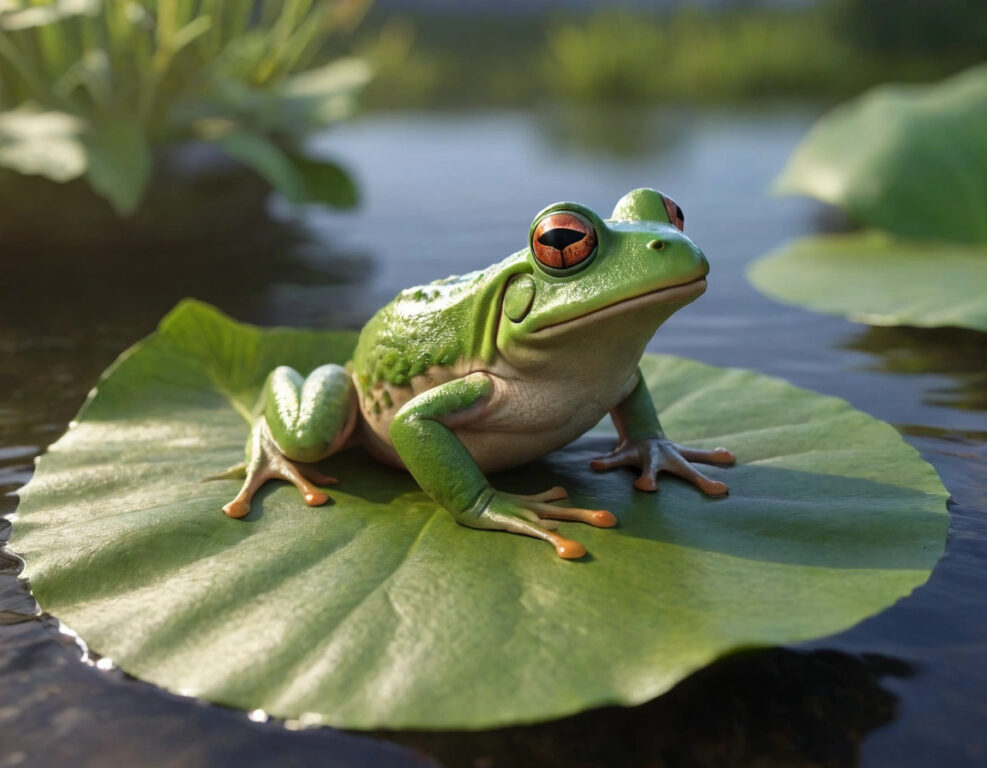
Have you ever stopped to observe a frog-en-la-cadena-alimenticia/” title=”What role do frogs play in the food chain?”>frog in detail? I’m not talking about those fleeting moments, but about truly understanding what characteristics distinguish frogs from other amphibians. Frogs have unique physical characteristics that make them stand out in the animal kingdom. For example, their ability to adapt to their aquatic and terrestrial environment is surprising. Thanks to their long hind legs, they are excellent jumpers, something that not all species of amphibians achieve with the same skill.
I recommend you check out this interesting article: toboso-un-pueblo-que-te-hara-volver-a-la-historia-de-don-quijote-de-la-mancha-y-dulcinea-del-toboso/” title=”El Toboso, a Town That Will Take You Back to the Story of Don Quixote of La Mancha and Dulcinea del Toboso” class=”internal-recommendation” target=”_self” rel=”noopener”>El Toboso, a Town That Will Take You Back to the Story of Don Quixote of La Mancha and Dulcinea del Toboso.
If we talk about their key differences from other amphibians, such as salamanders, the first thing we notice is how they move. Salamanders, although fascinating, don’t have that jumping agility, and their bodies are much more elongated compared to those of frogs. But it’s not just their physique that’s intriguing. The life cycle of frogs, which goes from egg to tadpole and then to adult, is a much more visible process than in other species. Metamorphosis in frogs is truly striking—did you know that frog larvae have gills and then develop lungs? A radical change!
Then there’s the skin of frogs, which also plays a fundamental role in their survival. Their skin is permeable, which allows them to breathe through both their lungs and their skin, something that sets them apart from other amphibians. This skin function also helps them regulate their temperature and protect themselves from predators. Frogs, in general, are much more resistant to environmental variations thanks to these adaptations.
And speaking of reproduction, frogs usually seek out bodies of water to lay their eggs, which makes them very different in terms of reproductive habits. Compared to other amphibians, such as salamanders, which have a more dispersed approach to reproduction, frogs often gather in large groups when it’s time to spawn.
Now, what about their respiration? While other amphibians have a respiratory system more dependent on their lungs, frogs have a unique mix: they can breathe through their skin when they’re in water, which gives them a huge advantage in environments that are humid. This type of respiration allows them to spend more time in puddles or ponds without needing to constantly come up to the surface.
As for their common habitats, frogs prefer wetlands, but they adapt surprisingly well to different aquatic and terrestrial environments. This versatility is something that distinguishes them from other amphibians. Although most species of amphibians prefer more stable habitats, frogs aren’t afraid to migrate between different types of ecosystems, which gives them a great advantage in terms of survival.
And finally, their behavior and diet are aspects that truly make them unique. Frogs are mostly insectivorous, but some species also hunt small animals. While other amphibians may be slower or have a more specialized diet, frogs quickly adjust to whatever is within their reach, showing surprising flexibility in their feeding.
So now you know, frogs are much more complex than they appear at first glance. Physical adaptations, an amazing life cycle, multifunctional skin, and a flexible diet… all these characteristics make them stand out in the world of amphibians. We’ll never look at a frog the same way again!