Post actualizado el día October 12, 2026 by DeiviSanzPlay
Sea and land turtles are not just slow, friendly critters. They are animals with evolutionary superpowers that have been roaming the planet for more than 200 million years. I’ve read enough to know that most articles circulating out there barely scratch the surface. Here I’ll tell you what really matters if you want to understand them, care for them, or simply show off some fun facts.
What sets a sea turtle apart from a land turtle (and why it matters)
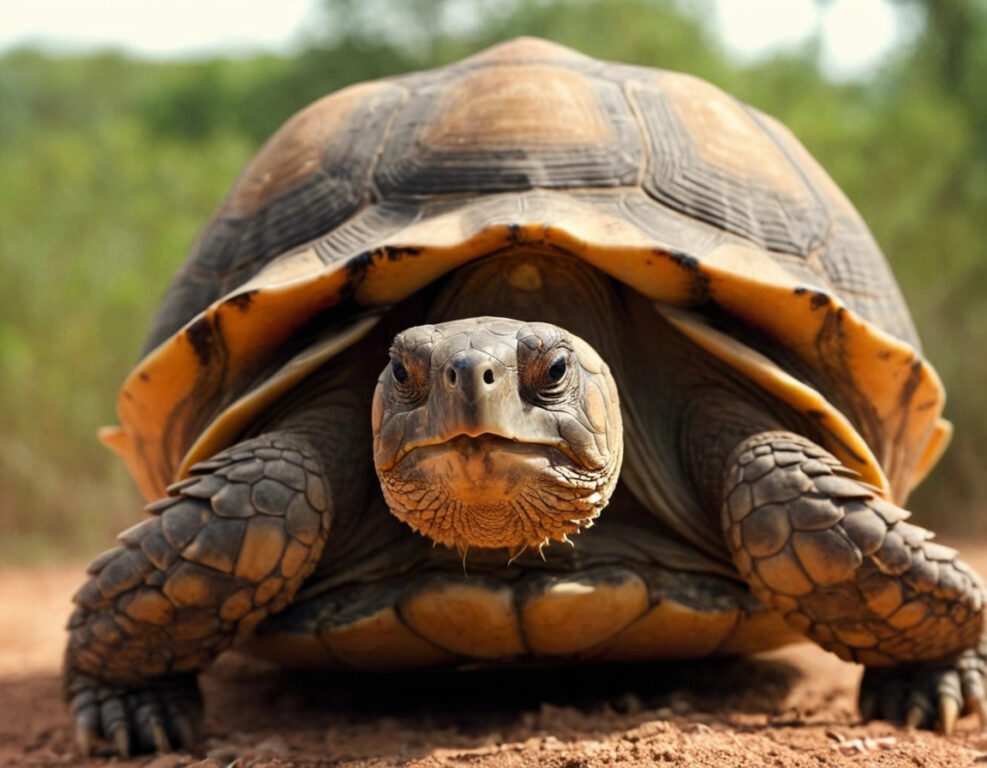
Sea turtles and land turtles share a shell, but little else. Sea turtles have flippers instead of legs, a hydrodynamic body, and glands that allow them to excrete salt. Land turtles, on the other hand, sport sturdy legs with claws, domed shells, and a brutal resistance to dehydration.
Think of the loggerhead or the leatherback: the first is a tireless traveler that crosses the Atlantic like someone going to the supermarket. The second is the largest sea turtle in the world, capable of exceeding 600 kilos. At the other extreme, the Russian tortoise or the red-eared slider have adapted to living in terrariums and gardens, but they are nowhere near as hardy as many believe.
A detail almost nobody mentions: sea turtles cannot pull their heads inside their shells. Land turtles can. That simple difference defines two completely opposite lifestyles. The land turtle hides; the sea turtle relies on its speed in the water to escape.
Turtle species you should know beyond the typical article
Talking about sea and land turtle species is opening a huge can of worms. Of sea turtles alone there are seven recognized species: loggerhead, green, hawksbill, leatherback, olive ridley, flatback, and Kemp’s ridley. The green turtle is the only strict herbivore as an adult, and that makes it a key player for underwater seagrass meadows.
On land, things explode. There are more than 300 species of land turtles and tortoises. The Galápagos giant tortoise is a case apart: it can live more than 100 years and has developed long or short necks depending on the island where it lives. That’s evolution in real time, not textbook theory.
The desert tortoise of the southwestern United States is another survival beast. It withstands extreme temperatures and goes months without drinking water. When it rains, it stores up to 40% of its body weight in liquid in its bladder. That’s no small feat.
What do turtles eat? The diet isn’t as simple as it seems
The question of what turtles eat has a tricky answer: it depends. Young land turtles are usually omnivorous and eat insects, carrion, and plants. As they grow, many become almost exclusively herbivorous. Sea turtles, on the other hand, vary radically: the loggerhead eats jellyfish, crustaceans, and fish; the hawksbill specializes in sponges; the leatherback feeds almost exclusively on jellyfish.
In captivity the most common mistake is giving them iceberg lettuce and little else. That’s a slow death sentence. A land turtle needs fiber, calcium, and a controlled phosphorus ratio. Dark leafy greens, dandelion, hibiscus, and calcium powder are basics. Fruits, in moderation, because sugars are terrible for them long-term.
80% of health problems in pet turtles come from a poorly balanced diet and lack of UVB light. That’s not opinion, it’s what exotic vets repeat over and over.
UVB light is not an optional accessory. Without it, turtles don’t synthesize vitamin D3 and end up with serious bone problems. If you have an indoor turtle, you need a specific lamp and to replace it every 6-12 months, even if it’s still on.
Habitats: from the reef to the desert, non-stop
Sea turtles spend almost their entire lives in the ocean, but females return to the beach where they were born to lay their eggs. That fidelity to the nest is one of the most studied and most fragile behaviors. A single poorly planned resort can wipe out an entire nesting beach.
Land turtles occupy everything from tropical rainforests to savannas and deserts. The red-eared slider, native to the southeastern United States, has become an invasive species in half the world thanks to the pet trade. Released into rivers and lagoons, they displace local species and transmit diseases.
Climate change is messing with something curious: the sex of the hatchlings depends on nest temperature. More heat, more females. If the trend continues, many populations will end up with a brutal imbalance. That’s not alarmism, it’s basic biology.
Basic care if you have a turtle as a pet
Having a turtle is not like having a hamster. It’s a decades-long commitment. Some species exceed 50 years in captivity. Before buying, ask yourself if you’ll still be there in 2060.
- Terrarium or aquaterrarium: the minimum size depends on the species, but for an adult red-eared slider you need at least 150 liters just for swimming, plus a dry area.
- Filtration: turtles foul the water enormously. An oversized filter is not a luxury, it’s a necessity.
- Temperature: basking area between 30-35 °C and water between 24-28 °C depending on species. Without a thermal gradient, they can’t regulate their metabolism.
- UVB and UVA light: essential. Without UVB there are no healthy bones; without UVA there’s no natural behavior.
- Varied diet: species-specific pellets, fresh vegetables, live insects occasionally, and calcium.
- Exotic vet: not just any vet will do. Find one with real experience in reptiles.
And watch out for hibernation. Not all turtles hibernate, and those that do need a controlled process. Forcing it without preparation is killing them.
Conservation: what’s at stake and what you can do
The conservation of sea and land turtles is not a romantic topic. It’s a race against extinction. Bycatch, plastic, loss of beaches, and illegal trade are decimating entire populations. The hawksbill turtle is critically endangered because of its shell, used for decades to make jewelry and combs.
There are things that work. Protected beaches, turtle excluder devices in fishing nets, and captive breeding programs have recovered some populations. In the Galápagos, efforts to eradicate invasive species have saved several subspecies of giant tortoise.
If you want to contribute something real, don’t just share posts. Reduce single-use plastics, don’t buy hawksbill souvenirs, and support organizations that work on the ground, not the ones that just do marketing. The difference between conserving and posing is abysmal.
Facts that will leave you speechless
Some turtles can breathe through their cloaca. Yes, through their butt. It’s a process called cloacal respiration and it allows them to spend hours underwater without surfacing. The Australian snake-necked turtle is a brutal example of this adaptation.
Another: they can detect Earth’s magnetic field and use it as a GPS. Loggerhead hatchlings are born on a specific beach, head out to sea, and years later return to exactly the same place. Without Google Maps.
And one more: the leatherback turtle can regulate its body temperature in cold waters, something unique among marine reptiles. That allows it to cross from the tropics to Canada and Norway. It is, literally, a functional warm-blooded reptile.
Understanding turtles is understanding that evolution isn’t always about being the strongest, but the most adapted. And that we, with our haste and our plastic, are their main threat. You don’t need to be an expert to care for them better. You just need to stop seeing them as ornaments.