Post actualizado el día October 25, 2026 by DeiviSanzPlay
If you grow tomatoes, lettuce, or even cacti and you’re tired of hail or frost ruining your harvest, the polycarbonate greenhouse is probably the best investment you can make this 2026. But don’t just buy any old thing: there’s a lot of junk disguised as a ‘bargain’ and then come the regrets. Here I’ll tell you what I’ve learned after seeing dozens of setups, some well done and others that ended up in the dumpster after the second storm.
What exactly is a polycarbonate greenhouse
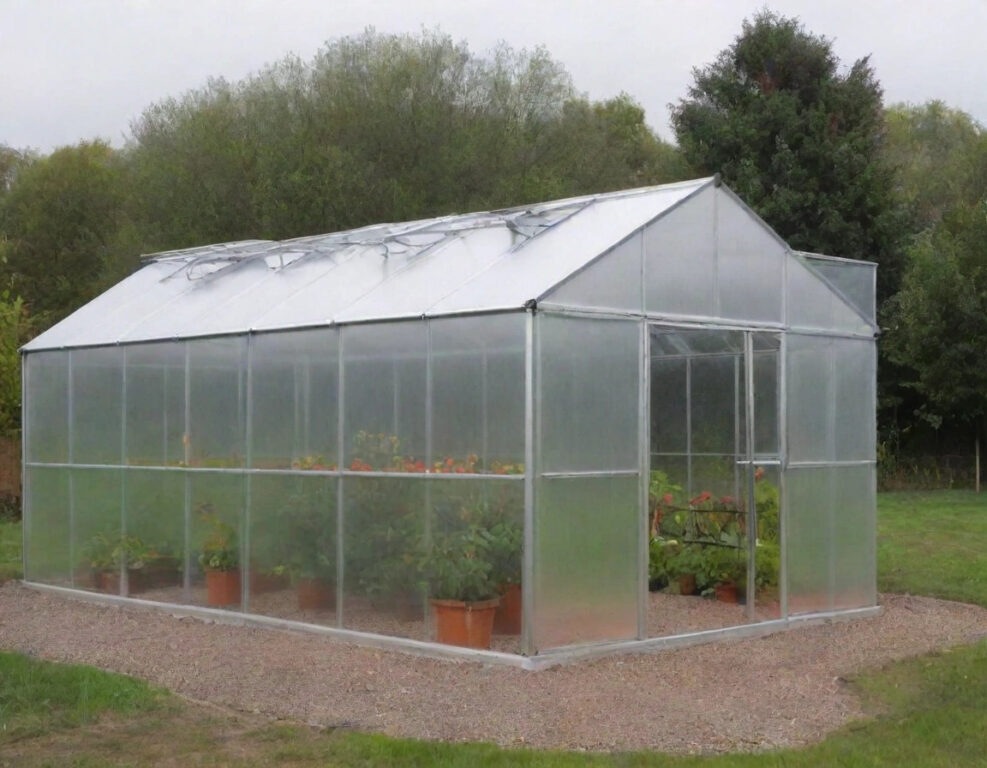
A polycarbonate greenhouse is a growing structure whose enclosure is made with polycarbonate sheets, a thermoplastic that replaces traditional glass and the old-school plastic. The key difference isn’t in the frame (usually aluminum or galvanized steel), but in those cellular or solid sheets that trap heat and filter radiation.
Polycarbonate isn’t a gardening invention: it’s used in riot shields, stadium domes, and car headlights. That’s its charm, in that it withstands impacts that a 4 mm pane of glass wouldn’t survive even as a joke.
Compared to glass, the polycarbonate greenhouse weighs up to six times less and its thermal insulation is far superior if we’re talking about double- or triple-chamber cellular panels. That translates into less heating in January and less scorching in July.
What the panels are really made of
The panels are made of polycarbonate, a polymer obtained from the reaction between bisphenol A and phosgene. It sounds like a laboratory, but the result is a resistant, transparent sheet with a lifespan that, well cared for, exceeds 15 years.
There are two formats you’ll find in any specialized store:
- Cellular polycarbonate: it has internal air chambers (4, 6, 8, 10, or 16 mm). It insulates more and is cheaper, but less transparent. Ideal for cold areas.
- Solid polycarbonate: it’s a solid sheet, like glass but unbreakable. More expensive, clearer, but it insulates less if you don’t combine it with a double wall.
If they sell you a cheap greenhouse without specifying the panel thickness, be suspicious. A 4 mm panel in a hail zone is throwing your money away. I wouldn’t go below 6 mm for cellular and, if you live in a snow zone, 10 mm.
Real advantages that make a difference
The first advantage is impact resistance. I’ve seen glass greenhouses hit by a 2 cm stone and goodbye to two panes. In a polycarbonate one, the stone bounces off and at most leaves a mark. That, in storm zones, is no small detail.
The second is thermal insulation. Cellular polycarbonate reduces heat loss because the still air between chambers acts as a natural insulator. In practice, you can keep 4-6 °C warmer inside than outside without turning anything on. With a thermal blanket at night, the difference skyrockets.
The third, UV protection. Almost all modern panels have a coextruded layer that blocks ultraviolet rays. Without it, the plastic yellows in two years and the plants get burned. When you buy, demand that the technical sheet indicates UV protection on both sides.
And the fourth: price. A 6 m² polycarbonate greenhouse can cost between €400 and €900, while an equivalent glass one easily goes to €1,500 or more. The difference shows in your pocket and in the electricity bill.
How to choose the right polycarbonate greenhouse
Before buying, measure the real space and think about what you’re going to grow. A winter seedbed isn’t the same as a year-round tomato garden. Size matters more than you think: if you come up short, in two seasons you’ll be expanding.
Pay attention to the structure. Anodized aluminum withstands corrosion well, but if you live near the sea, hot-dip galvanized steel is better. Plastic or thin aluminum profiles bend with the first strong wind.
Ventilation is another critical point. A hermetically sealed greenhouse is an oven in summer and a nest of fungi in winter. Look for models with roof windows (on the ceiling) and, if you can, with automatic opening via a thermal piston. They cost little and prevent disasters.
As for accessories, don’t go crazy at first. A drip irrigation system, a growing table, and a 50% shade net cover 90% of your needs. You’ll add the rest as you see fit.
Maintenance that truly extends the greenhouse’s life
Cleaning the panels with water and neutral soap once or twice a year is mandatory. Dirt and green algae eat the light and, if they accumulate, the panel loses transparency forever. No solvents or metal scouring pads: they scratch the UV layer.
Check the seals and joints every spring. A dried-out gasket lets water in, and water inside the panel chambers is a death sentence: it loses insulation and ends up green inside. Changing a gasket costs pennies; changing the panel, a fortune.
Pest control inside the greenhouse is more delicate because the ecosystem is closed. Aphids, red spider mites, and whiteflies appear quickly if humidity and temperature get out of control. I recommend beneficial insects (ladybugs, predatory mites) over chemicals, because a strong insecticide leaves your greenhouse without pollinators.
Mistakes I see over and over again
The first: buying by price without looking at the panel thickness. A 4 mm polycarbonate greenhouse for €200 isn’t a bargain, it’s a problem on a fixed schedule.
The second: not anchoring the base properly. Wind is the number one enemy. If you don’t concrete or drive the anchors into the ground, the first gale turns it into a kite.
The third: ignoring orientation. In the northern hemisphere, the greenhouse should face south to capture the maximum winter light. If you put it facing north, in winter you’ll have a cold storage room, not a greenhouse.
A well-assembled polycarbonate greenhouse with an 8-10 mm panel can give you year-round production in almost any climate in Spain, except in extreme mountain areas where you’ll need heating support.
How long it lasts and when it’s worth it
With basic maintenance, the structure lasts 20 years and the panels between 10 and 15. From there, they start to yellow and it’s time to replace them. It’s worth it when you grow vegetables intensively or want to bring the season forward 4-6 weeks. If you only have four pots, a mini tent or a cold frame might be more profitable for you.
But if your goal is to eat tomatoes in April and keep harvesting chard in December, the polycarbonate greenhouse is the most profitable tool you’ll find in 2026. That said, choose well, assemble with help, and don’t skimp on anchors. The rest comes easily.