
Post actualizado el día September 28, 2026 by DeiviSanzPlay
The safest and most recommended product for cleaning solar panels is WATER. Ideally, demineralized or osmosis water, along with a suitable cleaning tool, is all you need in most cases.
I recommend you check out this interesting article: Let’s unravel the mysteries of the different types of pipes, how they are used and what characteristics they have.
- Risk of damage: Household cleaners (soaps, detergents, abrasive or ammonia-based products) can scratch the anti-reflective coatings on the panels, degrade the seals and damage the cells over time, reducing their efficiency and lifespan.
- <a href="https://www.chusmeando.com/preguntas-y-respuestas/como-remove–stains-en-zapatos-de-gamuza/” title=”How to remove stains on suede shoes”>Stains and residues: Any product that leaves residue (such as soap) will create a film that attracts more dirt and, paradoxically, reduces the energy generation capacity by blocking the passage of light.
- Voiding the warranty: The use of products not authorized by the manufacturer may void the warranty on the panels.
- Consult the installer: First of all, check the manual for your installation or contact the company that carried it out. Many offer professional maintenance services.
- Cleaning with water:
- Timing: Clean at dawn, at dusk or on a cloudy day. Hot panels can cause water to evaporate quickly, leaving marks.
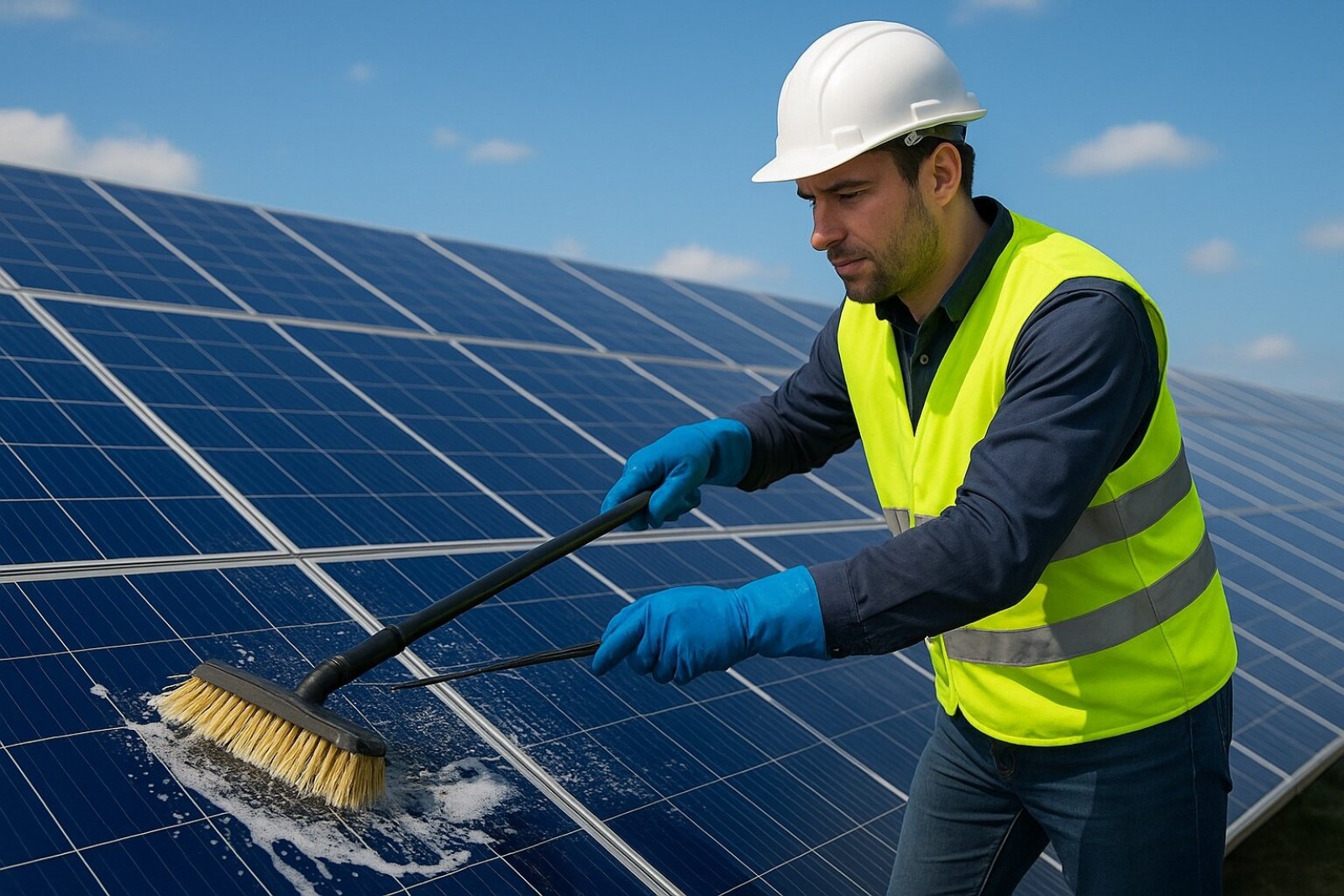
- Product/Tool: Use an extendable foam roller or a very soft sponge along with a bucket of warm water. For optimal results without streaks, demineralized water is the best choice.
- Rinse: First, rinse the surface with water to remove loose dust and prevent scratches.
- Rub gently: Pass the wet tool (without pressing) to remove the most stubborn dirt.
- Final rinse: Rinse with plenty of clean water.
Professional alternative: There are specific cleaning kits for solar panels on the market (purified water and soft-bristle brushes) that are the safest option if water alone is not enough.
Conclusion: The best practice is prevention. In many areas, rain is usually enough. If you need to clean them, pure water and gentle physical methods are the most effective and safe solution. For installations on hard-to-reach roofs or large-scale systems, always hire a professional service.