

Post actualizado el día octubre 25, 2026 by DeiviSanzPlay
The swallows have chosen your balcony to build their nest again. Again. And although watching them fly is a spectacle, cleaning up the trail of mud, feathers, and droppings every morning is anything but poetic. If you’re looking for how to keep swallows from nesting without harming them, here’s what actually works and what doesn’t.
The first thing you should know: swallows are protected birds in Spain. European regulations and Law 42/2007 prohibit destroying their nests while they are occupied. Fines of up to 2,000 euros per nest destroyed during breeding season. So forget the stick, the broom, or the pressure washer. The solution lies in deterring them before they build, not in attacking them afterward.
Why they choose your house (and not your neighbor’s)
Common swallows and house martins look for eaves, cornices, wooden beams, and corners sheltered from rain and direct sunlight. The more your balcony resembles a cave with an overhang, the more attractive it is to them. It’s no coincidence: they need mud nearby, abundant insects, and a safe anchoring point away from predators.
If your facade faces an open lot, a river, or an area with puddles, you’ve got the perfect combo. That combination is what explains why they return to the same spot every spring. And yes, swallows are faithful: the same pair returns year after year to the nest where they were born or where they bred before.
Tricks that really work to scare away swallows
The most effective method is to act in February or early March, before they start building. Once the nest is half-built, it’s too late for many of these tricks.
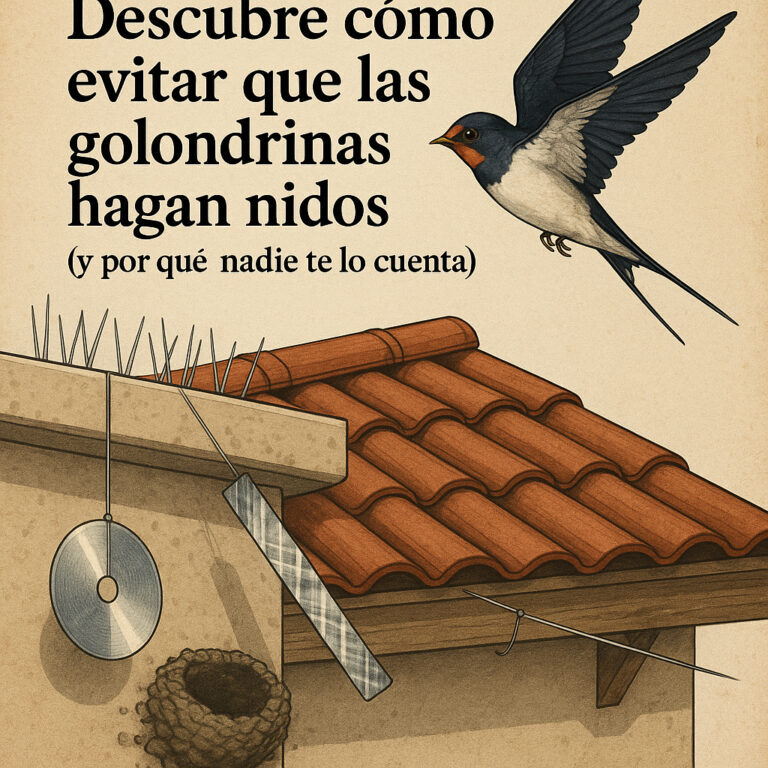
- Moving reflective objects: CDs hung on string, strips of aluminum foil, or Mylar ribbons. The intermittent glare and movement make them wary. It’s not magic, but it greatly reduces the chances of them landing.
- Fine mesh or netting: stretched under the eaves or across the balcony opening. They physically prevent access. Note: they must be well secured with no gaps, because if birds get in and become trapped, the problem is much worse.
- Slippery or slanted surfaces: if the eave is smooth and sloped, the mud won’t stick. Some people install transparent polycarbonate or methacrylate panels with that slant.
- Eliminate nearby mud and puddles: without building material at hand, they’ll think twice. If you have pots with damp soil or a pond, it’s a magnet for them.
- Bird repellent sprays: those containing polybutene gel or essential oils of mint and cinnamon create a sticky, uncomfortable film. They work, but you have to reapply every few weeks and they aren’t cheap.
What doesn’t work: ultrasound devices (swallows hear in different ranges), static scarecrows, and plastic owl decoys. They get used to them in two days.
What to do if the nest is already built
If the nest is empty, outside the breeding season (between October and February), you can remove it carefully. But if it has eggs or chicks, the law requires you to wait. Breeding season runs from April to August, and during those months it cannot be touched.
In that case, the only practical solution is to place a tray or shelf right below the nest. They’re sold in garden stores or can be improvised with plasticized cardboard. It catches the droppings and prevents them from falling on your hanging laundry or the balcony floor. It’s uncomfortable, yes, but it’s temporary: the chicks fledge in a few weeks.
A pair of swallows can have up to three clutches per season. If you don’t act before the first one, your balcony could be occupied from April to September.
Alternatives that respect swallows
There’s an option that more and more people are using: installing nest boxes specifically designed for swallows in an area of the garden or facade where they won’t bother anyone. This gives them an alternative spot and keeps them away from your balcony without harming them. They work well if you place them at a height of between 3 and 5 meters, facing north or east, and put them up before the breeding season.
Another option is to leave the original nest but protect the area with a metal sheet or slanted glass. They raise their young, you don’t clean. It’s a strange balance but possible.
Mistakes you must avoid at all costs
Don’t use poisons or traps. Besides being illegal, killing swallows can result in a serious penalty. Also don’t use glues or hot silicone on the nest: if the bird gets trapped, you suffer and so does she.
And don’t fall for the myth that «if you scare them away, they won’t come back.» They can come back. Swallows have spatial memory and return to the same place for years. If you don’t change the conditions of the nesting spot, the problem repeats every spring.
The key is consistency
No homemade trick works only on the first day. CDs fall, ribbons get tangled, rain washes away the sprays. If you want to prevent swallow nests on your balcony, you have to check and renew the barrier every few weeks during the breeding season.
And if you ultimately decide to live with them, look on the bright side: a swallow eats between 500 and 1,000 insects a day, including mosquitoes. In humid areas, that makes a difference. Sometimes the noisiest neighbor is also the most useful one.
