Post actualizado el día octubre 26, 2026 by DeiviSanzPlay
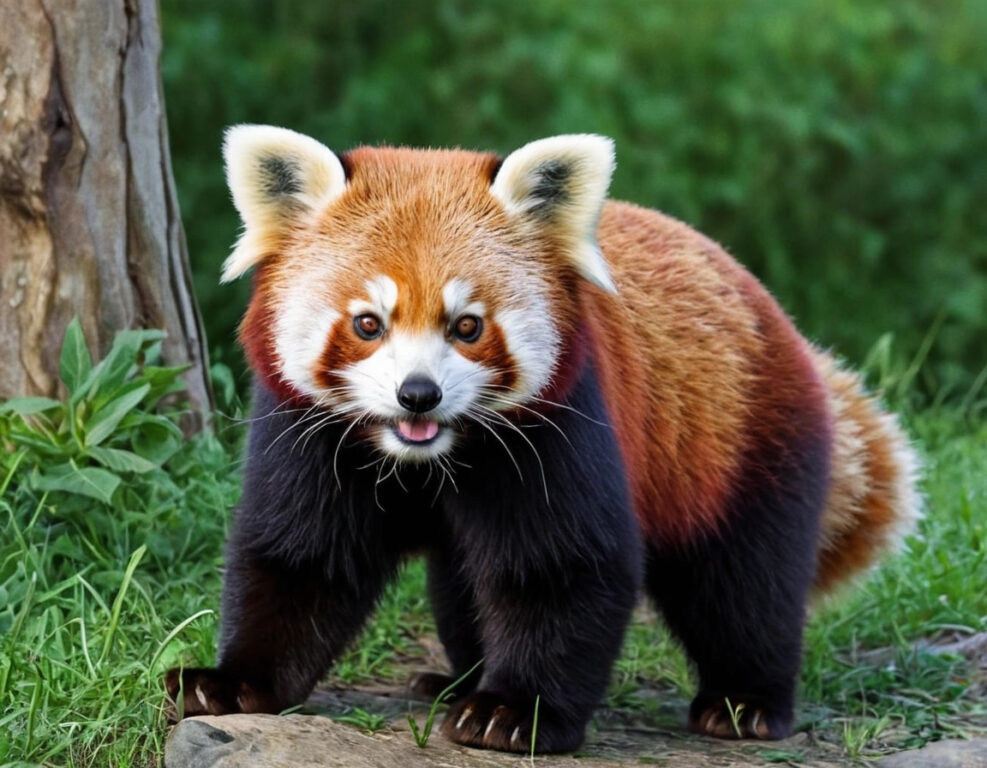
Let’s cut the cute act for a second. The red panda, or Ailurus fulgens, isn’t just a fuzzy mascot for bamboo lovers. It’s a living fossil with its own taxonomic family, a thumb-like wrist bone, and a survival strategy that’s failing fast. And no, it’s not a mini giant panda.
I dug through IUCN reports, the Smithsonian’s National Zoo data, and recent field studies from Nepal and China. Here’s what actually matters if you want to understand the red panda beyond the Instagram photos.
What Exactly Is a Red Panda? Not a Panda, Not a Raccoon
First reality check: the red panda belongs to its own family, Ailuridae. It’s not a bear, not a raccoon, not a weasel. Genetic sequencing in the 2000s settled that debate — it’s the only living member of its lineage.
That makes every red panda you see essentially a walking evolutionary leftover. Scientists call it a «living fossil» because its lineage split from other carnivorans roughly 30 million years ago.
The physical stats are less romantic than the photos suggest. Adults weigh between 3 and 6.2 kg (7–14 lbs). Body length hits 50–64 cm, plus a tail of 28–59 cm. That tail isn’t decoration — it’s a balance pole and a blanket.
Where Do Red Pandas Actually Live in the Wild?
You’ll find the red panda across a narrow band of the eastern Himalayas and southwestern China. Specifically: Nepal, India (Sikkim, Arunachal Pradesh), Bhutan, Myanmar, and China’s Sichuan and Yunnan provinces.
The altitude range is brutal — 2,200 to 4,800 meters. That’s cold, wet, and wrapped in bamboo understory. But here’s the catch: the total occupied range is estimated at less than 50,000 km², and it’s fragmented into patches.
A 2022 study in Nature Conservation found that suitable habitat in Nepal shrank significantly over two decades. Climate change is pushing the bamboo line uphill, and the red panda can only climb so far before it runs out of mountain.
The Bamboo Diet Myth — It’s Not a Vegetarian
Everyone parrots the same line: red pandas eat bamboo. True, but incomplete. Bamboo makes up about 85–95% of their diet, yet their digestive system is still that of a carnivore.
They can’t efficiently break down cellulose. So they eat constantly — up to 20,000 bamboo leaves a day — and pass most of it undigested. That’s why they’re active at dawn and dusk, resting between meals.
They also eat bird eggs, insects, small rodents, and berries when available. A 2015 dietary study confirmed seasonal shifts toward fruits and animal matter in summer. So the red panda is an opportunistic omnivore wearing a herbivore costume.
How Endangered Is the Red Panda in 2026?
The IUCN lists the red panda as Endangered, with a global population estimate between 2,500 and 10,000 mature individuals. That’s a wide, uncertain range — and uncertainty is never good news in conservation.
Between 2001 and 2016, Nepal’s red panda population dropped by roughly 50%, per a 2019 Journal of Threatened Taxa report. Poaching is a major driver: their pelts become hats, and their tails become dusters in some Chinese markets.
Habitat loss is the bigger hammer. Logging, road building, and livestock grazing destroy the bamboo understory. A red panda without bamboo is a red panda without a home.
Red Panda vs Giant Panda — The Real Differences
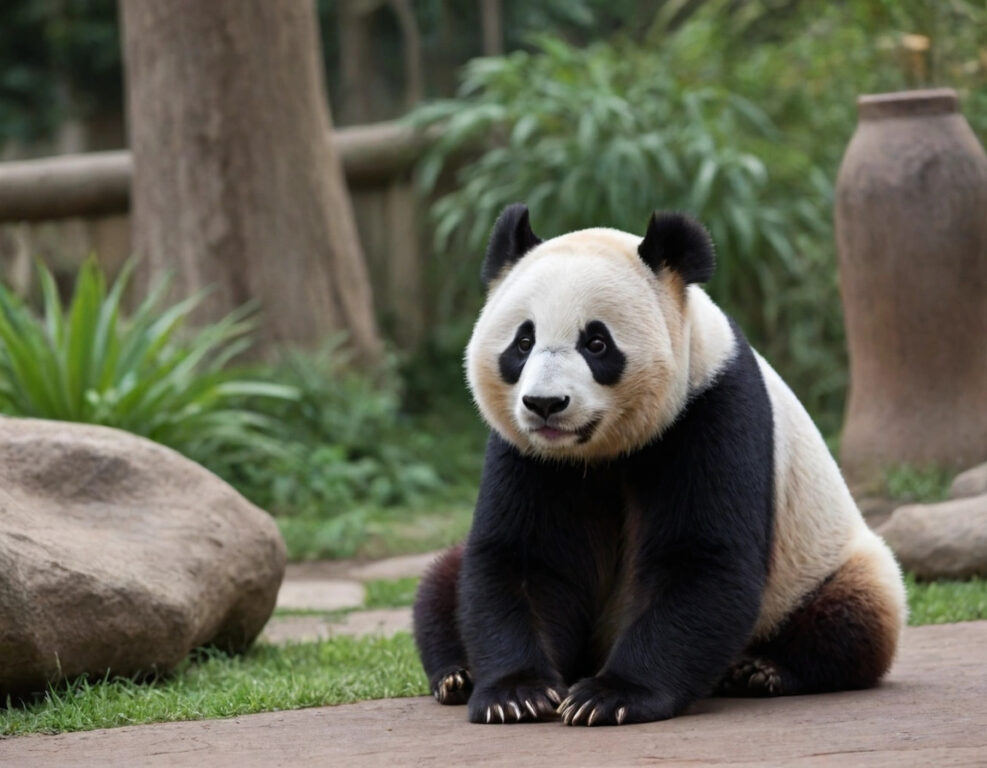
- Size: Red panda weighs up to 6 kg; giant panda can hit 150 kg.
- Family: Red panda is Ailuridae; giant panda is Ursidae (bear family).
- Diet: Both eat bamboo, but the giant panda is far more specialized.
- Behavior: Red pandas are solitary and territorial; giant pandas are mostly solitary too but interact more during mating seasons.
- Range: Red panda spans the Himalayas; giant panda is confined to China’s Sichuan, Shaanxi, and Gansu.
The «lesser panda» nickname is misleading. There’s nothing lesser about a species that’s survived 30 million years on its own branch of the tree of life.
Behavior, Reproduction, and Why They’re So Hard to Study
Red pandas are solitary except during the breeding season (January to March). Females give birth to 1–4 cubs after a 90–150 day gestation, often in tree hollows or rock crevices.
Cubs stay with mom for about a year. They reach sexual maturity at 18 months. In captivity, they can live 14–18 years; in the wild, probably half that.
They communicate through scent marking, whistles, and a distinct «quack-snort» alarm call. That’s not a typo — it sounds like a duck having a bad day.
«The red panda is a flagship species for the Eastern Himalaya. If it disappears, we lose an entire evolutionary lineage and a key indicator of forest health.» — conservation biologist, paraphrased from IUCN assessments.
What Conservation Actually Works for Ailurus fulgens
Captive breeding programs in zoos from Rotterdam to Darjeeling have produced cubs, but reintroduction is rare and risky. The real wins come from community-based anti-poaching patrols in Nepal and India.
In 2021, Nepal’s Red Panda Network reported that community forests with active monitoring had significantly lower snare density. That’s boots-on-the-ground work, not hashtag activism.
What doesn’t work: buying cute merchandise and assuming the problem is solved. The red panda needs intact bamboo forests, not plush toys.
Why the Red Panda Still Matters in 2026
Every red panda in the wild is a test case for whether humans can protect a small, non-charismatic-mega-fauna species. It doesn’t dominate headlines like tigers or elephants. It doesn’t have a billion-dollar zoo industry behind it.
If we can’t save an animal this well-studied, this well-loved, and this geographically limited, what hope is there for the obscure frogs and insects disappearing quietly?
So next time you see an Ailurus fulgens — in a zoo, a documentary, or a lucky Himalayan trek — remember: it’s not just cute. It’s a 30-million-year-old survivor running out of time.