

Post actualizado el día octubre 17, 2026 by DeiviSanzPlay
Ever picked up a turtle and felt that rock-hard dome? Most people think it’s just a fancy external shield. Wrong. A turtle’s shell is actually its ribcage and spine fused together — a biological oddity that no other vertebrate pulls off. So when you ask what a turtle’s shell is really like, you’re not asking about armor. You’re asking about a skeleton worn on the outside.
The Shell Is the Skeleton, Not a Jacket
Here’s the part that blows people’s minds: turtles can’t leave their shell. Not because they’re lazy or stuck, but because their shell is their skeleton. The ribs and vertebrae have grown outward and fused into a bony box. Trying to remove a turtle from its shell is like trying to remove your skull from your head — it’s not happening.
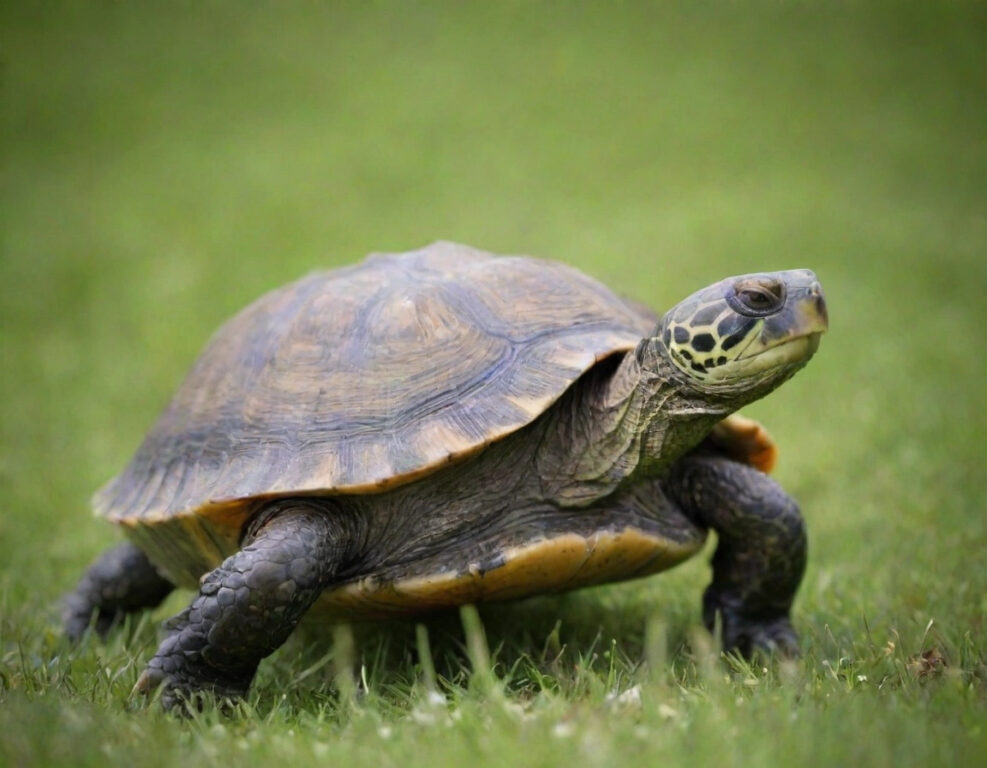
The structure of a turtle’s shell splits into two main pieces. The top is the carapace, the bottom is the plastron, and a bony bridge connects them on each side. That bridge is what gives the whole thing rigidity. Without it, the shell would flex and offer zero real protection.
Some species, like the softshell turtles, have reduced bone and a leathery covering instead. That’s an exception that proves the rule: the harder the shell, the more bone packed inside.
Bone or Scales? Both, and That’s the Point
The turtle shell bone or scales debate is settled by basic anatomy. Underneath, it’s bone. On top, it’s covered in keratinous scutes — the same stuff your fingernails are made of. Those scutes aren’t just decoration. They add hardness, resist abrasion, and in some species, they regenerate.
What’s wild is that the scutes don’t always match the bones underneath. A single scute can sit on top of multiple bone plates, and vice versa. That mismatch is one reason paleontologists can identify turtle species from fossil fragments that look almost identical to the untrained eye.
Colors and patterns in the scutes? Some are camouflage, some are sexual signals. The painted turtle’s red and yellow markings aren’t random. They tell other turtles exactly what species they’re looking at.
What the Shell Actually Does for a Turtle
The function of the shell in turtles goes way beyond blocking bites. It’s a multitool.
- Protection: Predators like raccoons and birds of prey hit a wall of bone. Some turtles can fully retract their head and legs, leaving nothing to grab.
- Temperature control: The shell absorbs and radiates heat. A turtle basking on a log is using its shell as a solar panel.
- Mineral storage: Calcium and phosphorus get stored in the bone. Females draw on that reserve when producing eggs.
- Oxygen storage: Some aquatic turtles, like the Fitzroy River turtle, can absorb oxygen through their shell while submerged. That’s how they stay under for days in cold water.
That last one is the kind of detail that makes you rethink what a shell even is. It’s not dead weight. It’s a living organ system.
How a Turtle’s Shell Grows (and Why It Never Molts)
Insects shed their exoskeleton. Turtles don’t. How a turtle’s shell grows is by adding new layers of bone and keratin from the edges, slowly expanding outward. The old layers stay put.
That’s why you can sometimes see growth rings on the scutes. They’re not as reliable as tree rings — food availability and temperature mess with the pattern — but in some species, they give a rough age estimate. A smooth, worn shell usually means an older turtle.
Here’s the catch: a cracked shell doesn’t heal like a broken bone in your arm. The bone can repair itself, but the keratin scutes don’t regenerate perfectly. Deep fractures can expose the body cavity and lead to infection. That’s why a cracked shell is a veterinary emergency, not a minor scrape.
Can Turtles Feel Through Their Shell? Yes, and It Matters
Do turtles feel through their shell? Absolutely. The shell is packed with nerve endings. Turtles react to pressure, temperature, and even light touch on the scutes. That’s why you should never tap or scratch a turtle’s shell like it’s a drum — it’s not a helmet, it’s skin and bone with a live nervous system underneath.
This also means the old myth about turtles being «armored robots» is garbage. They’re sensitive animals. Handling them wrong causes real stress, and stress kills reptiles faster than most people realize.
Sea Turtles vs. Land Turtles: Different Shells, Different Rules
Not all shells are built the same. Sea turtles have flatter, lighter shells that reduce drag in water. Their scutes are often thinner and more streamlined. Land tortoises, like the Galapagos tortoise, have thick, domed shells that can weigh over 100 pounds.
That variation isn’t cosmetic. It’s evolution solving different problems. A sea turtle needs speed and buoyancy. A tortoise needs to survive a predator bite and stay cool in the sun. Same basic blueprint, radically different execution.
«The shell is one of the most successful evolutionary designs in vertebrate history — it’s been around for over 200 million years and barely changed.»
Myths That Need to Die
Two big lies keep circulating. First: turtles can leave their shells. False. Second: a turtle can fully regenerate a destroyed shell. Also false. They can heal minor damage, but a shell crushed by a car or chewed by a dog is usually fatal without surgery.
Another one: turtles are slow because of the shell’s weight. Not true. The shell is surprisingly light for its strength — it’s mostly airy bone and keratin. Turtles are slow because their metabolism is slow. The shell isn’t the anchor.
Next time you see a turtle crossing a road, don’t just admire the shell. Understand it. That dome is a spine, a ribcage, a heat panel, a mineral bank, and a sensory organ all in one. It’s not armor. It’s a body plan that decided to wear its skeleton on the outside — and somehow made it work for 200 million years.


