

Post actualizado el día octubre 26, 2026 by DeiviSanzPlay
You’ve probably heard the classic answer a thousand times: the cheetah. And yeah, it’s true, but only if we’re talking about running on land. The moment you change the question to «fastest animal in the world, period», the crown jumps from the savannah to the sky, and then to the ocean. So let’s cut the fluff and break down who actually holds the speed record depending on where you’re measuring it.
The cheetah: 100 km/h of pure muscle and bad brakes
The fastest land animal in the world is the cheetah (Acinonyx jubatus), and it’s not even close. In short bursts it hits between 93 and 104 km/h, and it can go from 0 to 100 km/h in about three seconds. That’s quicker than most sports cars off the line.
But here’s what documentaries barely mention: that sprint lasts between 20 and 30 seconds. After that, its body temperature shoots up to levels that could literally cook its brain, and it has to stop to pant and cool down for up to half an hour. So the cheetah isn’t a marathon runner, it’s a one-shot weapon.
Its secret isn’t just the legs. It has a flexible spine that works like a spring, non-retractable claws that grip the ground like cleats, oversized nostrils and lungs to pump oxygen, and a long tail that acts as a rudder when it changes direction mid-hunt. Everything in its body is designed for one thing: closing the gap in less than half a minute.
In the air, the peregrine falcon destroys every record
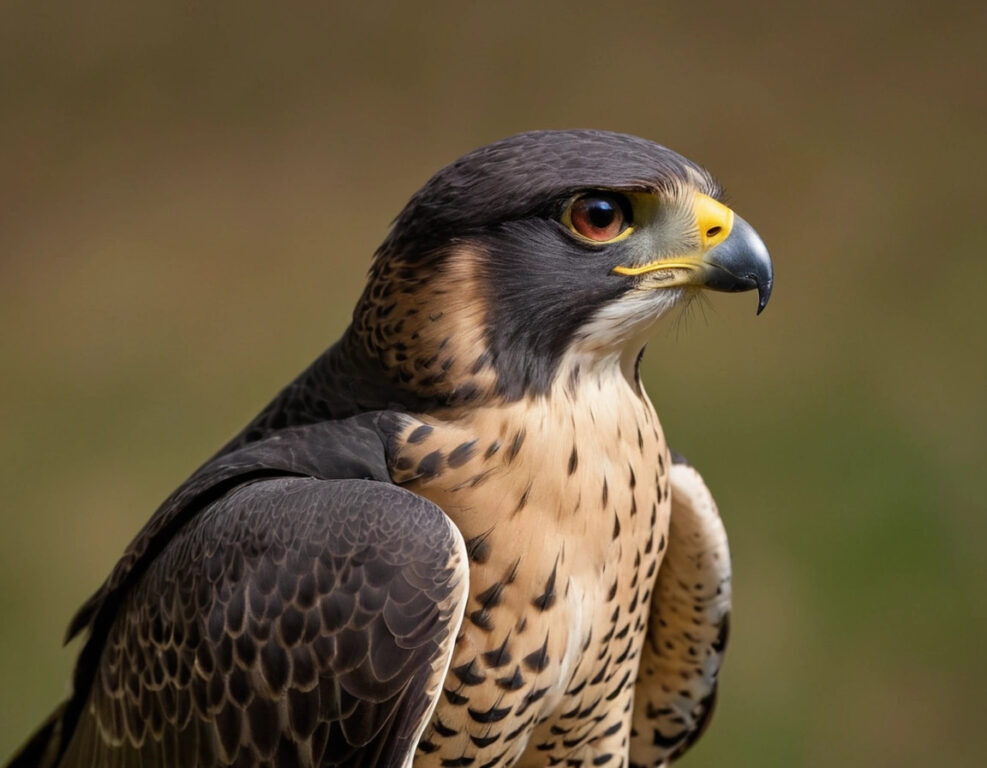
If we talk about the fastest animal in the world without adding «on land», the answer is the peregrine falcon (Falco peregrinus). In a hunting dive, called a stoop, it exceeds 320 km/h, and verified measurements have clocked it at over 380 km/h. That makes it the fastest animal on the planet, full stop.
How does it survive pulling those G-forces? It has special bony tubercles in its nostrils that redirect the airflow so its lungs don’t explode, and a third eyelid that protects its eyes from debris and wind. It’s a biological engineering marvel that hunts other birds mid-flight.
Fun fact: in level flight, the peregrine falcon cruises at a modest 65-90 km/h. It only becomes a missile when it folds its wings and drops.
So if someone asks you what the fastest animal in the world is and you only say «cheetah», you’re technically wrong. Context matters, and the falcon wins the overall title.
In the water, the sailfish swims faster than most boats
The fastest fish in the ocean is the sailfish (Istiophorus platypterus). It’s been recorded at speeds of up to 110 km/h in short bursts, which is insane for something moving through water, a medium 800 times denser than air.
Its weapon is that huge dorsal fin it raises like a sail to cut drag, plus a hydrodynamic body and a bill that slices through the surface. Some researchers have questioned those top speeds because measuring a fish in open water is messy, but even conservative estimates put it well above any other fish.
Close behind is the black marlin, another billfish that’s been clocked at over 100 km/h, and the bluefin tuna, which can sustain around 70 km/h for longer periods. Different strategies, same goal: catch prey or avoid being caught.
What actually makes an animal fast?
Speed isn’t just about having big muscles. It comes down to a combination of factors that evolution has fine-tuned in each species:
- Fast-twitch muscle fibers: they contract quickly but tire fast. Cheetahs and falcons rely on them.
- Aerodynamic or hydrodynamic body shape: less drag means more speed for the same energy.
- Efficient cardiovascular system: an enlarged heart and lungs deliver oxygen at a brutal rate.
- Skeletal adaptations: flexible spines, lightweight bones, specialized joints.
- Behavioral strategy: knowing when to sprint and when to save energy is half the game.
And here’s a nuance most articles ignore: being the fastest isn’t always an advantage. Cheetahs lose a huge chunk of their kills to lions, hyenas and vultures because they’re exhausted after the chase. Speed is a trade-off, not a free pass.
Other speed demons worth knowing
Beyond the big three, there are some underrated sprinters that deserve a mention:
- Pronghorn antelope: the fastest land animal over long distances, sustaining around 88 km/h for miles. The cheetah would lose a marathon against it.
- Mexican free-tailed bat: the fastest horizontal flyer among bats, reaching close to 160 km/h in level flight.
- Black marlin: a billfish that rivals the sailfish in short bursts.
- Anna’s hummingbird: dives at nearly 100 km/h despite weighing less than a coin.
- Spine-tailed swift: the fastest bird in level flight, hitting up to 170 km/h without diving.
Notice the pattern: the fastest animals in the world are almost always predators or prey that depend on explosive movement to survive. Speed is a survival mechanism, not a party trick.
So, what’s the fastest animal in the world in 2026?
Depends on the category. On land, the cheetah. In the air, the peregrine falcon, which also takes the absolute crown. In water, the sailfish. If you want one single answer for the fastest animal in the world, it’s the peregrine falcon at over 380 km/h in a dive.
The cheetah is the fastest runner, yes, but it’s not the fastest animal. Anyone who tells you otherwise is stuck on the land category. And honestly, the most impressive part isn’t the raw number, it’s how each species has evolved wildly different bodies to solve the exact same problem: moving fast enough to stay alive.


