Post actualizado el día octubre 26, 2026 by DeiviSanzPlay
Hippos don’t sleep the way you’d expect a two-ton animal to sleep. They don’t lie down on a cozy riverbank and drift off for eight hours. They do something far stranger: they sleep while floating, often with just their nostrils, eyes and ears above the surface. That’s the real answer to how do hippos sleep, and it’s a trick that only works because of how their bodies are built.
I dug into this because most articles about hippo sleeping habits recycle the same vague lines. The reality is more interesting. A hippo can surface to breathe automatically, without waking up, thanks to a reflex that keeps its body bobbing like a cork. It’s not magic — it’s buoyancy plus a brain that never fully switches off.
How Do Hippos Sleep in Water Without Drowning?
The key is that hippos are semi-aquatic. Their bones are unusually dense, which lets them walk or stand on the bottom of rivers and lakes instead of floating uselessly. But when they relax, their body fat and lungs give them just enough lift to keep the top of their head at the surface.
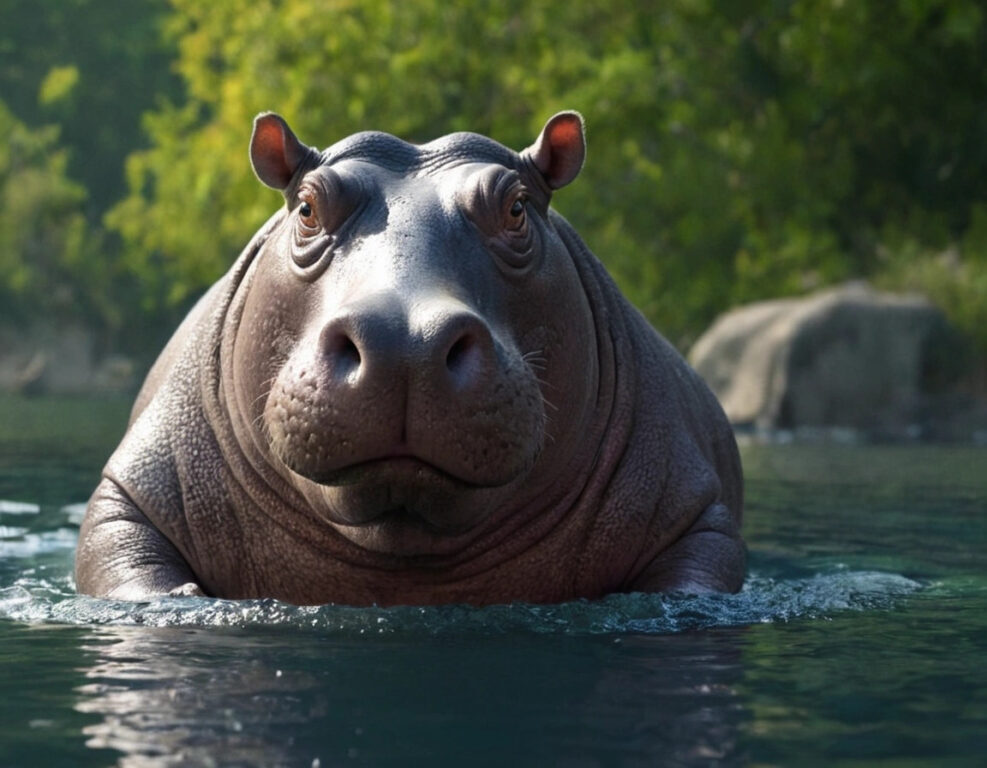
So a sleeping hippo looks like a floating log with three bumps: nose, eyes, ears. Every few minutes it may sink slightly and then push back up — often without opening its eyes. Researchers who’ve watched hippos in the wild describe this as «micro-surfacing»: a breath, a snort, then back to sleep.
This is why you’ll rarely see a hippo sleeping fully underwater for long stretches. They can hold their breath for around five minutes, but they don’t need to. Their sleep cycle is built around constant, effortless breathing.
«A hippo’s idea of a nap is a slow-motion bobbing act that never stops.»
Are Hippos Nocturnal? Yes — and That Changes Everything
Here’s where most people get it wrong. Hippos are nocturnal, not lazy daytime loafers. They spend the day resting in water or mud, then come out after sunset to graze. A single hippo can walk several kilometers in one night, eating up to 40 kilos of grass.
That means their sleep is split. During the day they doze in short bursts, often in groups. At night they’re active, but they still take rest breaks between feeding sessions. The hippo sleep cycle isn’t a single long block — it’s a patchwork of naps, alertness and movement.
If you’ve ever seen a hippo yawn enormously in the afternoon, that’s not boredom. That yawn is a threat display, not a sign of sleepiness. Don’t confuse the two.
Where Do Hippos Sleep? Pools, Sandbanks and Pods
Hippos don’t sleep just anywhere. They choose calm, shallow water near sandbanks or reedy edges. Deep water is risky because calves can’t surface as easily. Muddy shallows are ideal: they regulate body temperature and give the herd a quick exit if a predator shows up.
During the day, a pod of hippos will bunch together, sometimes touching. This isn’t just affection. It’s a warning system. If one hippo snorts or shifts, the others wake instantly. That social sleep structure protects the youngest and weakest members.
At night, when they leave the water to feed, they often return to the same resting spot before dawn. Hippos are creatures of habit. They’ll use the same paths, the same pools, the same sleeping spots for years.
How Many Hours Do Hippos Sleep?
Nobody has a precise number, and anyone who claims one is guessing. What we know from tracking studies is that hippos sleep in short cycles, maybe 20 to 30 minutes at a time, both day and night. Total rest could add up to 12–16 hours in a 24-hour period, but it’s fragmented.
Compare that to a lion, which can sleep 20 hours straight. Hippos can’t afford that. Their environment — rivers with crocodiles, banks with lions — demands constant low-level vigilance. Even while resting, their ears twitch. Their nostrils flare. They’re never truly off duty.
This is a big reason why hippos are so dangerous. A half-asleep hippo that feels threatened will charge without warning. They kill more people in Africa than any other large mammal. Sleeping hippos are not cuddly — they’re landmines.
Why Hippo Sleep Matters for Their Survival
Hippo sleeping habits aren’t just a curiosity. They’re a survival strategy tied to their whole body design. Dense bones, webbed feet, a reflex that keeps the nose up, a nocturnal schedule that avoids the hottest hours — all of it fits together.
Climate change is starting to mess with that balance. Warmer water holds less oxygen, and droughts shrink the pools hippos rely on. When water levels drop, hippos crowd together, and disease spreads faster. Their sleep gets disrupted too, because they have less safe space to rest.
So the next time someone asks how do hippos sleep, the honest answer is: badly, by human standards — but perfectly for a hippo. Floating naps, night grazing, group vigilance. It’s not relaxation. It’s a 24-hour job.
And that’s the part most people miss. A hippo isn’t a lazy river cow. It’s a finely tuned nocturnal machine that sleeps with one eye on the water and one ear on the bank.