Post actualizado el día octubre 25, 2026 by DeiviSanzPlay
The cherry blossom is not just a pretty flower. It is a symbol that has been shaping the way Japan and much of Asia understand life, death, and the passage of time for centuries. And in 2026, with climate change altering bloom times, its meaning is stronger than ever.
What exactly the cherry blossom is and where it comes from
The cherry blossom, known in Japan as sakura, belongs to the genus Prunus, the same one that includes plum, almond, and peach trees. We are not talking about a single species, but rather several dozen that bloom in spring. Its origin lies in the temperate regions of Asia millions of years ago, but its cultural history begins much later, when humans began to look at it with different eyes.
In China, ornamental cherry trees were already documented more than 2,000 years ago. However, it was in Japan that the cherry blossom went from being a simple tree to becoming a national icon. During the Heian period (794-1185), the Japanese aristocracy shifted its attention from the plum blossom to the cherry blossom, and that is where it all began.
Hanami: the tradition that turns the cherry blossom into a collective ritual
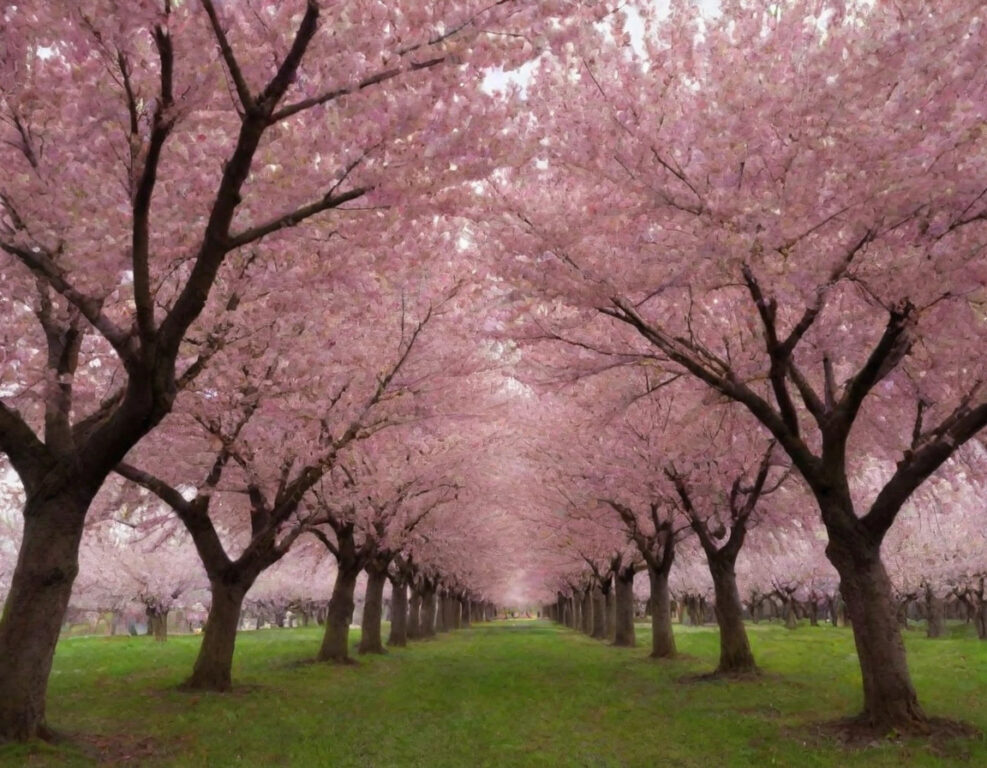
Hanami (literally «flower viewing») is not a tourist invention. It is a custom with more than a thousand years of history. At first it was a ritual of the imperial court, but from the Edo period (1603-1868) onward it became popular among all social classes. Today it is still a perfect excuse for families, friends, and coworkers to sit under the cherry trees to eat, drink, and chat.
What is interesting about hanami is that it is not celebrated to admire the flower at its peak splendor, but to accept that this splendor will be gone in a few days. The cherry blossom lives between 7 and 14 days, depending on the species and the climate. That very short window is precisely what gives it all its meaning.
The cherry blossom does not teach us to cling to anything. It reminds us that good things do not last long and that precisely for that reason we must be present.
The real meaning of the cherry blossom: beyond the cliché
Many people repeat that the cherry blossom symbolizes the fleeting nature of life. It is true, but it falls short. In Buddhist philosophy, sakura represents the concept of mono no aware, that sensitivity to the ephemeral that mixes beauty and melancholy. It is not pure sadness, it is acceptance.
There is a nuance that almost no one mentions: the cherry blossom also symbolizes rebirth. It falls, yes, but the tree blooms again every spring. It is a cycle, not a straight line. That is why in Japan it is associated with hope and with the idea that after any winter comes a blossoming.
Cherry blossom in art, literature, and pop culture
From the waka poems of the Heian period to today’s anime, the cherry blossom has been a constant. In traditional Japanese painting, flowering cherry trees appear on folding screens, ukiyo-e prints, and ceramics. In literature, authors such as Murasaki Shikibu were already mentioning it in Genji Monogatari a thousand years ago.
In contemporary culture, sakura has gone global. It appears in video games, in movies, in tattoos, and even in marketing campaigns. That has a good side (cultural dissemination) and a bad side (banalization). When a flower that symbolizes death and rebirth becomes a simple spring decoration, part of its power is lost.
The life cycle of the cherry blossom: why it lasts so little
Cherry tree blooming depends on temperature. It needs to accumulate hours of cold in winter and then a sharp rise in degrees in spring. If the winter is too mild, blooming comes early or falls out of sync. In 2026, cities like Tokyo have seen the peak bloom arrive several days earlier than it did decades ago.
That detail is not minor. Climate change is altering the life cycle of the cherry blossom, and with it the traditions associated with it. Festivals are scheduled months in advance, but nature does not always follow the calendar. It is one more sign that the cherry blossom is not a static symbol, but something alive that changes with its environment.
Differences between the Japanese cherry tree and other Asian varieties
Not all cherry blossoms are the same. The most common species in Japan is Somei Yoshino, with almost white flowers that take on a pale pink tint. But there is also Yamazakura, wild and more pink, or Shidarezakura, with weeping branches. In China, the cherry blossom competes with the plum blossom, which has a different meaning: resilience and purity.
In South Korea, the cherry tree also carries cultural weight, although there it is celebrated more as a symbol of spring than of philosophical reflection. And in the United States, the cherry trees of Washington D.C. are a diplomatic gift from Japan in 1912 that has become a local icon. The cherry blossom, as you can see, travels well.
What the cherry blossom means today (2026)
In 2026, the cherry blossom remains an uncomfortable reminder: everything passes, everything withers, but everything also returns. In a world obsessed with productivity and permanence, a flower that lasts a week is almost an act of rebellion.
If you have the opportunity to see a cherry tree in bloom, do not look at it only for the photo. Stop, count the days it has left, and think about what you too will leave behind this season. That is the true meaning of the cherry blossom, and no marketing can improve on it.