

Post actualizado el día octubre 25, 2026 by DeiviSanzPlay
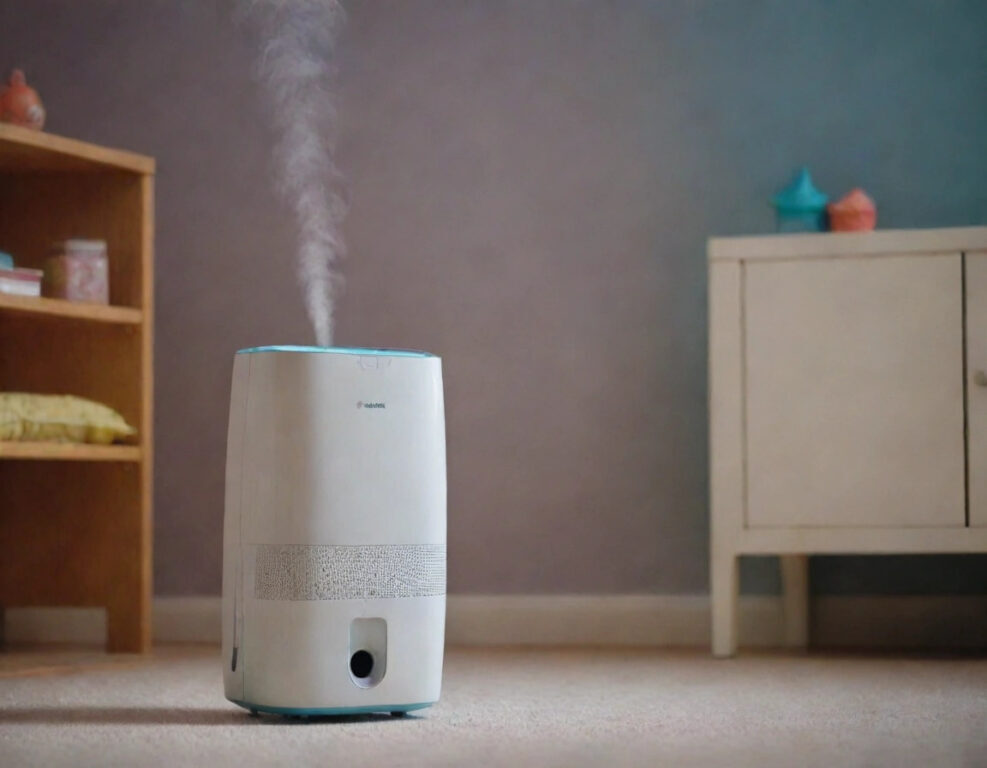
The dry air at home is not a minor annoyance: you wake up with a scratchy throat, tight skin, and a stuffy nose. A humidifier is the device that raises the relative humidity of a closed room and, used well, changes your daily life more than you think. It’s not magic, it’s basic physics: if the environment is below 30% humidity, your body notices.
I’ll tell you straight: if you live in a cold area, use heating for many hours, or have air conditioning in summer, a humidifier is a purchase with real returns. Another matter is choosing it well and cleaning it properly. That’s where many people fail.
What exactly does a humidifier do and why do you need it
The ideal humidity in a home is between 40% and 60%. Below that range, the environment becomes hostile to your mucous membranes, your skin, and even your furniture. A home humidifier keeps that range stable, especially when heating dries the air without you realizing it.
Underfloor heating or classic radiators reduce relative humidity brutally. In winter, it’s common to find living rooms at 25% or less. Translated, that means dry eyes, cracked lips, irritated throat, and a higher chance of catching a cold.
And it’s not just health. Wood contracts, furniture joints creak, and parquet floors open up. A humidifier prevents that silent disaster that is often detected when it’s already too late.
Types of humidifier: which to choose according to your case
There are three technologies that dominate the market, and each has a clear user profile. There isn’t one better than another in the abstract: there’s one better for you.
- Ultrasonic: they release a cold mist through high-frequency vibration. They’re quiet, use little energy, and are great in bedrooms and offices. Watch out for the water: if it’s very hard, they leave white dust on furniture. Use filtered or distilled water.
- Evaporative: a fan pushes air through a wet filter. They self-regulate: the drier the environment, the more humidity they release. They’re the safest if there are children, because there’s no hot water or concentrated mist.
- Warm mist: they boil the water and release steam. They warm the environment somewhat, but they consume more and burn. With small children or pets, I’d rule them out unless there’s a specific need.
If you have to decide quickly: ultrasonic for sleeping, evaporative for the living room with kids, warm mist only if you’re looking for extra warmth and you control the risk.
Real benefits for respiratory health and skin
A humidifier for respiratory health doesn’t replace medication, but it helps. Maintaining high humidity reduces irritation of the airways and keeps your nose and throat from drying out during the night. For those with asthma or allergic rhinitis, sleeping with the right humidity level makes a difference.
There’s also an indirect effect: in humid environments, suspended viral particles fall to the ground sooner and disperse less effectively. It’s not a magic barrier against viruses, but it’s an extra layer of common sense.
On the skin, the difference is visible in just a few days. Less tightness, less flaking, lips that don’t crack when you smile. And if you have indoor plants, many appreciate that ambient humidity that is almost nonexistent in heated apartments.
How to choose a humidifier without wasting your money
Before buying, look at three things: room size, the type of water in your area, and ease of cleaning. A humidifier for a small room won’t work for a 40-square-meter living room, and conversely, a huge one in a bedroom will saturate the environment.
Cleaning is not optional. Damp tanks breed fungi and bacteria if you don’t dry and disinfect them every few days. A dirty humidifier is worse than not having one: you’d be spreading filth into the air you breathe.
Energy efficiency also counts. Ultrasonic and evaporative models use little; warm mist ones send your bill soaring if you use them for many hours. If you’re going to have it on all night, choose a quiet, low-consumption one.
Mistakes almost everyone makes
The first: not measuring humidity. Buy a cheap hygrometer and stop guessing. If you go above 60%, you start getting condensation on windows and risk of mold. Over-humidifying is also bad.
The second: using unfiltered tap water in an ultrasonic model. Result: white dust everywhere and clogged filters. Distilled or filtered water isn’t a luxury, it’s maintenance.
The third: not changing the water every day. Stagnant water is a breeding ground. Empty the tank, dry it, and refill it with clean water. This one-minute routine saves you serious problems.
A humidifier doesn’t improve the air on its own: it improves it if you use it sensibly, clean it, and control the humidity. If not, you have an expensive gadget breeding microbes.
How much it costs and what to expect in 2026
In 2026 there are decent humidifiers from 30 euros for small rooms, and models with a built-in hygrometer and app control from 60-80 euros. Warm mist and large-capacity evaporative models go up to 100-150 euros. You don’t need to spend a fortune: you need the right type and cleaning discipline.
My direct advice: if your problem is winter heating, a self-regulating evaporative model with a 3-4 liter tank is the safest bet. If you’re looking for absolute silence for sleeping, ultrasonic with filtered water. And if you have children, stay away from warm mist unless you know exactly what you’re doing.
In the end, a humidifier is a tool. Well chosen and maintained, it gives you comfort, cares for your skin, protects your home, and helps you breathe better. Poorly chosen or neglected, it’s a contraption that takes up space. The difference is in how you use it.
