Post actualizado el día octubre 17, 2026 by DeiviSanzPlay
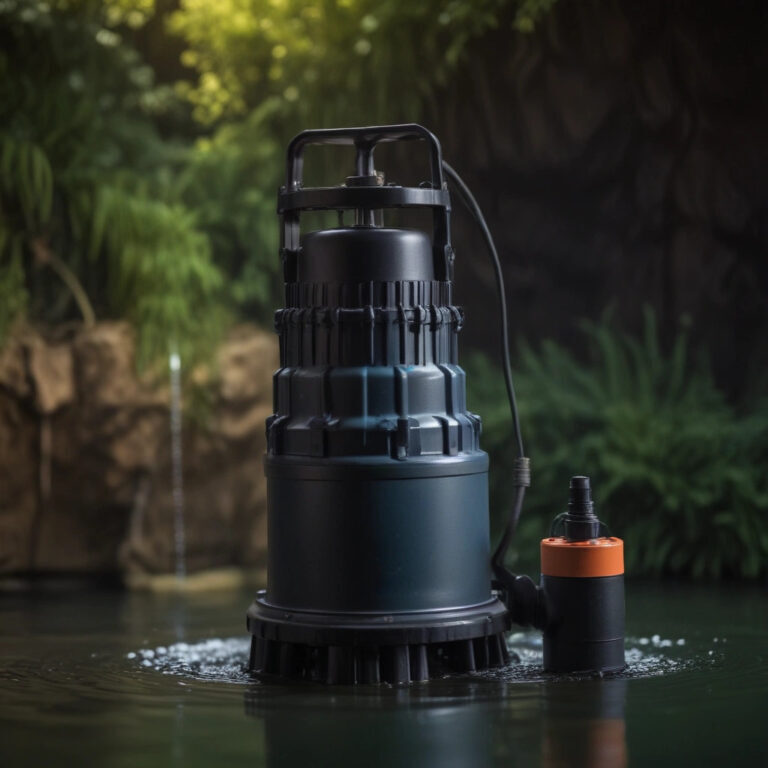
You drop a cylinder the size of a thermos down a well, flip a switch, and water starts climbing hundreds of feet up a pipe. No priming, no suction hose, no drama. That’s the everyday magic of a submersible water pump, and once you understand what’s happening down there, you never look at your well the same way again.
The trick isn’t that the pump «sucks» water up. It can’t. No pump on Earth can pull water more than about 25 feet vertically by suction, because atmospheric pressure sets a hard physical ceiling. A submersible pump works the other way around: it sits inside the water and pushes it upward under pressure. That single design choice explains why these pumps dominate deep wells, boreholes, and industrial dewatering jobs where surface pumps simply give up.
What Actually Happens Inside a Submersible Pump
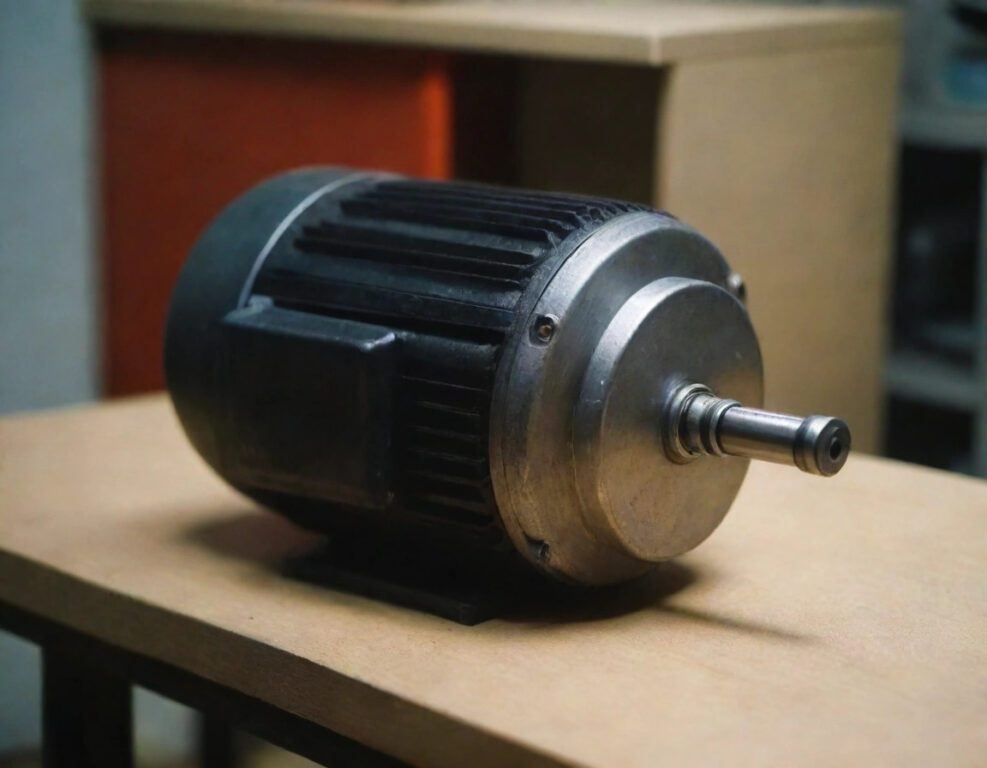
A submersible pump is really two machines bolted together in one sealed housing: a motor and a hydraulic section. The motor is filled with dielectric oil or water, wrapped in a stainless steel shell, and sealed with mechanical seals that keep the liquid out. Power reaches it through a waterproof cable that drops down alongside the discharge pipe.
When you energize the motor, it spins a shaft connected to one or more impellers. Water enters through an intake screen at the bottom, gets caught between the impeller vanes, and is flung outward by centrifugal force into a diffuser. Each stage adds a bit of pressure. A domestic well pump might have 10 to 20 stages stacked in series; deep-set irrigation pumps can run 50 or more. That’s how a submersible water pump generates enough head to lift water from 500 feet or more without breaking a sweat.
The water never touches the motor’s windings. It flows around the motor housing on its way up, which conveniently cools the motor at the same time. That’s a design detail worth remembering: if a submersible pump runs dry, it overheats and dies fast, because the water it’s moving is also its cooling system.
Why Submersible Pumps Beat Surface Pumps in Deep Wells
Surface jet pumps and centrifugal pumps sit above ground and rely on suction. Once the water level drops below roughly 25 feet, they cavitate and lose prime. A submersible pump for deep wells sidesteps that limit entirely because it’s submerged where the water actually is.
There’s a second, less obvious advantage: noise. Because the pump is underwater, the surrounding liquid absorbs most of the mechanical vibration. In residential settings, that’s the difference between hearing a pump cycle in your basement and hearing almost nothing at all.
Efficiency also favors submersibles. There’s no long suction line creating friction losses, and the motor runs cooler in water than in air. Modern high-efficiency models from manufacturers like Grundfos, Pedrollo, Wilo, and Ebara routinely hit 60% or better overall efficiency, which matters a lot when you’re paying for the electricity.
Pressure vs. Flow Rate: The Balance That Makes or Breaks a System
Every pump has a curve. On one axis you have flow rate (gallons or liters per minute), on the other you have head (the height it can push against). These two trade off against each other: open the tap wide and flow goes up while pressure drops; throttle the flow and pressure climbs.
Getting the pressure and flow rate in submersible pumps wrong is the single most common installation mistake I see. Oversize the pump and you’ll cycle it on and off constantly, wearing out the motor and pressure switch. Undersize it and you’ll never get decent shower pressure on the second floor. The right move is to calculate your total dynamic head — static water level plus drawdown plus friction losses plus the height of your highest fixture — and then pick a pump whose curve puts you near its best efficiency point at your target flow.
Rule of thumb: a household well pump should deliver 8–12 GPM at 40–60 PSI. If your pump can’t hold 40 PSI while two taps are open, it’s undersized or the well is running dry.
Maintenance: The Stuff That Actually Keeps It Alive
Submersible pumps have a reputation for being install-and-forget, and that reputation is mostly earned. But «mostly» is doing a lot of work in that sentence. The parts that fail first are the ones you never see: the check valve, the pressure switch, the control box capacitor, and the motor seals.
Good water pump maintenance for a submersible unit looks like this:
- Test the pressure tank charge annually — a waterlogged tank makes the pump short-cycle and burn out.
- Check amp draw on the motor against the nameplate rating. A rising amp draw signals impeller wear or sand in the well.
- Inspect the control box and pressure switch contacts for pitting.
- If your water has iron, sulfur, or sand, install a sediment filter ahead of any pressure tank and clean or replace it on schedule.
- Never run the pump with the discharge valve fully closed for more than a few seconds — deadheading overheats the motor.
Pulling a deep well pump to service it is expensive, so the smart money is on preventing failures above ground rather than reacting to them below.
Types of Submersible Pumps and Where Each One Belongs
Not all submersibles are built for the same job, and using the wrong one is a fast way to destroy it.
Deep well submersible pumps are the classic narrow-cylinder design, typically 3 to 8 inches in diameter, built for clean water in boreholes. Effluent and sewage submersible pumps have wider passages and often a grinder or vortex impeller to handle solids — these are what you find in septic lift stations and basement sump pits. Drainage pumps are the cheap, compact cousins used for flooded basements and construction sites. And then there are solar submersible pumps, which have exploded in popularity for off-grid irrigation in Africa, India, and rural Latin America because they eliminate diesel costs entirely.
Matching the pump to the application matters more than brand. A sewage pump dropped into a drinking water well will contaminate it. A clean-water well pump dropped into a slurry pit will clog in a week.
Installation: Why DIY Rarely Ends Well
Installing a submersible water pump in a well isn’t technically complicated, but it’s unforgiving. You need to know the static water level, the recovery rate of the well, the inside diameter of the casing, and the total depth. You need torque arrestors and centralizers so the pump doesn’t bang against the casing. You need a safety rope or a properly rated drop pipe. And you need to size the wire gauge so voltage drop over a 300-foot run doesn’t cook the motor.
Get any of those wrong and you’ll be pulling the whole assembly back out — often within months. A licensed well contractor charges real money, but so does replacing a burned-out motor and the labor to retrieve it.
The Bottom Line on Submersible Pump Technology
A submersible pump is a beautifully simple idea executed with tight tolerances: put the motor where the water is, seal it properly, and let centrifugal force do the lifting. Once you know that, the machine stops being a black box and starts being something you can actually reason about — size correctly, maintain intelligently, and expect to last 10 to 15 years instead of two.