Post actualizado el día octubre 26, 2026 by DeiviSanzPlay
Buying a hospital mattress isn’t like buying a mattress for your bedroom. Get it wrong and you’re looking at pressure ulcers, fall risks, infection control headaches, and a replacement bill in 18 months. Get it right and you’ll forget the mattress even exists for the next decade. That’s the whole game.
I’ve dug through spec sheets from Stryker, Hillrom, Invacare, Drive DeVilbiss and a pile of lesser-known manufacturers, plus clinical guidance from the NHS, FDA and NPUAP (now NPIAP). Here’s what actually matters when you’re choosing the best quality hospital mattresses.
Start With the Patient, Not the Price Tag
The single biggest mistake buyers make is shopping for hospital mattresses by budget first. The mattress has to match the patient’s risk profile. A low-risk post-op patient on a standard foam mattress? Fine. The same mattress under a 90 kg patient with limited mobility and diabetes? That’s how you get a stage 3 pressure injury in a week.
Ask three questions before anything else: What’s the patient’s Braden or Waterlow score? What’s their weight range? How long will they realistically be in bed? Those three answers eliminate half the market instantly.
For high-risk patients, you need a pressure-redistribution mattress — either high-spec foam, alternating pressure (dynamic), or low-air-loss. Static foam is not enough once the Waterlow score climbs.
Foam vs Dynamic: The Honest Breakdown
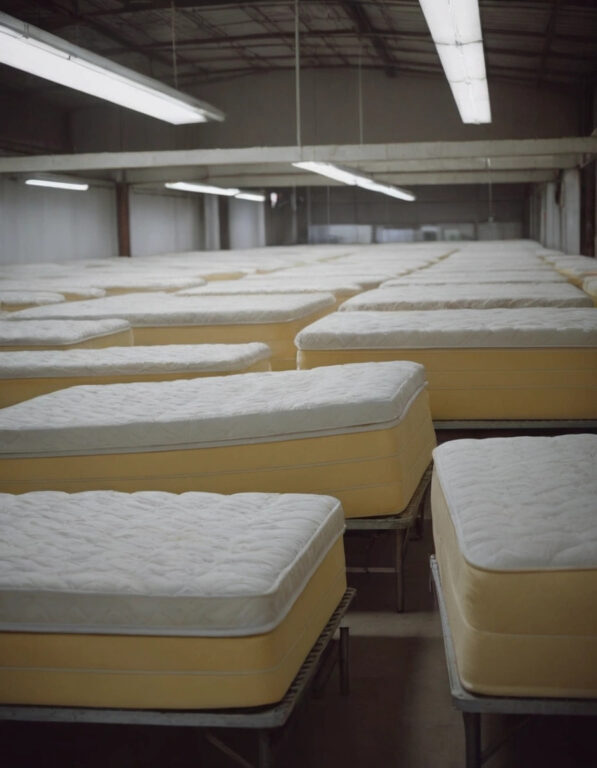
Foam hospital mattresses dominate because they’re cheap, silent, and need zero power. But ‘foam’ is a useless word on its own. What matters is density and construction.
- Standard foam (32–35 kg/m³): entry level, low-risk patients, short stays. Expect 2–4 years of life.
- High-spec foam (≥ 38 kg/m³ with cut cells or castellated design): medium-to-high risk, the workhorse of most hospital wards.
- Alternating pressure mattresses: air cells inflate and deflate on a cycle. Best for high-risk and immobile patients. Needs a pump, so you’re paying for electricity and maintenance too.
- Low-air-loss mattresses: constant airflow through the surface. Excellent for burns, grafts and heavy sweating. Expensive and noisy.
Here’s my take: for general wards, high-spec foam is the sweet spot in 2026. Dynamic systems are oversold for patients who don’t actually need them, and their failure rate (pumps, punctures, power cuts) is a real clinical risk.
Infection Control Is Non-Negotiable
A hospital mattress without a fluid-proof, wipeable cover is a biohazard waiting to happen. Look for covers that meet ISO 16604 or equivalent penetration resistance, with welded seams — not stitched. Stitched seams wick fluid straight into the foam core.
Watch for covers with zips. If the zip isn’t fully sealed, C. diff and MRSA spores get in and never come out. Replace the mattress, not the cover.
Rule of thumb: if you can’t wipe it down with a chlorine-based detergent and be confident it’s clean, it doesn’t belong on a ward.
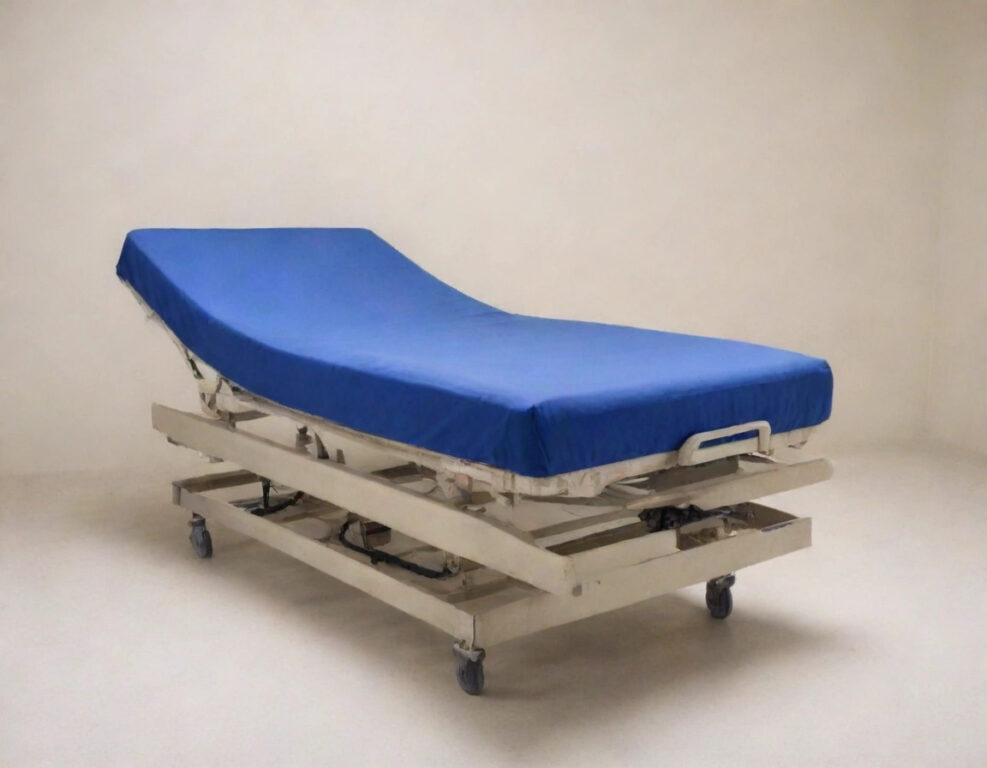
Also check the mattress is compatible with your existing bed frames and side rails. A 2026 hospital mattress that doesn’t fit the bed platform is a fall risk, not a bargain.
Weight Capacity and Dimensions: Read the Fine Print
Bariatric mattresses are a separate category for a reason. Standard hospital mattresses typically support 120–150 kg. Bariatric versions go to 250 kg and beyond, but they’re wider and heavier — and they may not fit standard frames.
Measure your bed deck before ordering. I’ve seen wards stuck with 20 mattresses that technically ‘fit’ but leave a 4 cm gap at the head end, which is exactly where patients slide down.
Also confirm the mattress height. Too thick and the side rails don’t provide effective fall protection. Too thin and the patient feels every spring in the deck.
Durability, Warranty and the Real Cost
A cheap hospital mattress that costs £150 and dies in 18 months is more expensive than a £400 mattress that lasts six years. Do the maths per patient-day, not per unit.
Warranties are a useful signal. Reputable manufacturers offer 5–8 years on the foam core and 2–3 years on the cover. If a supplier won’t put a number on the cover, walk away.
Check whether the mattress is repairable. Replaceable covers and individual air cells cut long-term costs massively. Fully sealed, one-piece mattresses are cheaper upfront but disposable.
Comfort, Noise and Patient Dignity
Nobody talks about this enough. A noisy alternating-pressure pump running all night destroys sleep, and sleep deprivation slows recovery. If you’re buying dynamic mattresses, check the decibel rating. Under 30 dB is acceptable in a shared bay.
Comfort isn’t a luxury in a hospital mattress — it’s clinical. Patients who are comfortable move more, and movement is what prevents pressure injuries and DVT.
What I’d Actually Buy in 2026
For a general medical ward: high-spec castellated foam with a welded, fluid-proof, vapour-permeable cover, replaceable, 5-year core warranty. That’s the baseline.
For ICU and high-risk: alternating pressure with a quiet pump, and a spare pump on the shelf. Never run a ward with zero backup pumps — the day one fails is the day you need it most.
For bariatric: purpose-built, wider, higher weight-rated, and matched to a bariatric frame. Don’t improvise.
Skip the marketing buzzwords — ‘anti-decubitus’, ‘therapeutic’, ‘advanced pressure care’ mean nothing without numbers behind them. Ask for foam density, cover material, ISO certifications, weight rating and warranty length. If the supplier can’t give you those in writing, they’re not selling you a hospital mattress. They’re selling you a problem.