

Post actualizado el día octubre 17, 2026 by DeiviSanzPlay
Most people ruin a leather jacket long before it wears out. Not because they don’t care, but because they treat it like a cotton hoodie. It isn’t. Leather is skin — animal skin, tanned and dyed — and if you soak it, bake it, or hit it with the wrong chemical, it cracks, stiffens, and never comes back.
So let’s skip the fluff. Here’s how to clean a leather jacket properly, what actually works on grease and ink, and the maintenance habits that keep it looking sharp for a decade or more.
What You Actually Need Before Touching the Jacket
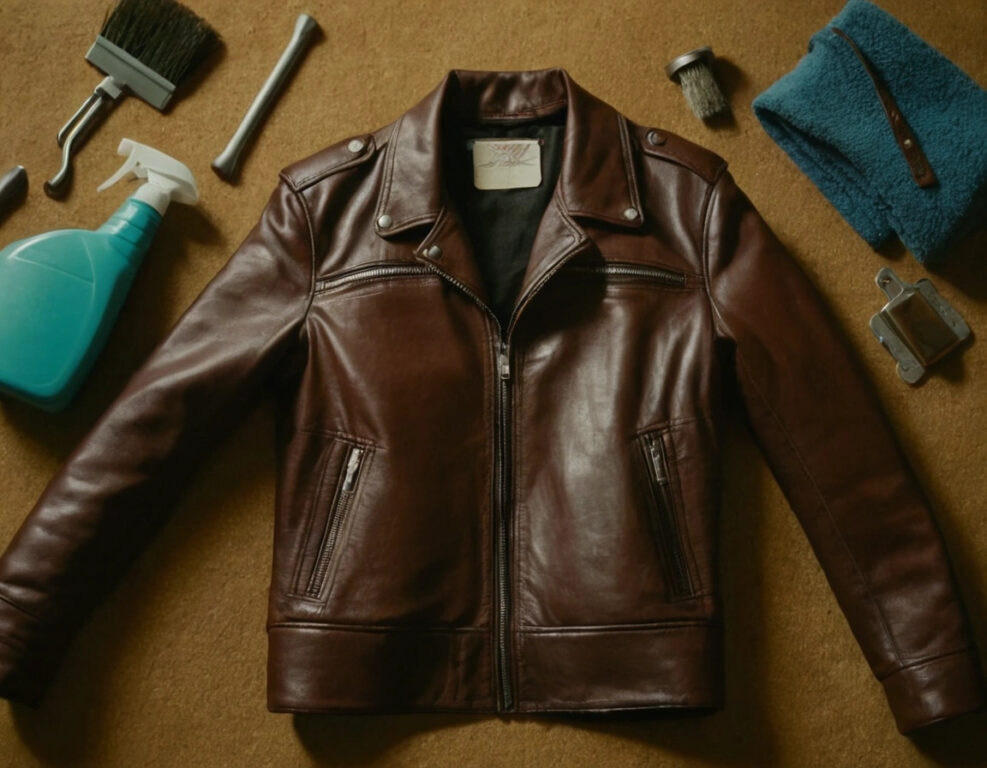
You don’t need a lab. You need four things: a couple of microfiber cloths, distilled or lukewarm water, a pH-neutral leather cleaner (or a drop of mild dish soap in a pinch), and a good leather conditioner.
That last one is non-negotiable. Cleaning strips oils. Conditioning puts them back. Skip it and you’ll trade dirt for dryness — a worse problem.
Also grab cotton swabs for seams and hardware, and a soft horsehair brush if your jacket has suede panels. A test patch on the inside hem is mandatory if you’ve never used a product on that jacket before.
Step-by-Step: How to Clean a Leather Jacket Safely
Work in a well-lit room with the jacket on a wide wooden or padded hanger. Never clean it while it’s lying crumpled on a bed — you’ll miss spots and stretch the panels.
- Dust first. Wipe the whole jacket with a dry microfiber cloth using light, circular strokes. Grit is what scratches leather, so remove it before any moisture touches the surface.
- Mix your solution. A few drops of pH-neutral soap in a cup of lukewarm water. Foam is your friend; puddles are not.
- Dampen, don’t soak. Dip the cloth, wring it out until it’s barely damp, then wipe in sections — sleeves, chest, back, collar. Rinse the cloth often.
- Hit stains separately. Don’t scrub the whole jacket to chase one spot. Deal with stains individually (more on that below).
- Air dry. Hang it on a hanger in a cool room with airflow. Never a radiator, never a hairdryer, never direct sun. Heat is what cracks leather.
- Condition. Once fully dry — usually 12 to 24 hours — apply a thin layer of leather conditioner with a clean cloth. Buff off the excess.
If your jacket is aniline or unfinished leather (very soft, absorbs water instantly), skip the water entirely and use a dedicated aniline cleaner. It’s a different animal.
How to Remove Stains from a Leather Jacket
Stain type dictates method. Using the wrong one turns a small mark into a permanent scar.
- Grease or oil: Cover the spot with cornstarch or talcum powder and leave it for several hours — overnight is better. The powder pulls the oil out. Brush it off with a soft cloth. Repeat if needed.
- Water stains: These are usually mineral deposits, not damage. Dampen the entire panel evenly with distilled water and let it dry slowly. Blotting just one spot leaves a ring.
- Ink: Isopropyl alcohol on a cotton swab, applied only to the ink, never the surrounding leather. Test on the inside hem first. Work from the outside of the stain inward so you don’t spread it.
- Mildew: Mix equal parts water and white vinegar, wipe gently, then dry in open air. Follow with conditioner — vinegar dries leather out.
Whatever the stain, tackle it the same day. Once it sinks into the pores it becomes a dye problem, and dye problems are professional territory.
Products That Actually Belong in Your Kit
You can spend a fortune on leather care, but three items cover 95% of situations:
A pH-neutral leather cleaner — removes surface dirt without stripping the finish. Liquid glycerin saddle soap also works well and has been used on leather for over a century.
A quality leather conditioner — lanolin or beeswax based. This is what keeps the leather supple and stops the cracking that kills jackets.
Leather wax or cream — optional, but great for a subtle shine and an extra layer of water resistance on jackets you actually wear in the rain.
What doesn’t belong: alcohol-based wipes, bleach, vinegar (except for mildew), acetone, and anything labeled «all-purpose.» Those dissolve the tanning agents that hold the leather together.
How to Restore an Aged or Dull Leather Jacket
If your jacket looks tired rather than dirty, cleaning alone won’t fix it. The leather has lost oils, not just accumulated grime. The fix is a three-pass routine:
- Deep clean the entire jacket with a leather-specific cleaner, section by section.
- Condition heavily — two thin coats, 30 minutes apart, letting each absorb before the next.
- Finish with wax or cream to seal in moisture and restore that low sheen. Buff with a horsehair brush for an even finish.
If the surface is actually flaking or peeling, that’s a finish problem, not a cleaning problem. No product fixes cracked topcoat — only a professional re-dye or refinish will.
Everyday Habits That Keep a Leather Jacket Impeccable
Cleaning is the emergency room. Maintenance is the gym. Most jackets die from neglect, not accidents.
Hang it on a wide hanger. Wire hangers deform shoulders. If you’re storing it for the season, use a breathable cotton garment bag — never plastic. Plastic traps moisture and mildew.
Keep it out of the sun. UV fades dye and dries the surface. A closet beats a sunny coat rack every time.
Condition every 3 to 6 months, or more often if you wear it daily or live in a dry climate.
Rotate it. Wearing the same jacket every single day means it never fully dries between wears, and moisture is what breaks down the lining and the leather itself.
Let it breathe after rain. If it gets wet, hang it in open air at room temperature. Don’t wring it, don’t blow-dry it, don’t stuff it in a bag.
Killing Odors Without Damaging the Leather
Smoke, sweat, and musty closets all leave their mark. The fix is simple and cheap.
Sprinkle baking soda generously inside the jacket — sleeves, body, collar — and leave it overnight. Baking soda absorbs odor without adding moisture. Shake it out in the morning, then air the jacket outside in the shade for a few hours.
For stubborn smells, a dedicated leather deodorizing spray works, but avoid anything alcohol-based. And if the odor is coming from the lining, that’s a textile problem — a gentle hand-wash of the lining by a specialist is the honest answer.
Leather doesn’t need much. It needs you not to drown it, not to cook it, and to feed it oils a few times a year. Do that and a good jacket outlives most of the wardrobe around it.


