Post actualizado el día octubre 26, 2026 by DeiviSanzPlay
You think your pension is safe because you have worked and contributed for decades. But there is one mistake in your employment history that can silently reduce the amount you get every month. And no, it is not about working more or less. It is about how your contributions are recorded by Social Security. If something is missing or wrong, you will receive less pension than you are entitled to. I have seen this happen to people who only find out when they get their first payment. By then, fixing it is a nightmare.
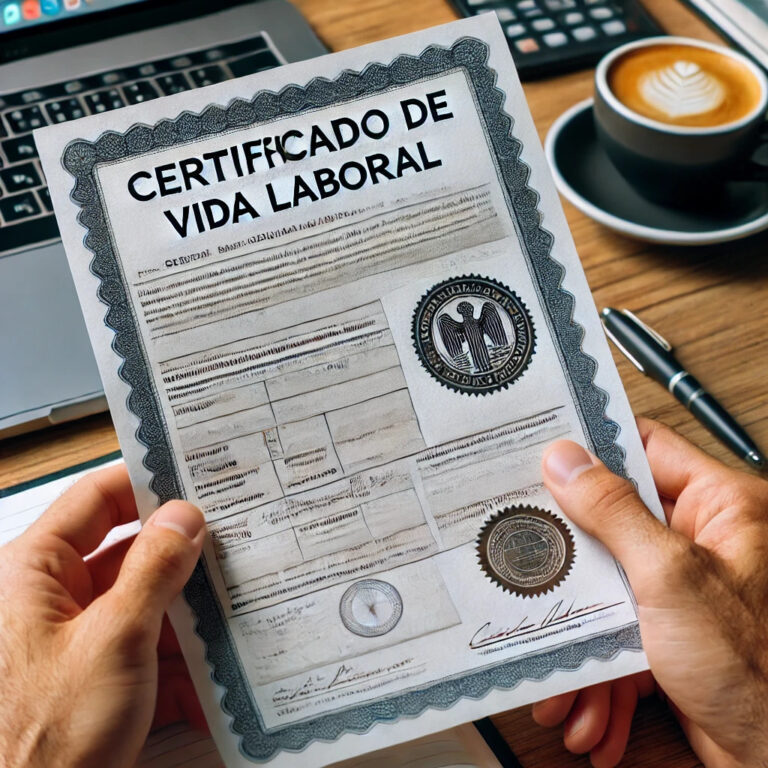
Let’s cut the crap: your employment history report ( informe de vida laboral in Spain) is the document that proves every day you have worked and contributed. If a company forgot to register you, or if there is a gap that should not be there, your pension calculation will be based on incomplete data. That means less money. And the worst part: Social Security will not call you to warn you. You have to check it yourself.
Why your employment history is the backbone of your pension
Your pension is calculated based on your contribution bases over a certain number of years. If your employment history has missing days or wrong bases, the system takes what is there. It does not care if you actually worked. The burden of proof is on you. So if you have ever worked without being properly registered, or if a company made a mistake in your contribution bases, your pension will be lower. That is the mistake that can cost you thousands over your retirement.
I am not talking about a hypothetical. I have personally seen cases where a person worked for months without being registered, and those months simply do not exist for pension purposes. The company saved money, the worker lost future income. And Social Security? They just apply the rules. So your first task is to get your employment history report and check it line by line.
How to request your employment history report in 2026 without losing your mind
Requesting your employment history report is free and you can do it online. But the process is not always straightforward. If you have a digital certificate (DNIe), Cl@ve, or a mobile phone registered with Social Security, you can download it in minutes. You go to the Import@ss website, identify yourself, and download the PDF. It shows every company you have worked for, your registration and deregistration dates, and the days contributed.
If you do not have any of those digital tools, you can still request it to be sent by mail. But be careful: they will only send it if your address in their database is perfect. If you have moved and did not update it, the letter will never arrive. And no, they will not call you to confirm. So before you request it by mail, make sure your personal data is up to date.
Another option is to call the Social Security information line (901 50 20 50) and ask if they can process your request over the phone. Sometimes they can, sometimes they cannot. It depends on the office. But do not expect to walk into any office without an appointment and get it printed. That is the last resort and usually a waste of time.
The trap: what your employment history report does NOT include
Here is a big surprise for many: your employment history report does not include jobs you had abroad, nor military service. So if you worked in another country or served in the military, those periods will not appear. That does not mean they do not count for your pension. They do, but you have to claim them separately with the proper documents. If you ignore this, you could lose years of contributions that would increase your pension.
Also, the report does not show contribution bases, only days. So you cannot see if a company underpaid your contributions. To check that, you need your contribution bases report ( bases de cotización ), which is a different document. But that is a topic for another day. The point is: your employment history is the starting point, not the whole picture.
What to do if you spot an error in your employment history
If you find a missing period or a wrong date, you need to act fast. First, gather evidence: payslips, contracts, bank statements, any document that proves you worked during that time. Then, go to Social Security and request a correction. You will likely need to file a formal claim. This process can take months, so do not wait until you are about to retire.
If the error is from a company that no longer exists, it gets trickier. You may need to go to court to prove your employment. That is why it is crucial to keep your own records. Do not rely on your employer to do things right. Check your employment history report at least once a year. It takes five minutes and can save you a fortune.
The digital shortcut that saves you from the bureaucratic maze
My advice after dealing with this: get a digital certificate or register for Cl@ve. Yes, it is a bit of a hassle at first, but it unlocks everything. You can download your employment history report instantly, request pension simulations, and handle most Social Security procedures without leaving your house. Without it, you are stuck in phone calls, appointments, and letters that never arrive.
And if you are self-employed, your employment history report works differently. You need to check your contributions through the RETA system. But the principle is the same: verify, verify, verify. Because at the end of the day, your pension is your money. Social Security is not going to chase you to give you more. You have to claim what is yours.
Your employment history is yours, but accessing it sometimes feels like a state secret. Do not let that stop you. The difference between a full pension and a reduced one can be a single missing month.
So stop reading and go check your employment history report right now. If you find an error, fix it. If you do not, celebrate. But do not assume everything is fine. Because the system will not warn you until it is too late.