

Post actualizado el día octubre 26, 2026 by DeiviSanzPlay
Let’s cut the crap: no one is chopping down the Amazon to wipe your butt. I’ve been inside a toilet paper plant, and the reality is way weirder than the eco-guilt trip you see on social media. The raw material for how toilet paper is made doesn’t come from pristine forests. It comes from the leftovers nobody else wants.
Think tree tips, branch trimmings, sawmill waste, and wood that’s too knotty for furniture. That’s the stuff that ends up in your bathroom. The logging industry doesn’t grow trees specifically to become toilet paper. They grow them for lumber and paperboard, and the scraps get repurposed. That’s the dirty little secret the marketing departments don’t scream about.
From Tree Scraps to Wood Chips: The Unsexy Beginning
Once those leftovers arrive at the mill, a debarking machine strips off the outer layer. Bark is useless for paper; it’s full of dirt and grit that would ruin the final product. What’s left is the clean trunk, which gets fed into a chipper and blasted into pieces the size of your thumbnail.
Here’s where the toilet paper manufacturing process gets interesting. Those chips aren’t just mashed up. They’re cooked. Literally. They go into a giant pressurized digester, kind of like a industrial pressure cooker, and get blasted with chemicals and steam for hours.
The goal? Separate the cellulose fibers (the good stuff) from lignin, which is the natural glue that holds wood together. If you skip this step, you don’t get soft paper. You get cardboard.
The Pulp Kitchen: Cooking, Bleaching, and Turning Wood Into Puree
After the cook, the pulp gets washed repeatedly to remove the chemical cocktail. Then it’s bleached. And yes, bleaching is controversial. Elemental chlorine was the old-school method, but most modern mills switched to chlorine dioxide or oxygen-based bleaching to cut down on toxic byproducts like dioxins.
What you’re left with looks like a very watery smoothie. It’s called pulp, and at this stage it’s about 99% water. That’s not a typo. The fiber content is tiny, which is why the next step is all about draining.
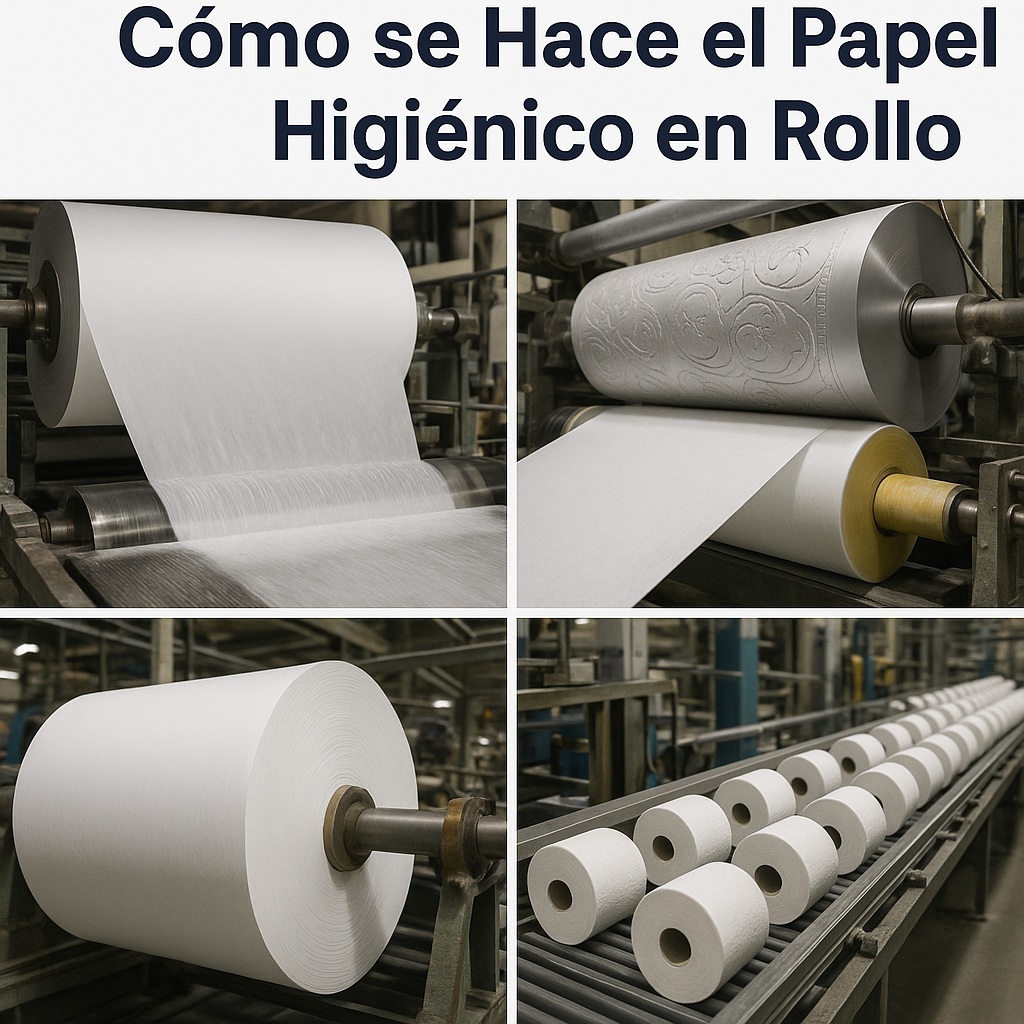
The pulp slurry gets sprayed onto a moving mesh screen that vibrates like crazy. Water pours out, fibers tangle together, and a wet mat starts to form. Then it runs through a series of heated rollers that squeeze out remaining moisture and dry it into a continuous sheet.
Why Recycled Toilet Paper Takes a Completely Different Path
Recycled toilet paper doesn’t start in a forest. It starts in blue bins. Office paper, old magazines, newspapers, junk mail, all of it gets collected and hauled to a recycling plant.
There, it’s shredded, mixed with water and cleaning agents, and pulped again. The de-inking process is the tricky part. You have to remove inks, staples, and adhesives without destroying the fibers. It’s more chemistry, less forestry.
From that point, the recycled toilet paper production line looks almost identical to the virgin pulp line. Same mesh, same rollers, same giant reels. The difference is in the fiber quality. Recycled fibers are shorter and weaker, which is why recycled rolls often feel rougher and tear more easily. That’s not a defect; it’s physics.
The Giant Reel and the Perforation Trick
Once the paper sheet is dry, a blade scrapes it off the roller in one continuous motion. It’s thinner than you’d expect, sometimes just 0.1 millimeters. Then it gets wound onto a master roll that can weigh over a ton and measure more than 2 meters wide.
That master roll is basically a tree trunk made of paper. From there, it’s all about converting. The jumbo roll gets unwound, perforated with those little square dots you rip along, and cut into standard roll widths.
Then it’s wrapped, packed, and shipped. The entire process from chip to roll takes a few hours, not days. Factories run 24/7 because the demand never stops.
Bamboo, Sugarcane, and the Future of Toilet Paper
Bamboo toilet paper is having a moment, and for good reason. Bamboo grows fast, needs less water, and doesn’t require replanting. The fiber is naturally soft, though some brands blend it with virgin pulp to keep costs down.
Sugarcane bagasse is another contender. It’s the waste left after juice extraction, and it makes surprisingly decent paper. But here’s my take: neither bamboo nor bagasse is a silver bullet. They still require energy, water, and chemicals. The greenest roll is the one you use less of.
«The average American uses over 100 rolls of toilet paper per year. That’s not a personal failing; it’s a design flaw in a system that treats a basic need as a disposable commodity.»
What Actually Surprised Me Inside the Factory
The scale. You don’t see two rolls being made. You see thousands per minute, all automated, all synchronized. Pulp flows through pipes like a river. Machines roll, cut, and wrap without a human hand touching a single sheet.
And that’s the part that messes with your head. The most mundane object in your house is the result of a hyper-engineered, chemically intensive, globally sourced industrial process. Next time you grab a roll, you’re not just holding paper. You’re holding cooked wood chips, water, bleach, and a whole lot of machinery.
So no, they’re not wiping out forests for your bathroom break. But they’re not saving the planet either. The truth is somewhere in the middle, and it smells like wet pulp.
