

Post actualizado el día octubre 26, 2026 by DeiviSanzPlay
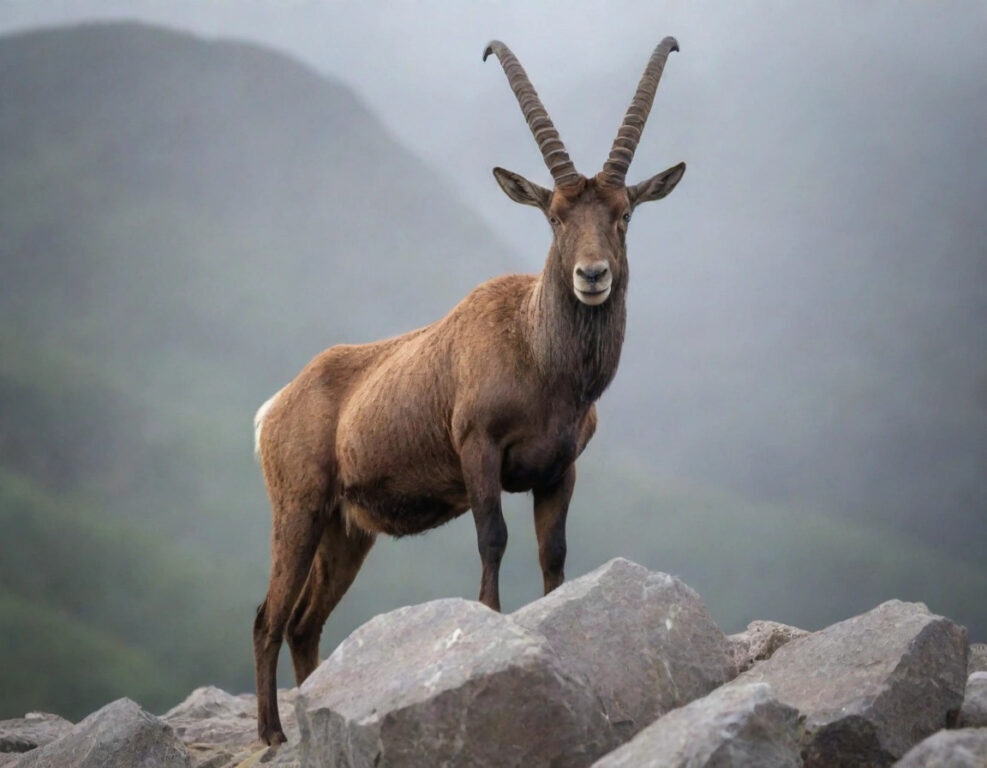
The Iberian ibex, known locally as cabra montés, is not just another mountain goat. It is an endemic species of the Iberian Peninsula, meaning you won’t find it naturally anywhere else on Earth. That alone makes it a biological treasure. But its story is also one of brutal crashes, unexpected comebacks, and ongoing threats that most people ignore.
If you’ve hiked in Sierra Nevada, the Pyrenees, or the rugged mountains of northern Portugal, you might have spotted one. If not, you’ve probably seen its silhouette on Spanish coins or regional flags. The Iberian ibex is a symbol, but symbols don’t protect themselves. Let’s talk about what this animal really is, why it matters, and what’s actually happening with its conservation in 2026.
What Exactly Is the Iberian Ibex and Where Does It Live?
The Iberian ibex (Capra pyrenaica) is a wild goat species native to the Iberian Peninsula. It’s built for vertical chaos: cliffs, scree slopes, and rocky outcrops that would make a mountain runner cry. Its hooves are essentially climbing shoes — hard on the outside, soft and grippy on the inside. That’s how it sticks to near-vertical walls.
There are currently four recognized subspecies, though one is extinct and another is critically endangered. The Western Iberian ibex (Capra pyrenaica lusitanica) disappeared in the 19th century. The Pyrenean ibex (Capra pyrenaica pyrenaica) went extinct in 2000 when the last known individual, a female named Celia, was found dead. Yes, scientists tried cloning her in 2003 — the clone died minutes after birth due to lung defects. That’s how desperate the situation got.
Today, the remaining subspecies are the Spanish ibex (C. p. hispanica), found across southern and eastern Spain, and the Portuguese ibex (C. p. victoriae), which clings to survival in northern Portugal and Galicia. The geographic distribution of the Iberian ibex in Spain and Portugal is fragmented, but conservation has helped some populations rebound.
Why the Iberian Ibex Is a Master of Survival
The natural habitat of the Iberian ibex is brutal: high-altitude mountains, rocky cliffs, and scrubland where food is scarce and weather swings from scorching to freezing. Yet this animal thrives. Its diet is flexible — herbaceous plants, shrubs, mosses, and even lichen when times get tough. It can go without water for days, extracting moisture from vegetation.
Behaviorally, the Iberian ibex is social in a tactical way. Females and young form nursery groups, while adult males often roll solo or in bachelor crews. This segregation reduces competition and protects the young from aggressive males during mating season. During the rut, which peaks in late autumn, males fight for dominance with head-butts that can echo across valleys. The winner gets mating rights; the loser gets a headache and a bruised ego.
Predators? In the past, wolves, lynxes, and golden eagles posed real threats. Today, human hunting and habitat loss are far bigger problems. A healthy adult ibex can live 10–15 years in the wild, but few make it that far in hunted areas.
The Dark Side: Extinction Threats and Hard Truths
Let’s not sugarcoat it. The danger of extinction of the Iberian ibex in the Iberian Peninsula has been real for decades. The Pyrenean subspecies is gone. The Portuguese ibex is down to a few hundred individuals. Poaching still happens, especially in remote areas where enforcement is weak.
Habitat destruction from urbanization, agricultural expansion, and ski resort development chops up the mountainous terrain they need to survive. Climate change adds another layer: warmer winters mean less snow, which shifts vegetation patterns and pushes ibex higher up mountains where food is scarcer. A 2023 study in the Journal of Wildlife Management found that heat stress is already affecting ibex behavior and reproduction in southern Spain.
And then there’s disease. Sarcoptic mange, a skin parasite, has caused massive die-offs in some populations. In the Sierra Nevada, outbreaks have killed up to 70% of local ibex in some years. It’s not a pretty picture.
Conservation Wins: What’s Actually Working in 2026
Here’s where it gets interesting. Despite the grim stuff, the Iberian ibex is one of Europe’s few conservation success stories. Several areas of the Iberian Peninsula have been declared nature reserves, and reintroduction programs have brought ibex back to regions where they’d vanished.
- Sierra Nevada National Park (Spain): Home to the largest population, with strict hunting regulations and monitoring.
- Peneda-Gerês National Park (Portugal): A stronghold for the Portuguese subspecies, with anti-poaching patrols.
- Reintroduction in the Pyrenees: French and Spanish authorities have released ibex from other regions to fill the ecological gap left by the extinct Pyrenean subspecies.
Hunting is a double-edged sword. Regulated trophy hunting generates revenue for conservation, but it’s controversial. Some biologists argue it disrupts social structures; others say it funds the very protection that keeps the species alive. I lean toward the latter — as long as quotas are science-based and enforced. In Spain, hunting licenses for ibex can cost thousands of euros, and that money goes back into habitat management. It’s not pretty, but it works.
Reforestation and the creation of wildlife corridors are also helping. By connecting fragmented habitats, ibex can move between populations, which improves genetic diversity and reduces inbreeding. The LIFE Iberian Ibex project, funded by the EU, has been instrumental in these efforts since 2018.
Why the Iberian Ibex Matters More Than You Think
You might wonder why it’s important to protect the Iberian ibex. It’s not just about saving a cute animal. As an herbivore, the ibex shapes vegetation structure. It grazes on shrubs and grasses, which prevents overgrowth and maintains open landscapes that other species — from insects to birds — depend on. Remove the ibex, and the whole mountain ecosystem can shift.
It’s also a flagship species. When you protect ibex habitat, you’re protecting everything else that lives there: wildcats, eagles, rare plants, and amphibians. Conservation is rarely about one species; it’s about the web.
And culturally? The Iberian ibex is woven into Spanish and Portuguese identity. It appears in cave paintings dating back 20,000 years. It’s on coins, in literature, and in the names of mountain peaks. Losing it would be like losing a piece of the peninsula’s soul.
The Future: Challenges That Won’t Disappear
Despite the wins, the Iberian ibex faces a rocky road ahead. Climate change is the wildcard. Models predict that suitable habitat could shrink by up to 30% by 2050 if warming continues unchecked. That means ibex will be pushed to higher elevations, where there’s less space and less food.
Disease outbreaks are another wildcard. Mange is manageable but never fully eradicable in wild populations. And human-wildlife conflict? As cities expand and tourism grows, ibex increasingly raid crops and get hit by cars. Not exactly a fair fight.
What can you do? Support conservation organizations like WWF Spain or SEO/BirdLife that work on habitat protection. If you hike in ibex territory, keep your distance and don’t feed them. And if you’re a hunter, follow the rules — they exist for a reason.
The Iberian ibex is a survivor. It outlasted the last ice age, survived human hunting pressure, and even came back from the brink in some areas. But survival is not the same as thriving. The next 20 years will decide whether this endemic legend remains a wild reality or becomes a museum memory.

