Post actualizado el día octubre 26, 2026 by DeiviSanzPlay
Walk into a packed bar on a Tuesday night and you already know the owner nailed the decor. It’s not luck. It’s not a huge budget either. It’s about knowing what restaurant and bar decorating ideas actually move people to sit down, order a second round and come back next week. I’ve spent enough nights in everything from dive bars to tasting-menu spots to notice the patterns, and most of them come down to five or six decisions that either work or kill the vibe.
Decide the vibe before you buy a single chair
Here’s the mistake I see constantly: owners buy furniture first and figure out the concept later. Wrong order. Before you spend a euro or a dollar, write one sentence describing what a customer should feel when they walk in. «I’m in a 1970s Lisbon tasca» is a brief. «Nice and modern» is not.
That single sentence dictates everything: color palette, materials, music, even the glassware. A high-end restaurant leans neutral, restrained, textured. A neighborhood cocktail bar can go loud, vintage, slightly chaotic. Both work. A space that tries to be both fails at being either.
Lighting is 70% of the job
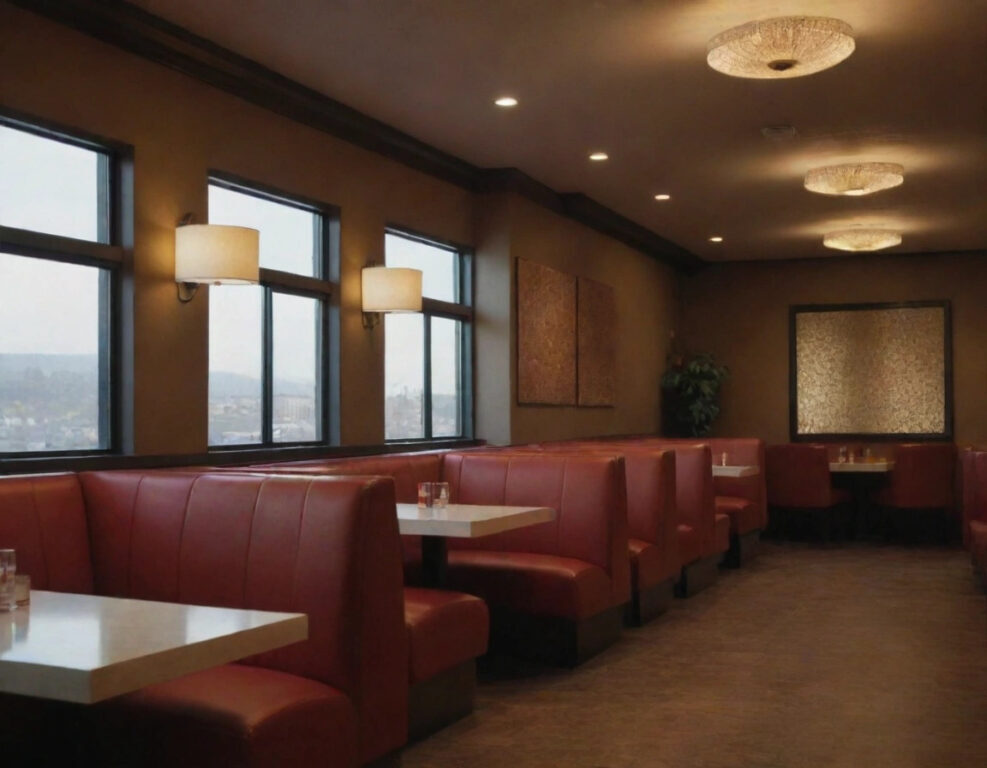
If you only fix one thing in your venue, fix the lighting. Nothing else in bar and restaurant interior design changes how people feel as fast. Harsh ceiling fluorescents make even great food taste cheaper. Bad lighting photos badly, and in 2026 your Google Maps listing is doing half your marketing.
Practical rules that actually work:
- Keep ambient light warm — 2200K to 2700K. Anything cooler than 3000K reads as a hospital.
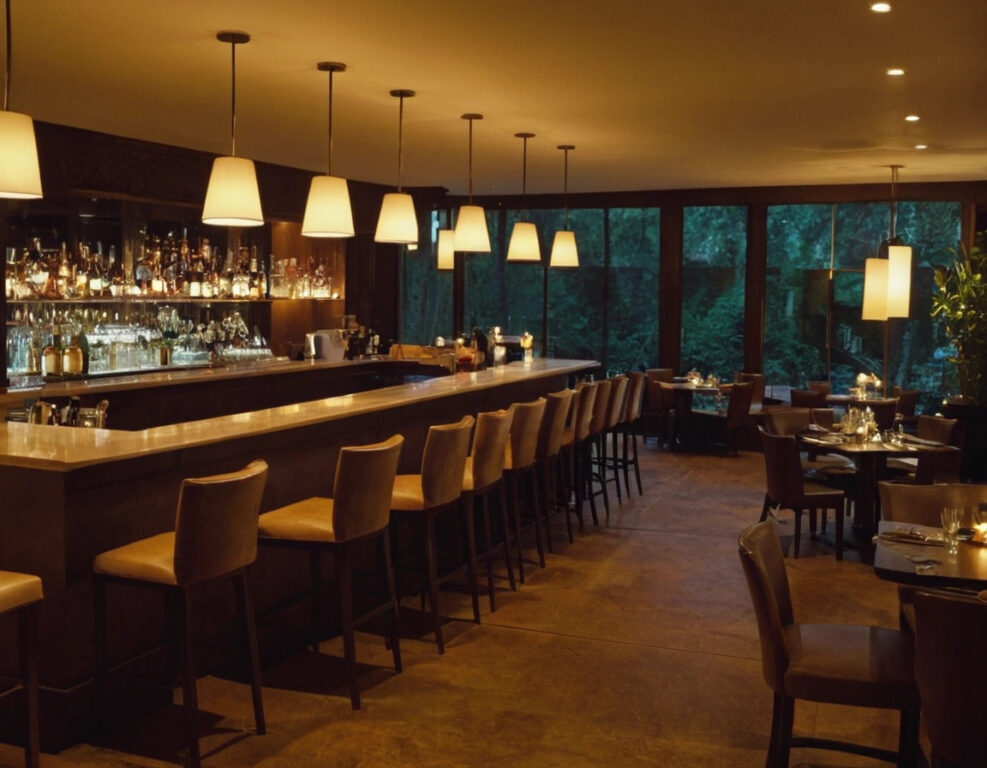
- Layer it. Overhead ambient, plus table lamps, plus accent spots on the bar or a feature wall.
- Never light the whole room evenly. Flat light kills intimacy.
- Dimmers are not optional. Brunch and last call need different moods.
If your food photos look orange under your own lighting, you’ve got a problem. Fix it before your soft launch, not after.
Layout: the part everyone gets wrong
A beautiful room with terrible flow still fails. Guests feel squeezed, servers can’t move, and your covers per night drop. The restaurant space planning side of decorating is unglamorous but it’s where the money is.
What I’d defend every time: leave at least 90 cm between tables if you want anyone to sit comfortably, and more like 120 cm on the main traffic route. Yes, that means fewer seats. Fewer happy seats beat more miserable ones — and your Google reviews will reflect it within a month.
Also plan the bar as a destination, not a waiting area. A bar with stools facing each other, not just the wall, invites conversation and doubles as overflow seating on busy nights.
Materials and colors that age well
Trends come and go fast. The restaurant decor trends for 2026 I keep seeing in real venues (not Pinterest mood boards) lean into warm minimalism: raw wood, lime plaster, stone, brushed brass, matte black metal. Terracotta and olive green still work for cozy rooms. Cool grays and blues feel calm but can go cold if you don’t warm them up with wood or textiles.
Mix at least three materials in any room. Wood plus metal plus glass. Stone plus linen plus leather. One-material rooms look like showrooms, not places people want to linger.
Rule I’d defend hard: anything a guest touches — tables, chairs, bar top, menus, cutlery — should feel good in the hand. That’s what people remember, not your accent wall.
Small details that make a bar feel authentic
The cozy bar atmosphere ideas that actually stick are cheap. A wall of framed photos from the neighborhood. A handwritten menu board. Real plants, not plastic ones — even the low-maintenance ones like pothos or snake plants. A record player instead of a Bluetooth speaker. None of it costs much and all of it signals «a human runs this place.»
Skip the generic art prints. Skip the fake Edison bulbs everyone used in 2015. Skip chalkboard paint on every surface. Those are the details that scream «we copied a template.»
Match the menu to the room
Your menu is decor. If the space is minimalist, the menu should be clean typography on good paper. If the bar is vintage, go retro layout and warmer copy. A cocktail list on laminated A4 in a candlelit wine bar breaks the spell instantly.
Same logic for uniforms, playlists and even the bathroom. The bathroom is the most underrated decor opportunity in any venue — people judge a place by it and they all visit at least once. Good soap, good lighting, one nice detail on the wall. That’s it.
Sound: the invisible decor
Nobody talks about it enough. Hard surfaces (concrete, glass, tile) bounce noise and turn a full room into a shouting match. Add soft materials — curtains, upholstered banquettes, acoustic panels behind the bar, rugs where possible — and suddenly guests stay longer because they can actually hear each other.
A well-decorated bar is a bar where conversation is easy. Playlist volume matters too: loud enough to feel alive, quiet enough that a first date doesn’t have to yell.
Budget reality check
You don’t need a designer to do this well. Spend where it counts and go cheap where it doesn’t:
- Spend on: lighting, chairs, bar top, sound treatment.
- Go cheap on: decorative objects, plants you can propagate, art you can source from local artists or photographers.
- Never cheap out on: anything guests touch daily or anything that breaks every three months.
Buying second-hand solid wood furniture and refinishing it beats buying new particle board every time. It lasts longer, ages better and looks less like a chain.
Get the vibe, the light, the layout and the sound right, and the rest is decoration. Get those four wrong, and no amount of nice cushions will save you.