

Post actualizado el día octubre 17, 2026 by DeiviSanzPlay
If you’ve ever stared at a green iguana basking on a rock and thought, «I need one of those in my living room,» hold up. I get it. These reptiles look like tiny dinosaurs with attitude, and once you learn a bit about them, they’re even weirder than they seem. But there’s a huge gap between thinking they’re cool and actually keeping one alive and healthy. Let me walk you through the real deal on iguanas, no fluff, no sugarcoating.
What Makes Iguanas So Strange (and Awesome)
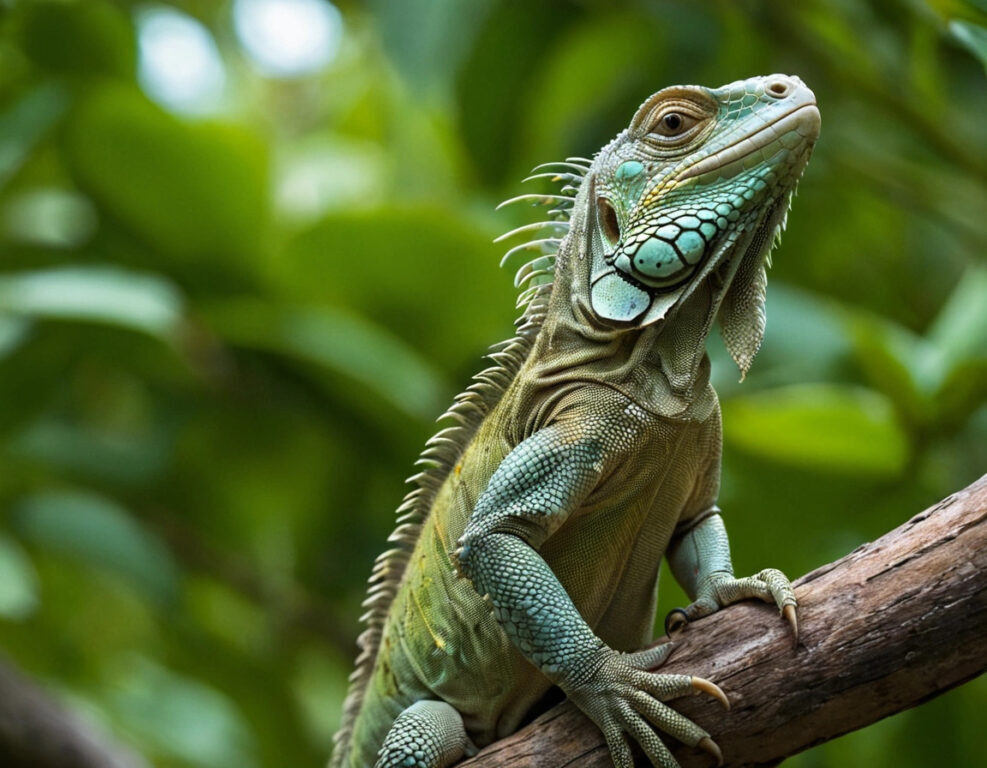
The characteristics of iguanas are honestly a mix of prehistoric and ridiculous. Scaly skin, a long tail that can whip you hard, sharp claws for climbing, and that iconic dewlap under the chin. The green iguana (Iguana iguana) can hit 2 meters from nose to tail tip. That’s not a pet, that’s a roommate.
But here’s the thing people miss: those claws and tails aren’t for show. In the wild, iguanas use them to escape predators. If you grab one wrong, you’ll get a tail whip that feels like a bike chain. They’re not aggressive by nature, but they will absolutely defend themselves.
Fun fact: iguanas can drop their tail if threatened. It grows back, but never looks quite the same. So never pick one up by the tail.
Iguana Care as a Pet: What Nobody Tells You
Here’s where most beginners screw up. They buy a baby iguana in a 20-gallon tank, and six months later they have a 4-foot lizard and no plan. Iguana care as a pet is not like keeping a hamster. It’s more like keeping a small dinosaur that needs a custom-built enclosure.
You need a terrarium that’s at least 6 feet tall and 4 feet wide for an adult. They need UVB lighting (not just heat) to process calcium. Without proper UVB, they get metabolic bone disease and their bones turn to rubber. That’s not an exaggeration.
They also need a temperature gradient: a basking spot around 95-100°F and a cooler side around 80°F. If you can’t provide that, don’t get an iguana. Full stop.
Iguana Feeding: The Truth About Their Diet
One of the biggest myths is that iguanas eat insects or meat. Wrong. They’re strict herbivores. Iguana feeding should be based on leafy greens like collard, mustard, and dandelion greens. Fruits like mango, papaya, and berries are fine as treats, but not the main course.
Avoid spinach, kale, and broccoli in large amounts. They bind calcium and can cause long-term problems. And never feed them dog food, cat food, or insects, no matter what the pet store guy says. That’s how you kill an iguana slowly.
Also, calcium-to-phosphorus ratio matters. You want at least 2:1 calcium to phosphorus. A varied diet with a calcium supplement (without D3 if they get good UVB) is key.
Where Do Iguanas Live in the Wild?
Iguanas are native to Central America, South America, and the Caribbean. They love heat and humidity, so tropical and subtropical forests, mangroves, and even urban areas in places like Florida (where they’re invasive) are home. In the wild, they spend most of the day sunbathing to regulate their metabolism.
They’re also excellent swimmers. When threatened, they’ll dive into water and swim away. So if you live near a canal in Miami, you’ve probably seen one.
Iguana Behavior: What Their Body Language Means
Iguana behavior is more complex than people think. Head bobbing? That’s a territorial display or a mating signal. Dewlap inflation? Usually a sign of aggression or stress. Tail whipping? Back off.
They’re not social animals like dogs. They tolerate handling if you work with them slowly, but they don’t crave affection. If you want a pet that loves you, get a dog. If you want a pet that tolerates you and looks cool, an iguana works.
Most Common Types of Iguanas
- Green iguana: The classic. Big, adaptable, and the most common pet. Can be tamed but needs space.
- Desert iguana: Smaller, more muted colors, thrives in arid climates. Not as common as pets because they need very specific heat and low humidity.
- Spiny-tailed iguana: Known for its thick, spiky tail. Harder to find in captivity and often wild-caught, which is a red flag.
Each species has different needs. Don’t assume a desert iguana can live in the same setup as a green iguana. That’s a recipe for a dead lizard.
How Long Does an Iguana Live?
How long does an iguana live? With proper care, 15 to 20 years. Some green iguanas have hit 20+ in captivity. That’s a two-decade commitment. If you’re 25 and get an iguana, it might outlive your current relationship, your apartment, and your patience.
In the wild, life expectancy is shorter due to predators, disease, and habitat loss. But in captivity, with correct UVB, diet, and vet care, they can live a long time.
Iguanas as Pets: The Hard Truth
Iguanas as pets: what you should know is that they’re not for everyone. They need a large enclosure, daily fresh water, and a vet who actually knows reptiles. Most vets don’t. Find one before you buy the iguana.
They also get big. A male green iguana can reach 6 feet and weigh 20 pounds. That’s not a lap pet. And during breeding season, males can get aggressive. You’ll need to handle that.
If you live in a small apartment, forget it. If you can’t commit 20 years, forget it. If you want a cheap pet, forget it. The setup alone can cost $500-$1000, and that’s before vet bills.
Final Thoughts (No Fluff)
Iguanas are fascinating, but they’re not beginner pets. They’re a lifestyle choice. If you’re ready for the space, the cost, and the time, they can be rewarding. If not, admire them from a distance. Either way, now you know the real story behind those scaly dinosaurs.

